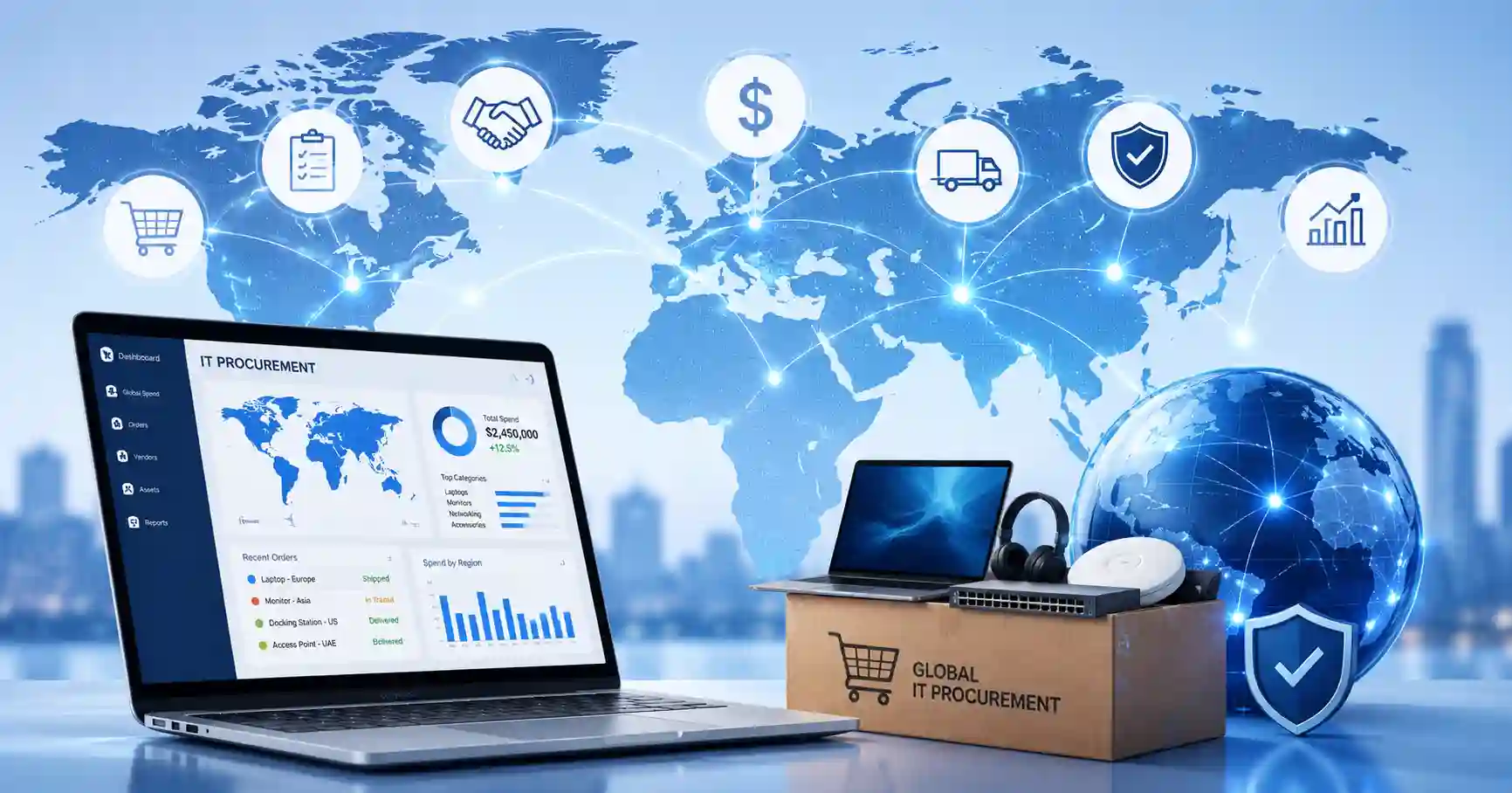
A decade back, running buying for teams in three countries was messy. You ended up with three vendors, three money types, and three sets of border forms. An office manager had to track it all in a spreadsheet that only they knew how to use. Nobody planned it like that. It just happened step by step. One rush order led to another, and what started as quick fixes became the way things got done.
The real price of those fixes was hard to spot. It often did not show up on any one bill. A firm with people in Lisbon, Manila, and Austin could end up paying three different amounts for the same laptop. Shipments could sit for weeks, and no one could clearly say where they were. Then an audit would reveal a rule problem, and it would feel like it came out of nowhere. The staff were not the problem. The issue was simple. Key details lived in too many email threads, and no one could pull it all together fast enough.
New tools changed the pattern. Not by one big headline release. It was more like many small upgrades. Teams got shared product lists. Approval steps were handled by systems, not by constant follow ups. Stock levels could be seen as they changed. Reporting finally made global purchases easier to understand. The old process that looked like a filing mess began to feel more like active oversight.
From Scattered Purchases to a Single Source of Truth
The first real shift was boring and enormous. Putting every order into one system means the company finally knows what it owns, what it paid, and when the warranty expires. That sounds like housekeeping, and it is, but it changes leverage too. A vendor quoting a price to one office behaves very differently from a vendor quoting a price to a buyer who can see all fourteen offices at once.
Consolidation also ends the quiet duplication that drains budgets. Two departments ordering nearly identical monitors under different cost codes stop looking like two purchases and start looking like one line item with real volume behind it. Procurement has always been about aggregating demand, and software simply made that aggregation possible across time zones and languages.
Automation Handles the Work Nobody Ever Wanted
Chasing approvals is nobody’s calling. Neither is rekeying a purchase order into an accounting system, or emailing a supplier for the third time about a shipment that left the warehouse a week ago. These tasks consumed an absurd share of procurement’s week, and they were exactly the sort of thing a rules engine does without complaint.
Modern platforms route a request to the right approver based on amount, category, and region, then push the approved order straight into finance without a human retyping anything. Onboarding a new hire in another country can trigger a hardware bundle, a shipping label, and an asset record in a single motion. The people who used to shepherd all that now spend their time on supplier strategy, which is both more interesting and worth considerably more to the business.
Data Replaces Instinct in Vendor Decisions
Plenty of sourcing decisions still get made on gut feel and a spreadsheet somebody last updated two quarters ago. That works until it does not. When order history, delivery results, and support cases are viewed together, clear trends show up. One shopper alone would not spot them. You may see a supplier whose lead times slow every December. You might also find one device model that brings in about double the repair work compared with other models. In some places, customers pay extra, yet there is no obvious cause.
This is where the tooling behind global it procurement earns its cost, because visibility of that kind compounds. Contract renewals get negotiated with evidence rather than anecdote. Forecasts stop being wishful, and a shortage brewing three suppliers upstream shows up as a warning rather than a surprise. Finance teams that have spent years mapping how money actually moves through a business, a challenge covered well in this guide to managing payments and expenses in a digital-first company, recognize the pattern immediately.
Compliance and Customs Stop Being Afterthoughts
Buying hardware across borders drags in tax rules, import duties, data residency requirements, and privacy law that varies by jurisdiction and changes often. Handling all of that manually is how good companies end up with expensive surprises, usually at the worst possible moment.
Procurement platforms increasingly bake these checks into the request itself. A purchase destined for Germany carries different documentation than the same purchase destined for Brazil, and the system knows it before anyone clicks submit. Vendor questionnaires about data handling and breach response get attached to onboarding rather than chased down later. E-procurement systems make compliance a property of the workflow instead of a separate project someone remembers in a panic.
Buying With the Full Life of the Asset in Mind
Cheap hardware is often the most expensive kind. A low sticker price says nothing about repair frequency, energy draw, support contracts, or what it costs to wipe and dispose of the thing responsibly in four years. Considering total cost of ownership turns a purchasing decision into an investment decision, and the two rarely point the same direction.
Connected procurement and asset systems make that math practical rather than theoretical. When the ordering platform knows what happened to the last eight hundred units of a given model, the next purchase gets scored on evidence. Devices get redeployed rather than replaced, refresh cycles get set by actual failure data, and end-of-life planning starts at the point of purchase instead of the point of panic.
Where the Real Gains Come From
The organizations getting the most out of all this are not the ones that bought the fanciest platform. They are the ones that used the technology to answer questions they had been avoiding for years: what do we actually own, what does it actually cost, and who actually decides.
None of it removes judgment from the job. Someone has to figure out how much standardization a team can take when work is spread out. If it feels too rigid, people will find their own ways, usually in quiet and small steps. A dashboard will not solve that. The software can cut through the clutter, though. Then the real focus goes to the choices that count. Instead of spending time hunting for one invoice that has vanished across several inboxes.
For a company growing across borders, that is the real transformation. Procurement stops being the function that slows everything down and becomes the one that sees a little further ahead than everyone else.

Nishanth Kumar is the Lead SEO Strategist at iTech Manthra. With over a decade of experience in the digital marketing landscape, he specializes in technical SEO, link-building strategies, and search engine algorithms. Nishanth has helped hundreds of businesses scale their organic presence through data-driven marketing and sustainable “white-hat” techniques. He is passionate about decoding Google’s ever-changing updates to help brands stay ahead of the competition.