What if ranking #1 on Google in 2027 still isn’t enough to get noticed?
That sounds strange, especially if you’ve spent years chasing better rankings, stronger backlinks, and higher organic traffic. But search is changing fast. Google’s AI Overviews and AI Mode can answer questions before users visit a website, while tools such as ChatGPT and Perplexity are becoming part of the research journey.
So, the real SEO question for 2027 isn’t simply, “How do I rank higher?” It’s becoming, “How do I make sure my brand is visible, trusted, understood, and cited wherever people search?”
Google says its generative AI experiences still rely on core Search systems and that strong SEO fundamentals remain the foundation. At the same time, its search experience is becoming much more conversational and capable of handling complex questions.
That means SEO isn’t disappearing. It’s getting bigger.
What Are the Most Important SEO Priorities for 2027?
SEO priorities are shifting fast. Forget simple keyword rankings. By 2027, it is all about broad search visibility.
Brands need to build real topical authority and sharpen their E E A T. Fast technical performance matters, alongside brand mentions and gearing up for AI search.
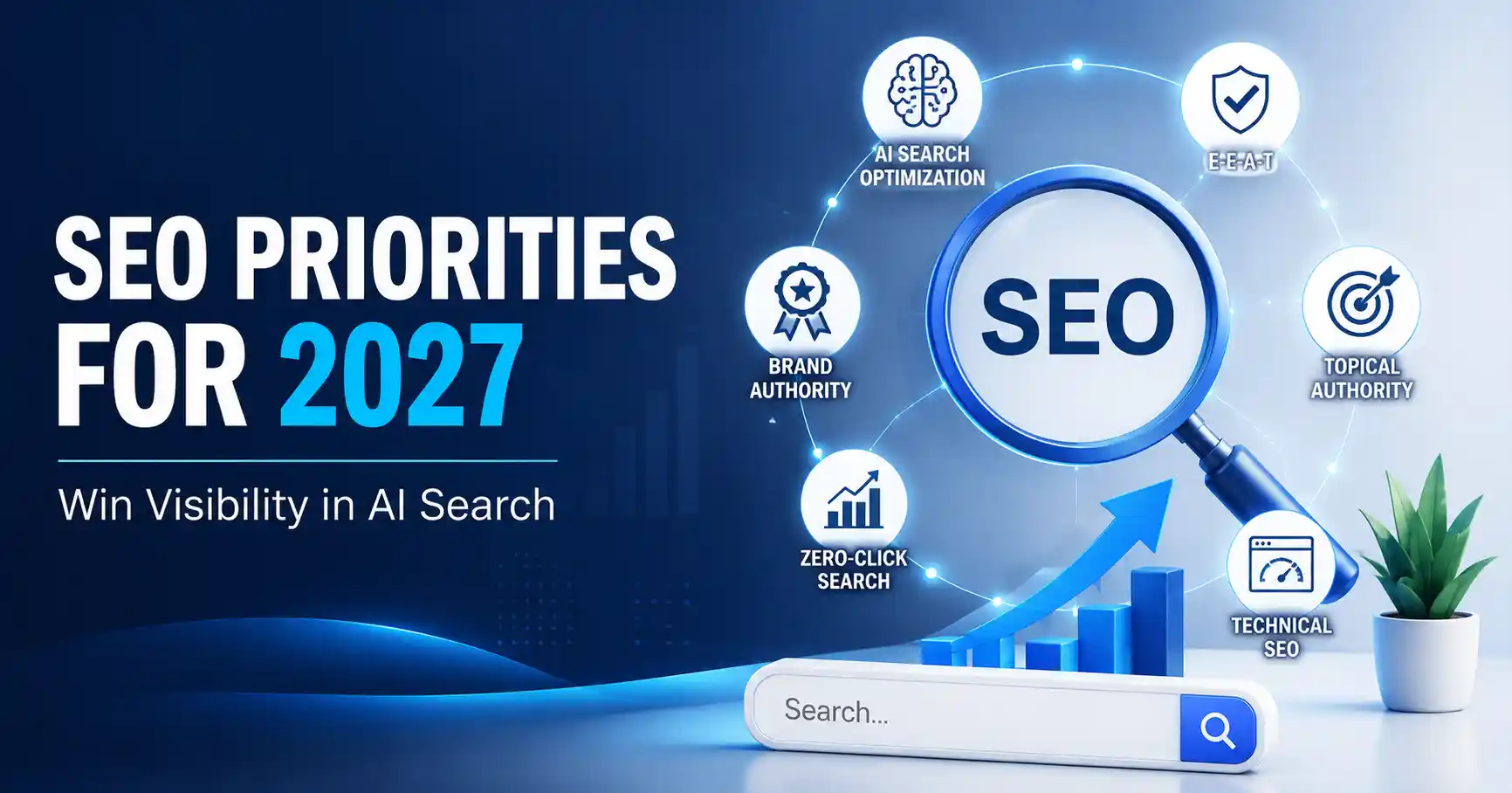
The biggest priorities are:
- AI search optimization and AI visibility
- Deeper topical coverage
- Stronger E E A T signals
- Brand authority beyond backlinks
- Preparing for zero click search
- Better technical SEO and structured data
- Continuous content updates and measurement
The common thread? Stop thinking about Google as a list of ten blue links. Search is becoming an ecosystem.
How Will AI Search Optimization Change SEO in 2027?
AI search optimization will become a normal part of SEO rather than a separate marketing experiment.
Google’s AI Mode already supports longer, conversational queries and follow up questions, while AI Overviews can combine information from multiple sources. Google also says its generative AI experiences are built on its existing Search systems.
For marketers, that creates a new visibility layer.
Look, you have to write for people, obviously, that means content that’s genuinely helpful. It must rank organically. But it also absolutely needs to be lucid enough for AI to digest, summarize, even pull a quote.
So, tackle those burning questions head on, Explain things with a rich context. Use strong, evocative headings. Back up your points with evidence, and yeah, inject your own insights where it fits. Google’s message is crystal clear here: write for humans, Don’t go making it weird for a machine.
Test your brand regularly in tools like ChatGPT and Google AI Mode, it is a smart move. Search for category terms, comparisons, and problem queries. Does your name show up? How do they describe you, and which rivals are getting recommended? You need to know.
Why Will Topical Authority Matter More Than Keywords?
Keywords still count, but dropping one in and bouncing won’t cut it, Topical authority means proving your site actually knows the subject inside and out. Stop pushing out random posts. Instead, tie related articles tightly around one main hub and all its subtopics, Take SEO as an example. You build a massive core guide, then back it up with focused pieces on technical tweaks, keyword hunting, AI search, internal links, content plans, local angles, and tracking results.
This creates a stronger information network.
Search Engine Land’s 2027 analysis highlights entity coverage and query fan out as important because users rarely stop at one simple question. They ask follow ups, comparisons, alternatives, and implementation questions.
That’s where many content strategies fall short.
They answer the main question but ignore the five questions that naturally come next.
A better strategy is to map the entire user journey. Give readers the definition, explanation, examples, alternatives, mistakes to avoid, and next steps they’re likely to need.
Is E E A T Becoming a Bigger Ranking Priority?
Yes, especially when trust rules the niche. What even is E E A T? Experience, expertise, authoritativeness, and trustworthiness. Not some magical ranking cheat code. Yet proving actual credibility just makes your pages infinitely more useful for every single reader.
In 2027, generic articles will have an even harder time competing with content that shows something original.
Think about what your business can provide that a thousand AI generated articles can’t:
Real examples. Original research. First hand testing. Customer insights. Expert opinions. Screenshots. Case studies. Data. Lessons learned from actual projects.
Those details give content a reason to exist.
Google’s current guidance also emphasizes valuable, unique, non commodity content and recommends focusing on information that only your organization can genuinely provide.
Google Search executive Nick Fox puts it simply. The best way to win at AI search is still just writing actually useful content, though you have to dig deeper than shallow fluff. Don’t recycle the same old noise, Bring something fresh to the table.
How Should Businesses Prepare for Zero Click Search?
Here’s the uncomfortable part: not every search will produce a click.
Zero click search is growing because Google can answer many informational questions directly through AI Overviews, featured snippets, knowledge panels, and other search features. Search Engine Land cites research showing that more than two thirds of U.S. Google searches ended without a click during January–April 2026.
That doesn’t mean organic traffic is dead.
It means visibility has to be measured differently.
A user might see your brand in an AI answer today, remember it tomorrow, and visit your website directly next week. Traditional last click reporting may not capture that entire journey.
So optimize for both visibility and action.
Give users a useful answer directly, but make the deeper resource worth visiting. Include original examples, tools, templates, comparisons, data, or practical details that aren’t easily condensed into a two paragraph AI answer.
That’s how you turn visibility into demand.
What Technical SEO Priorities Should You Fix Before 2027?
The futuristic side of SEO is exciting, but don’t neglect the boring stuff. It still matters.
A fast, accessible, mobile friendly website gives search engines and users a better foundation.Always check core web vitals and indexation, Never skip clean navigation, internal linking, or these core technical fundamentals.
Structured data works wonders. It hands search engines a direct roadmap of what a page actually means. Google points right to these semantic signals, treating them as key pieces for helping its systems grasp your content.
Start with the basics:
- Make important pages easy to crawl and index.
- Keep your mobile experience clean and fast.
- Improve Core Web Vitals where they genuinely affect users.
- Use descriptive internal links.
- Implement relevant schema correctly.
- Make sure structured data matches visible page content.
- Remove outdated or low value pages when appropriate.
Technical SEO won’t replace great content. It makes great content easier to discover, understand, and use.
What Should Your SEO Strategy Look Like in 2027?
Forget fixed SEO strategies for 2027, they won’t work. Instead of making an annual plan and walking away, check what is shifting every few months. Search behavior changes. AI features change. Competitors publish new content. Your own pages become outdated.
Set up a simple cycle:
Create → Measure → Refresh → Improve → Repeat.
Track rankings, organic traffic, conversions, branded searches, AI visibility, referral traffic, and the queries that actually bring qualified visitors.
Also watch how AI platforms describe your company. If ChatGPT, Google AI Mode, or another system consistently misunderstands your product or brand, that’s a visibility problem worth investigating.
And don’t abandon traditional SEO while chasing the newest acronym.
Google’s own 2026 guidance makes the point clearly: good SEO remains the foundation for success in generative AI search.
FAQ’s
Yes. SEO remains important, but success is expanding beyond traditional rankings. Businesses also need visibility across AI search, search features, branded results, and other discovery channels.
AI search optimization demands crafting content algorithms ingest and cite, yet keeping it engaging for living humans. That delicate balance remains genuinely tricky.
Not completely. AI Overviews change how results are presented, but traditional organic search remains part of Google’s overall Search experience.
Topical authority shows that a website covers a subject comprehensively rather than publishing isolated pages. Strong coverage can help search systems understand the relationship between related topics and questions.
Start with basics. Boost content quality, spot missing topics, and bulk up E E A T. Squash tech SEO bugs, build real brand weight, and track how your business shows in AI search.
Conclusion
The biggest SEO priorities for 2027 aren’t about finding one secret ranking trick.
They’re about becoming the source that search engines, AI systems, and people can understand and trust.
Build deeper topical coverage. Show real experience. Strengthen your brand beyond your website. Prepare for AI Overviews and zero click search. Keep technical SEO healthy. Most importantly, create content that gives people something genuinely useful.
Search may look very different in 2027, but one thing probably won’t change: the websites that understand their audience and consistently help them will have an advantage.

Kumar Swamy is the CEO of Itech Manthra Pvt Ltd and a dedicated Article Writer and SEO Specialist. With a wealth of experience in crafting high-quality content, he focuses on technology, business, and current events, ensuring that readers receive timely and relevant insights.
As a technical SEO expert, Kumar Swamy employs effective strategies to optimize websites for search engines, boosting visibility and performance. Passionate about sharing knowledge, he aims to empower audiences with informative and engaging articles.
Connect with Kumar Swamy to explore the evolving landscape of content creation!