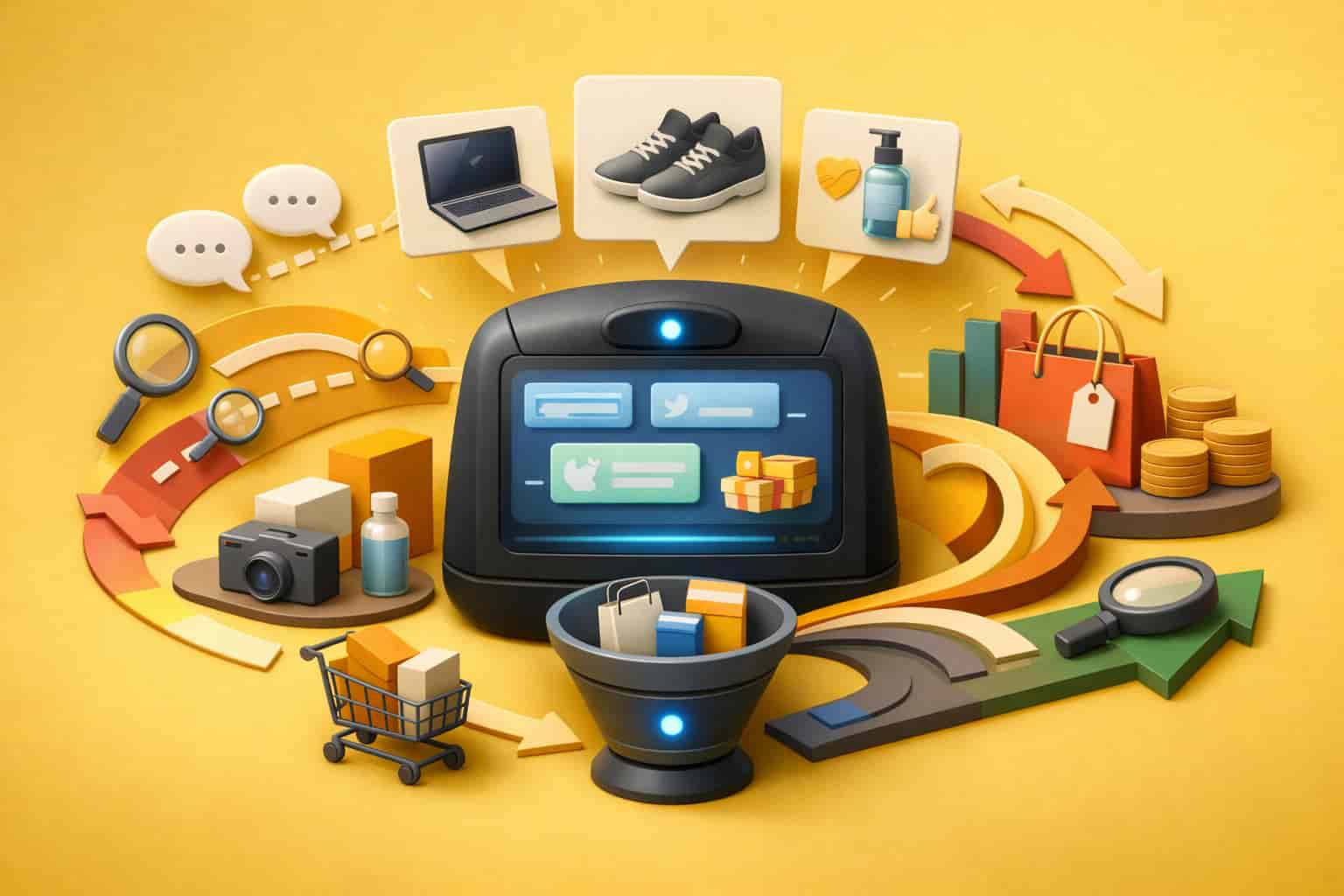
OpenAI Ads Are Coming: What This Actually Means for Marketers
You may agree that OpenAI has recently started showing ads like Google Ads 2.0 into ChatGPT.
It’s not about emerging platforms. It’s about emergent behavior. Not browsing, but asking behavior and so takes everything about how demand is captured, changed, influenced, and monetized.
The launch has got ads running in certain markets for something larger than mere monetization; all ads will thus be intent-driven. The interface is the mechanism that filters, and synthesizes, and decides who gets to see what.
Introduction
• AI interfaces squash the funnel discovery, evaluation, conversion in one step
• Ads will be different; they will not look like ads; we may have embedded ones, contextual ones, and recommendation types
• Small businesses might form a bet against the incumbents provided they really move faster to change
What New Ad Formats Did OpenAI Actually Introduce?
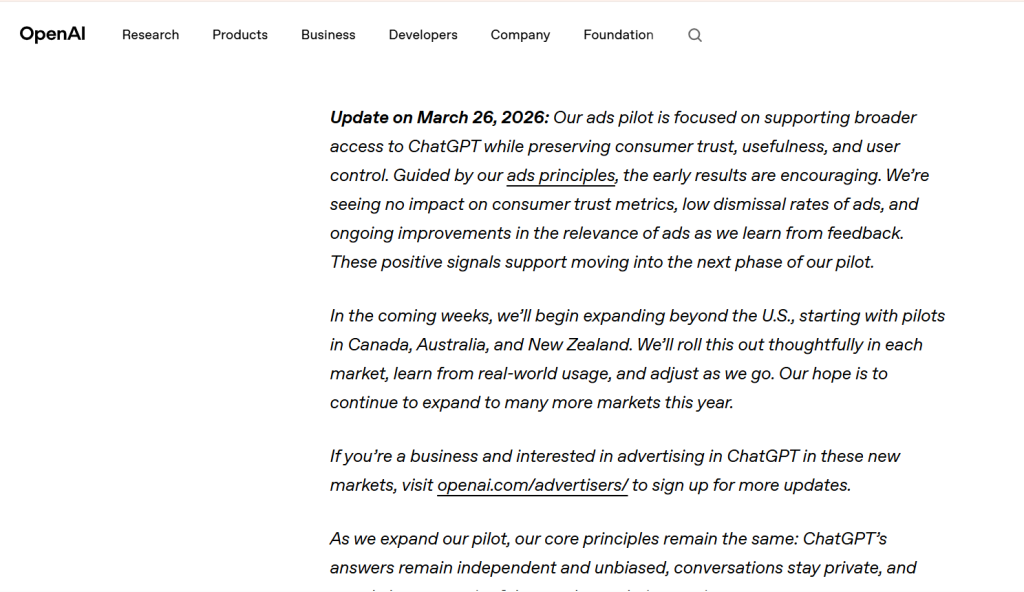
Brief: OpenAI has begun experimenting with ads in its ecosystem, probably using conversation outputs rather than traditional placements.
It hasn’t been confirmed, but ads probably won’t look like banners or marked as sponsored. It has been posited that they will be shown as contextual links embedded in replies to align with user intent.
The reason this is important is because herein, users do not scroll on an interface of AI and there is no SERP hierarchy to find space in; the model itself is the gatekeeper of visibility.
As such, the advertising plane could be definitely different from search engines.
Quotable Quote: In AI search, you aren’t vying for a place; you are vying for elimination.
how will ads in ChatGPT actually work?
• In shorter form: Ads will probably be presented in a way contextually, thereby offering recommendations.
“What laptop is there under 80,000 which is worth buying?”
Imagine then, the broad solution subtly flashing its endorsement of a product or service; or a mention with attribution; or a structured comparison sponsored by paid placements. This is a mix of native advertising plus an affiliate logic, and merged with search intent.
Key Differences from Traditional Ads
| Feature | Google Ads | OpenAI Ads |
|---|---|---|
| Interface | Search results page | Conversational response |
| User intent | Keyword-based | Natural language queries |
| Ad placement | Explicit (top/bottom) | Embedded in answer |
| Competition | Bidding on keywords | Relevance + model selection |
| Visibility control | Advertiser-driven | AI-mediated |
Takeaway: now, it’s no longer about saving your ad for the click; ad spend choice now drives its outcome.
Will it disrupt Google search vs traditional search ads?
Yes, but not from the very outset. The disruption is set to be slow and gradual in the area related to high intent queries.
Google still boasts very large scale. The AI interfaces, however, will begin gobbling up decisions-stage queries, quite near to conversion.
Look at the shift occurring from:
• Traditional search engines: “best project management software” → user compares → clicks multiple links
• ChatGPT: same query → user gets synthesized answer → fewer clicks → faster decision-making.
And this is why ad spends will trail.
Who Will AI Ads Reach First
• Comparison of Products (Software, Gadgets, SaaS Tools)
• Suggestions for Services (Agencies, Freelancers, Platforms)
• Decision Making Loaded with Research (Finance Tools, Healthcare Options)
Where Google Still Rules
• Local (any search with “restaurants near me”)
• Navigational Queries
• High-Considering Question Topics
Quote of the year: AI will replace the thinking aspect of search, not search.
What does this mean for SMBs?
Plainly: this will level the playing field for those working early with AI.
In traditional advertising, it’s scale that makes the difference:
• If you have a big budget, you will get more views.
• With better SEO, people find you more often.
In an AI environment, authority and context matter more than advertising budgets.
Why Small Businesses Might Have a Shot
• The AI models pay heed to the benefit and not the size of the brand.
• More specialized should beat the generic campaigns
• New content remains an all-encompassing barrier of competition.
For instance:
A little niche serviceable software suite targeting best part of small retailers experienced a 32% leap in conversions on an AI-generated query-driven by referring to (a success of the) improvements made in the documentation and added use-case content, lessening search costs.
Why invest?
The search engines, led by AI, are now putting in a significant mention for keywords such as:
- “Best inventory software for small clothing stores”
Ads did not have a single penny spent on a big budget. Just awareness and clarity only.
The Big If
If you don’t change:
a. You will never know you are being left out
b. There is no page 2 in AI marketing
c. Visibility is binary: present or invisible
Quote: Obscurity in AI search ain’t gradual, though absolute.
How should advertisers prepare for AI-powered advertisement?
Answer: Change from keyword optimization to intent-based modeling and answer engineering.
This is not about keyword stuffing on landing pages anymore. It is about providing the best possible answer to a question that a user is asking.
Here is a Step-By-Step Strategy :
- Identify high-intent questions
• Use sales calls, support tickets, or common queries” “””
• A good choice for marketing queries - Focus on creating an answer-first kind of content
• Clear and structured answers for the win.
• Avoid fluff: Precision is the name of the game when you talk to an AI. - Optimize for signals of inclusion
• Credibility (reviews, case studies)
• Specificity (truly niche use cases)
• Clarity (keep it simple) - Test conversation type of positioning by:
• Ask AI audit tools how they recommend solutions in your category.
• Identify the gaps where you are missing out. - Prepare the pay-to-play setup
• Look for where organic mention really happened and move in that direction.
• Be prepared to amplify with paid placement once it becomes accessible.
Issues many marketers might fall into
• Treating AI ads as search ads
• Missing out on the content structure
Quote-worthy insight: The best performing “ads” derived by AIs will look indistinguishable from good answers.
Are there risks and downsides to OpenAI ads?
Simple answer: Yes, especially around transparency, bias, and user trust.
And the hurdles this model throws are:
1. Blurred Lines Between Organic and Paid
If ads are being embedded, users may not be able to tell the difference:
• Between genuine recommendations
• And those that are paid for
… That could erode any trust given to them.
2. Bias Introduction
If advertisers influence the outputs:
• Certain brands could take over every response
• Smaller players might entirely be crowded out
3. Measurement Problems
Traditional metrics won’t apply cleanly:
• There are no definite impressions or click paths for model-users.
• Attribution goes pretty hazy.
Counter-argument: Why this might still work?
Users already trust AI for their
• summarizing abilities
• recommendation abilities
• simplified decision-making skills.
If positioned skillfully and in a conspicuous manner, ads wouldn’t feel as invasive a medium as they otherwise are.
- AI ads will not succeed because of targeting.
From Search Engine to Decision Engine
- Most of you might think I am missing something here.
We are not shifting from Google to ChatGPT but from
Search engines –> Decision engines
Now, that totally reframes our responsibilities as marketers:
Drive traffic –> Influence outcomes
Rank pages –> Shape answers
Click-throughs –> Be a part of the decision
How to factor all that into strategy?
• SEO becomes Answer Engine Optimization aka AEO
• Ads become contextual influence layers
• Content turns into decision infrastructure.
Conclusion:
Winning brands will not be the loudest; they will be the most useful when it matters most.
I could break this down into a kind of practical playbook for your Workisy or ERP marketing strategy in which I could show you how to get your product recommended as an AI response.

Kumar Swamy is the CEO of Itech Manthra Pvt Ltd and a dedicated Article Writer and SEO Specialist. With a wealth of experience in crafting high-quality content, he focuses on technology, business, and current events, ensuring that readers receive timely and relevant insights.
As a technical SEO expert, Kumar Swamy employs effective strategies to optimize websites for search engines, boosting visibility and performance. Passionate about sharing knowledge, he aims to empower audiences with informative and engaging articles.
Connect with Kumar Swamy to explore the evolving landscape of content creation!