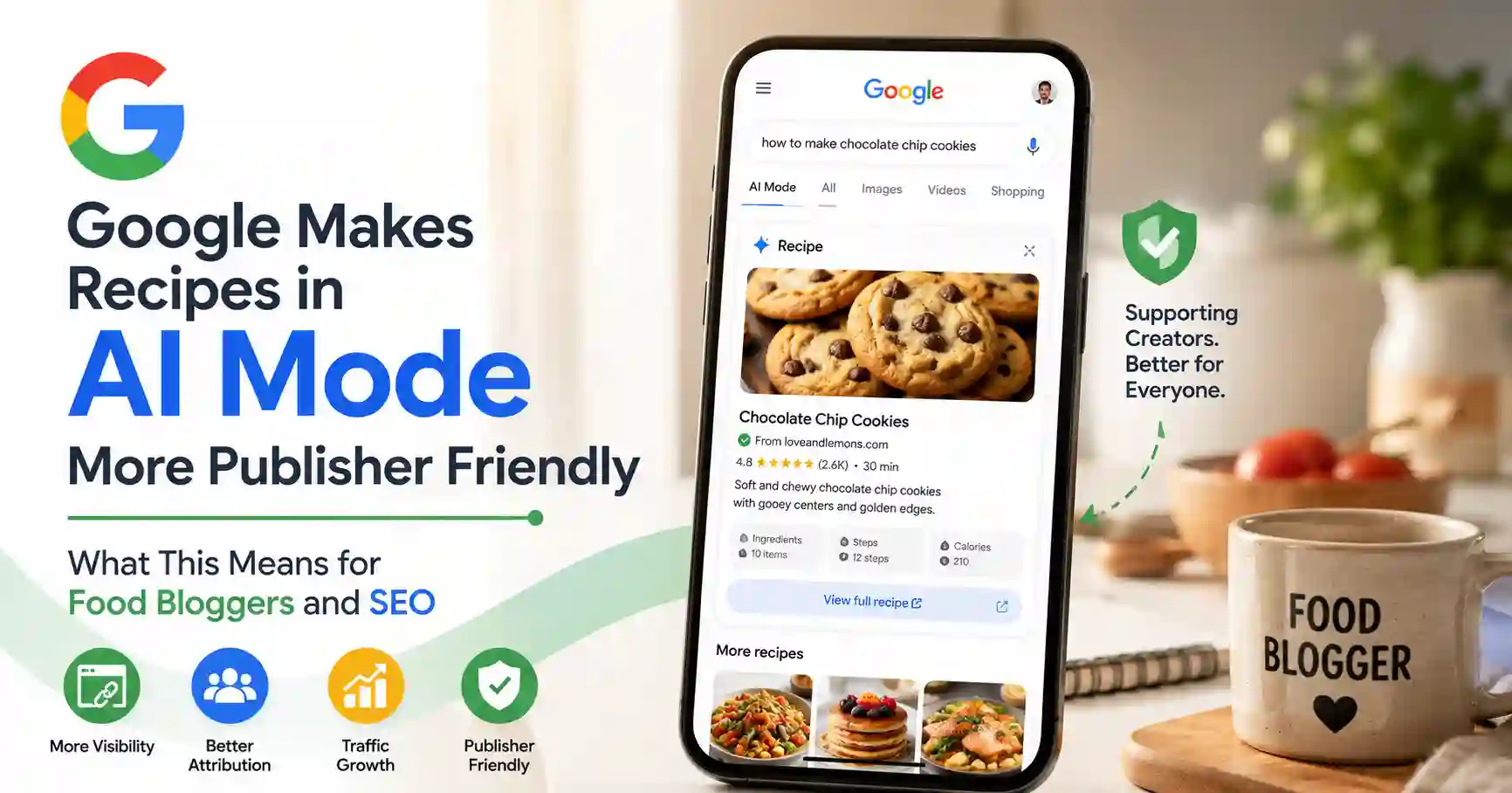
Have you ever searched for a recipe online and wondered whether AI-generated answers would eventually replace recipe websites?
Ever since Google started rolling out its AI-powered search features, food bloggers and digital publishers have been collectively sweating.
But there is a silver lining. Recent tweaks to AI Mode indicate that Google is leaning toward a more collaborative relationship with creators. Recipe content now surfaced in AI results includes clear attribution, actively nudging searchers back to the original source. Frankly, it is about time.
For culinary creators, this is not just another minor search update. It is a massive signal that Google understands it must balance its flashy AI tools with the survival of independent web traffic.
If you publish recipes, run a food blog, or handle culinary SEO, you need to understand these changes immediately.
Why is Google making recipes in AI Mode more publisher friendly?
Recipes are one of the most searched content types on the internet.
Millions of users search every day for:
- Dinner ideas
- Healthy meals
- Quick recipes
- Desserts
- Vegetarian dishes
- Baking tips
Since recipes use highly structured formats, AI handles their summaries easily.
Yet, publishers worry. If a machine spits out the directions, who actually clicks through to the food blog?
Google’s newest updates seem built to fix this. They are trying to point searchers back to the kitchen source while keeping the AI search slick.
As content strategist Nina Lopez explains:
“AI should help users discover great content—not replace the people who create it.”
That philosophy seems increasingly reflected in Google’s recent search updates.
How does this update benefit recipe publishers?
One of the biggest advantages is improved visibility.
Rather than treating recipes as simple pieces of information, AI Mode is becoming better at recognizing complete recipe content, including:
- Ingredients
- Preparation steps
- Cooking times
- Nutritional details
- Recipe creators
- Supporting context
This delivers a quick snapshot of the dish, coaxing readers over to the creator’s page for the real instructions.
It keeps Google pleased. Consequently, bloggers maintain search rankings without bleeding traffic.
Publishers investing in AI-friendly content strategies should also explore Google Search Console AI performance reports rolling out, which explains how AI visibility is becoming easier to measure.
What role does structured data play in AI recipe search?
Structured data has always been important for recipe websites.
Today, it’s becoming even more valuable.
Recipe schema helps search engines understand:
- Recipe name
- Ingredients
- Cooking instructions
- Images
- Ratings
- Nutrition information
- Preparation time
Google struggles to read minds. AI search relies heavily on structured data to make sense of your pages. Use recipe schema consistently, and you stand a real chance of hitting those top, flashy search spots.
Clear structure benefits both traditional search and AI-generated results.
How should recipe creators optimize content for AI Mode?
Creating high-quality recipes is still the foundation of success.
However, AI search introduces additional considerations.
Publishers should focus on:
Original expertise
Share personal cooking experience rather than generic instructions.
Helpful explanations
Include cooking tips, ingredient substitutions, and troubleshooting advice.
High-quality images
Original photography builds trust and improves user experience.
Clear formatting
Use headings, lists, and structured recipe cards.
Regular updates
Refresh older recipes with improved instructions and current information.
These improvements help both readers and search engines understand your content more effectively.
Businesses interested in broader AI search optimization should also read The New SEO Stack: What Replaces Your Old Toolset, which explains how modern SEO now extends beyond traditional ranking factors.
Will AI Mode reduce traffic to recipe websites?
That’s one of the biggest questions publishers continue asking.
The answer depends on content quality.
Simple factual queries may increasingly be answered directly by AI.
However, recipes often involve:
- Personal preferences
- Step-by-step guidance
- Photos
- Reviews
- Ingredient variations
- Cooking techniques
These are experiences AI summaries cannot fully replace.
Publishers who create original, trustworthy, and experience-based content are more likely to remain valuable sources for users.
What does this mean for the future of recipe SEO?
Recipe SEO is evolving rather than disappearing.
Future success will likely depend on:
- Structured data
- Original photography
- Helpful cooking advice
- Strong E-E-A-T signals
- Entity optimization
- High-quality user experience
You need real experts, not just SEO wizards. Trust matters way more than search rankings, it is that simple.
For official guidance on recipe structured data, Google Search Central Recipe Structured Data Documentation provides detailed implementation recommendations.
Final Thoughts
Google’s efforts to make recipes in AI Mode more publisher friendly represent an encouraging development for food bloggers and recipe websites.
AI keeps shifting how search works, but Google seems set on keeping creators in the loop instead of just pushing them out. The signal to publishers is plain. Keep cranking out genuine recipes, fix your structured data, polish the site flow, and lean into real-world expertise to earn trust. These basics matter every bit as much now as they did back then. How do you see AI search reshuffling recipe sites soon? Let us know what you think below.
FAQs
What is Google AI Mode?
Google AI Mode parses diverse search results, slicing through digital clutter with ease. It is effective. Honestly, I find it quite useful.
Why are recipe publishers important to Google?
Recipe blogs spew endless culinary content for home cooks. They matter to Google, and frankly, they have damn well earned it.
Does recipe schema improve AI search visibility?
Yes. Structured recipe data helps search engines better understand recipe content and present it accurately in search experiences.
Should food bloggers worry about AI search?
Hardly, Creators drafting genuine recipes possess true worth. Why settle for cold algorithms when you clearly hunger for humanity?
What is the best SEO strategy for recipe websites in 2026?
Prioritize structured data and unique recipes. Share crisp photos, offer clever hacks, Honestly, that is exactly how you build digital authority.

Kumar Swamy is the CEO of Itech Manthra Pvt Ltd and a dedicated Article Writer and SEO Specialist. With a wealth of experience in crafting high-quality content, he focuses on technology, business, and current events, ensuring that readers receive timely and relevant insights.
As a technical SEO expert, Kumar Swamy employs effective strategies to optimize websites for search engines, boosting visibility and performance. Passionate about sharing knowledge, he aims to empower audiences with informative and engaging articles.
Connect with Kumar Swamy to explore the evolving landscape of content creation!