
- Custom visuals can push organic traffic beyond 100%, beating stock images on engagement and click through rates.
- Small businesses can use original visuals to strengthen SEO, brand authority, and shareability, even if the budget is a bit tight.
- The biggest win is that search engines tend to reward unique, situationally relevant imagery, not only clean text optimization.
Why custom visuals feel more important than most people assume?
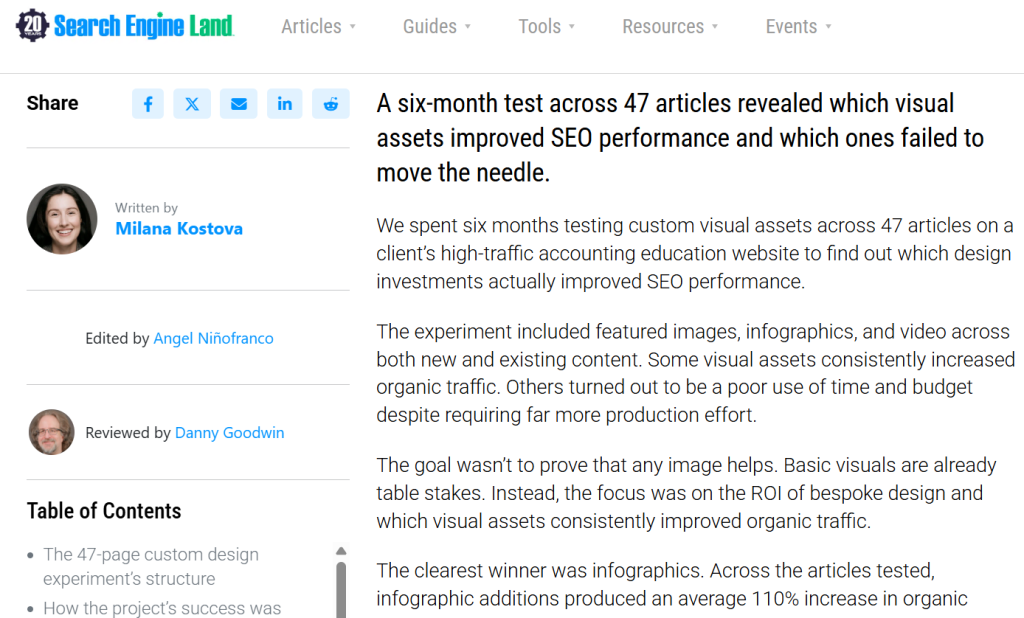
Custom visuals do more than make your posts look polished. They can make Google take a closer look. A recent study suggested that when you include original visuals inside content, organic traffic can rise by as much as 110%. Yet, many marketers still reach for stock images or basic infographic templates. Those are not aligned in the same way. Original graphics tend to pull people in because they are distinct, context appropriate, and actually match what the page is talking about, not just what it resembles.
For small businesses, this means a chance to level the field, against bigger brands, in a more fair way. A single well designed diagram or chart can make your blog post the definitive resource in a niche, and it can be memorable. the takeaway? Visual uniqueness, signals quality to both users and search engines, which is the whole point really.
Summary: Custom visuals turn regular content into high performing assets, and those assets pull traffic and earn links.
How exactly do custom visuals boost SEO and traffic?
Direct answer: Original visuals improve dwell time, click through rates, and backlink potential, and those are SEO ranking factors that matter.
When Google indexes a page, it does more than just read the text. visual content influences user behavior metrics like time on page and social shares. And then, custom visuals, raise the odds that someone will point to your piece as a reference, or embed it elsewhere, when they are writing their own article.
Case Study: A mid sized e-commerce blog built a sequence of bespoke product comparison charts. Within 3 months , their organic search traffic jumped by 87% , and the pages with custom visuals had about 65% more average time on page versus pages that relied on stock images.
Summary: SEO isn’t only about keywords, visual distinctiveness seems to matter in ranking in a measurable way.
Can smaller businesses afford custom visuals?
Direct answer: Yes , and in many cases the ROI beats the expense, particularly if the visuals are reused across multiple channels.
Putting money into custom visuals doesn’t have to mean a huge budget. Tools like Canva Pro, Figma, or hiring a freelance designer can get you sharp graphics at a reasonable rate. It can help to create templates for recurring content formats , that way you save time and keep everything consistent.
| Visual Type | Cost Estimate | Time to Create | Impact Potential | Reusability |
|---|---|---|---|---|
| Infographics | $50–$200 | 2–5 hours | High | High |
| Custom Diagrams | $30–$150 | 1–3 hours | Medium-High | Medium |
| Branded Photos | $100–$500 | 0.5–2 days | High | High |
| Data Visualizations | $50–$300 | 1–4 hours | Very High | High |
Key Insight: Even small investments in custom visuals can give disproportionate traffic bumps if used with intent, like, at the right moments
What visual kinds tend to earn the best engagement?
Direct answer: Charts, branded images, and interactive visuals beat generic stock photos in practice.
- Charts & graphs: Aid readers to digest complicated info fast, and with less friction
- Branded visuals: Strengthen identity, then improve recall in crowded spaces
- Interactive content: Quizzes, sliders and embedded maps extend the time someone stays on the page
Example: HubSpot noted that posts with custom charts and illustrations got 3x more backlinks compared to posts that relied on stock images only.
Summary: Pick visuals that explain ideas clearly and match your content message on purpose.
Are there any risks or tradeoffs from building custom visuals?
The main risk is spending time and money without any clear tie-in to SEO and content goals, then you end up with “nice” visuals but zero traction, you know.
Overly complex graphics can make people pause, or just feel lost. Also if your images are not properly optimized, page load speed gets worse, and that tends to hurt SEO too. Make sure to add alt text, compress the images, and keep everything responsive for mobile users, please.
In short, custom visuals can be powerful, but strategy plus optimization basically decides whether they actually work.
Step-by-step: Using custom visuals for more organic traffic
- Audit what you already have, and spot the posts that are lacking visuals or missing them entirely.
- Focus on the pages with more traffic, or those with strong potential, then upgrade visuals there first.
- Pick the suitable visual format, like a chart, an infographic, a photo, or a small interactive element.
- Design for clarity and branding, keep it simple to read, and keep the look consistent across pages.
- Do the SEO side too: file names, alt text, and compression.
- Promote and reuse: post the visuals on social media, embed them in guest posts, or drop them into newsletters.
Summary: A organized route helps visuals become measurable SEO and traffic benefits, not just pretty stuff.
Conclusion:
Investing in custom visuals is no longer optional, it’s a growth plan. Beyond surface looks, they directly affect SEO, user interaction, and trust. Small businesses that weave in original graphics in a deliberate way can outperform rivals even when those rivals have larger marketing budgets.

Kumar Swamy is the CEO of Itech Manthra Pvt Ltd and a dedicated Article Writer and SEO Specialist. With a wealth of experience in crafting high-quality content, he focuses on technology, business, and current events, ensuring that readers receive timely and relevant insights.
As a technical SEO expert, Kumar Swamy employs effective strategies to optimize websites for search engines, boosting visibility and performance. Passionate about sharing knowledge, he aims to empower audiences with informative and engaging articles.
Connect with Kumar Swamy to explore the evolving landscape of content creation!