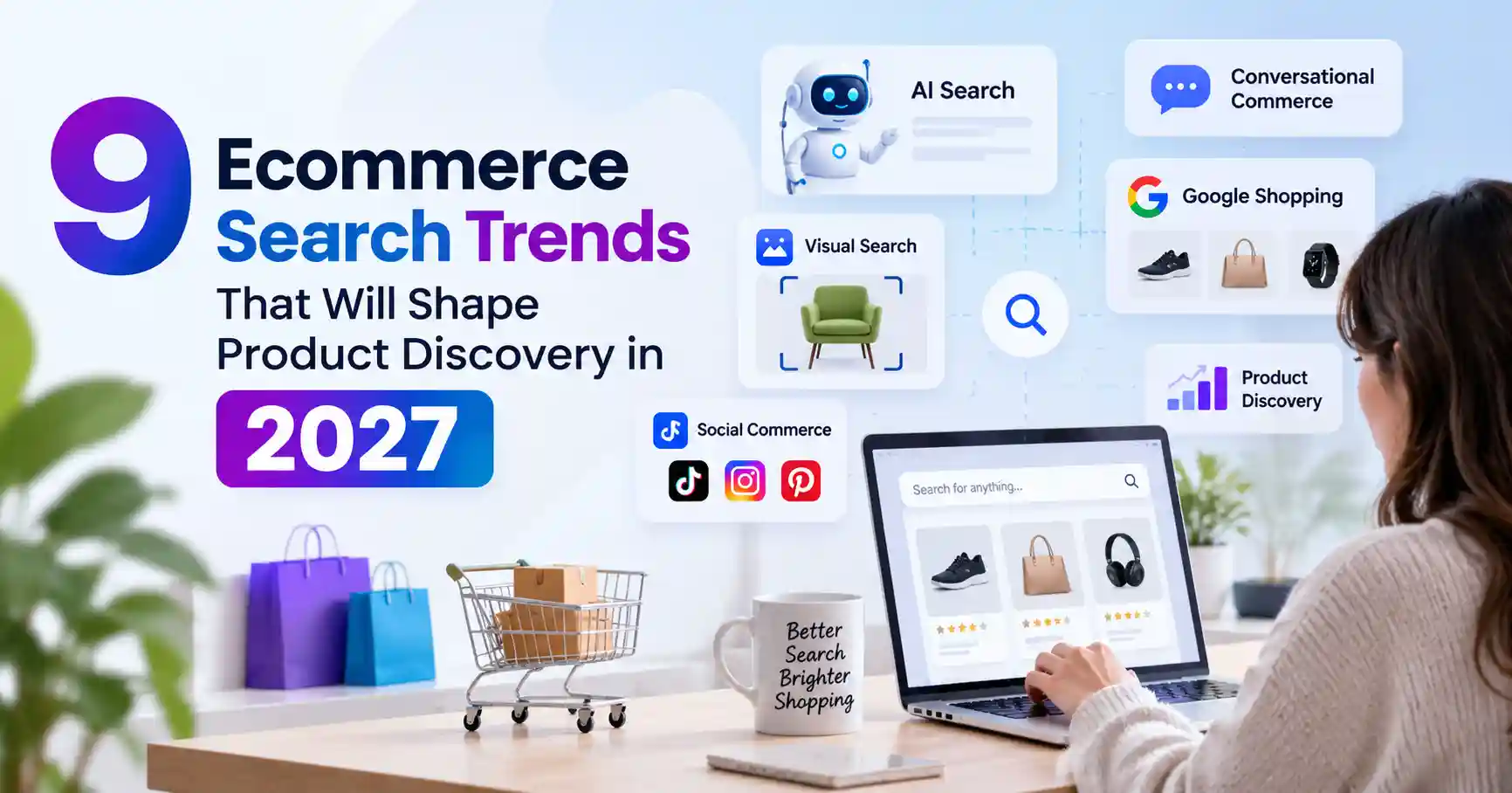
What happens when your customer stops searching for a product the way they used to? Instead of punching a quick keyword into Google, they might ask an AI chatbot for three top picks, compare specs right inside a shopping pane, search by snapshot, watch a creator use the item, or just ramble out a full sentence about what they need.
Traditional search isn’t dead yet. Far from it. But ecommerce search is getting messy, conversational, and hyper focused on the actual product.
For brands, the headache in 2027 won’t be chasing every single new gimmick. It’ll be figuring out which shifts actually drive discovery, clicks, sales, and cash, here are nine trends worth watching closely.
1. Is Google Search still important for ecommerce in 2027?
Yes. Despite all the talk about AI replacing traditional search, Google remains an important product discovery channel.
People still search for things like “best running shoes,” “wireless headphones under $100” and “skincare for oily skin.” What is changing is what happens after that search.
Search results increasingly combine organic listings, shopping results, reviews, images, videos and AI generated information. That means ranking a product page isn’t the only objective anymore.
The bigger goal is to make your brand and products understandable across the entire search journey.
Traditional ecommerce SEO still matters. But it now needs to work alongside product feeds, structured data, useful content, reviews and strong product information.
2. Will AI search change ecommerce product discovery?
Sure, but not in the easy way most predictions make it sound.
With AI search, shoppers can talk through what they need. They do not have to hunt for one “right” phrase.
For example, someone might say: “I need a light laptop for school. It should last a long time on a charge. It also needs to be under $800.”
That is a different kind of search than typing “best laptop under 800.”
AI systems can interpret the requirements, compare products and narrow the options. This makes product information increasingly important.
Your product page needs to answer practical questions clearly: What is it? Who is it for? What does it cost? What makes it different? What are the limitations? What do customers say about it?
In other words, AI search for ecommerce rewards useful product information, not just keyword repetition.
3. Are AI Overviews becoming part of ecommerce SEO?
They are becoming increasingly relevant to product searches, which creates a new visibility challenge.
A shopper may get useful information directly inside the search experience before visiting a retailer’s website. That can change the relationship between rankings and clicks.
This doesn’t mean organic SEO is dead. It means ecommerce SEO needs to account for visibility beyond the traditional blue links.
Brands should pay attention to the questions surrounding their products, not just the product keywords themselves.
Forget just “standing desk.” Instead, make truly helpful stuff. Think about how much room one needs, what features actually work for a home office, or how different materials stack up. It’s not complicated. You just want search engines to see loads of solid info, proving you know your stuff and your products inside out.
4. Why is Google Shopping SEO becoming more important?
Product searches are different from informational searches.
When someone searches for a product, they often want to see the product, price, availability, reviews and alternatives immediately. That’s where Google Shopping becomes particularly valuable.
For ecommerce brands, product feeds and accurate product data are no longer background technical tasks. They are part of search visibility.
Ensuring product details, names, descriptions, prices, stock status, everything, are dead on correct is crucial. That’s the whole kit and caboodle, Structured data, you know, it’s how search engines really get it. Your site converses with humans about the goods. But your structured data, that’s the direct line to computers, plainly stating its identity.
5. Will conversational commerce become normal?
Shopping’s changing from just searching and clicking to asking, comparing, and then deciding, this conversational commerce feels more like chatting with a smart sales clerk. Forget endless category pages. People can now ask super specific questions and then narrow down what they need through back and forth chats. This means brands should really be publishing content that answers these natural language questions.
Don’t write only for phrases such as “best coffee machine.”
Also cover questions like:
“Which coffee machine is easiest to clean?”
“What coffee machine is best for a small apartment?”
“Is this model worth paying more for?”
These longer, conversational searches can reveal much more about purchase intent.
6. Is visual search becoming a serious ecommerce trend?
People don’t just type anymore when looking for stuff. You can snap a picture instead. Visual search lets shoppers find products using an image, Think fashion, furniture, decor, beauty, anywhere looks matter.
Google’s image and visual search experiences are making product images more important to ecommerce visibility.
That means product photography shouldn’t be treated as decoration.
Use clear product images, multiple angles, useful filenames, accurate alt text and consistent product information. Show the product in context when that helps shoppers understand size, style or use.
For visually driven ecommerce brands, visual search could become one of the most practical ecommerce SEO trends to prepare for.
7. Are social platforms becoming search engines for products?
Folks don’t always start hunting for stuff on Google. Often, it’s a creator’s clip, an Insta drop, a quick TikTok, a Pinterest find, or what an influencer spills. A real maze, sure, but crucial. Shopping trips online don’t stick to just one spot anymore, Social platforms now blend seeing new things, hearing about them, and then buying. How people look might not go through Google, but that core question? It’s still there:
“Show me something I might want.”
Brands should therefore create content that works both as marketing and as product discovery material.
Demonstrations, comparisons, tutorials, customer experiences and short product videos can help shoppers understand products before they ever reach a product page.
8. Will AI recommendations send better ecommerce traffic?
One interesting development is that AI referrals can be smaller in volume while still being commercially meaningful.
Why?
Because someone asking an AI assistant to recommend a product has often already explained what they want.
That gives the recommendation system useful context about the shopper’s needs.
Seriously, if you’re selling online, traffic isn’t everything. You’d better watch assisted conversions, average order value, your actual conversion rates, and branded searches. Also, those AI flagged products, they matter.
This also connects with broader AI visibility. A customer may discover your brand in an AI answer and visit your website later through another channel.
That journey can be difficult to attribute, but it still matters.
9. Is agentic commerce the ecommerce trend to bet everything on?
This is where ecommerce marketers should slow down.
The idea of AI agents finding products, making decisions and completing purchases sounds like the natural next step. And major technology companies are clearly building toward more agent assisted shopping experiences.
But the technology and adoption are still developing.
For most ecommerce businesses, there is little reason to rebuild an entire store around agentic checkout simply because it is fashionable.
Instead, prepare the fundamentals.
Keep product information accurate. Maintain reliable feeds. Make pricing and inventory clear. Use structured data. Keep product variants organized. Make shipping and returns easy to understand.
AI’s gonna nail your store later on, but today? Customers are already grabbing those benefits.
What should ecommerce brands actually do in 2027?
The biggest mistake would be treating every new search feature as a separate SEO strategy.
A better approach is to build one strong product discovery foundation.
Start with technically sound ecommerce SEO. Then improve product data, structured information, product reviews, images and useful supporting content.
Then build on AI search, chat style questions, image based finding, and social shopping. Base it on the places your buyers truly hang out.
As Google and other sites lean into talking search, brands that show clear product details will do better. They are simpler for shoppers to read and simpler for systems to parse.
So the main ecommerce search lesson for 2027 is this. Do not only plan for where people type queries. Plan for how people figure out what to buy.
FAQ’s
Folks still use search engines to find stuff, that’s why SEO isn’t dead. It just has to play nice with product data, shopping ads, AI stuff, and other ways people discover products now. It’s a team effort.
Yes. Traditional SEO remains important because shoppers continue to use search engines to discover products. The difference is that SEO now needs to work alongside product data, shopping results, AI experiences and other discovery channels.
Share correct product details first. Put useful information up front. Add clear data fields. Show real reviews. List product facts in a simple way. Make each page work well for regular visitors and for tools that read pages. Use clean, readable page structure so search systems can crawl it without trouble.
Conversational commerce. You just talk to a bot and buy stuff. No weird buzzwords involved. It honestly makes shopping way simpler.
Not necessarily. Agentic shopping is developing quickly, but adoption and capabilities vary. Most businesses should first make their product data, inventory, pricing, structured data and checkout experience reliable before investing heavily in emerging agentic features.
Conclusion
Ecommerce search isn’t going away. In fact, it’s sprawling all over: Google, shopping sites, AI helpers, social feeds, visual search, and more and more, even conversations.
Brands don’t have to jump on every single new platform. What really matters is grasping how customers move from just noticing something to thinking about buying it, and finally, to making the purchase.
So, stick to the basics: super helpful product info, solid SEO for your online store, spot on product data, visuals that grab attention. And honest answers to questions. After that, once newer channels start pulling in money, give them a try.

Kumar Swamy is the CEO of Itech Manthra Pvt Ltd and a dedicated Article Writer and SEO Specialist. With a wealth of experience in crafting high-quality content, he focuses on technology, business, and current events, ensuring that readers receive timely and relevant insights.
As a technical SEO expert, Kumar Swamy employs effective strategies to optimize websites for search engines, boosting visibility and performance. Passionate about sharing knowledge, he aims to empower audiences with informative and engaging articles.
Connect with Kumar Swamy to explore the evolving landscape of content creation!