Ever launched a campaign, then later notice your ads were basically going to the wrong crowd. It happens a lot to marketers. After all, when you show an ad to an intern, but you actually meant a CEO, the outcomes are rarely great, and it feels frustrating right away.
This is also why Microsoft’s latest advertising update is getting a bunch of attention.
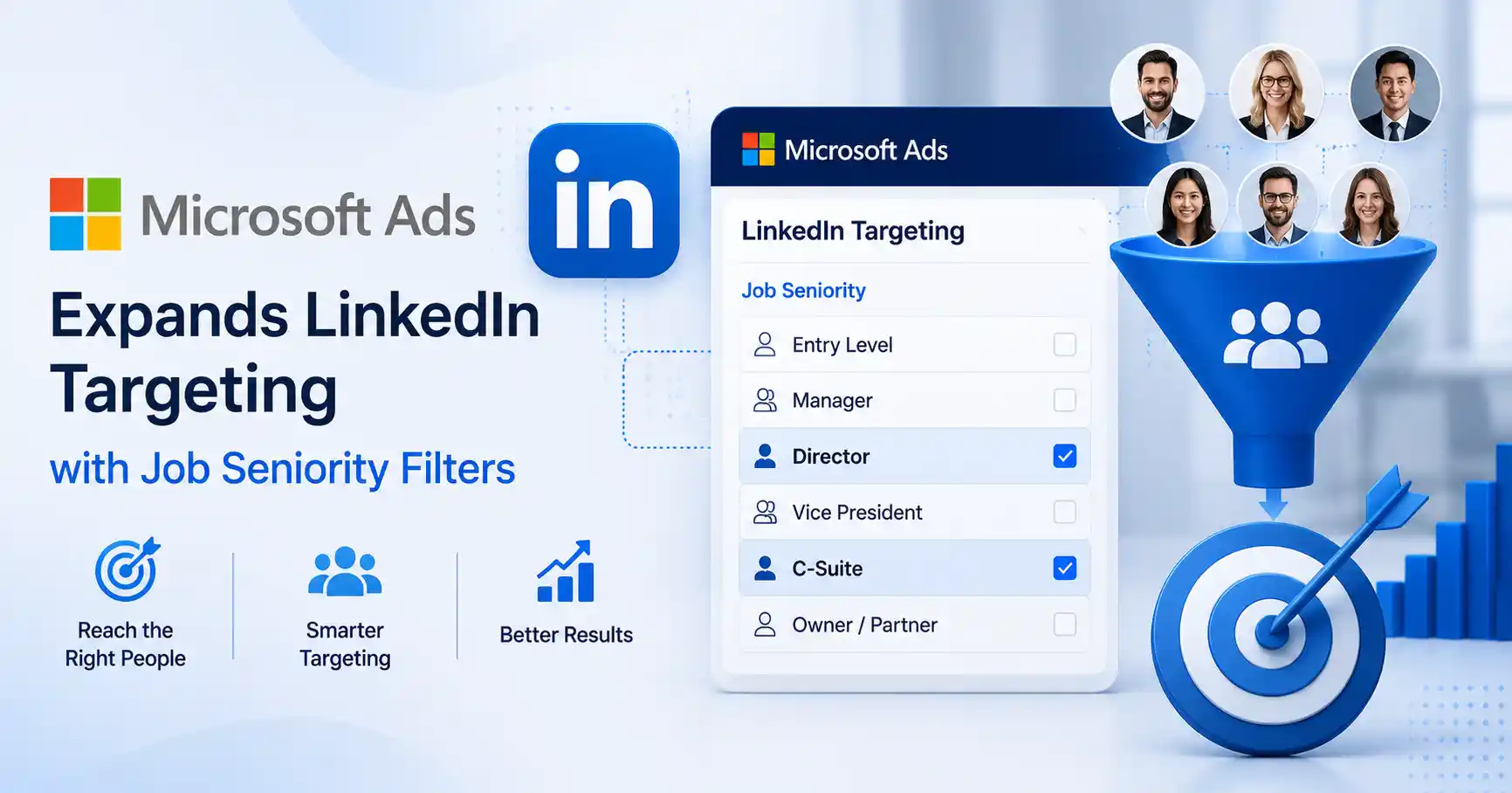
Microsoft Ads has broadened its LinkedIn targeting options by adding job seniority filters, so advertisers can reach key decision-makers in a more pinpoint way. For B2B marketers especially, this could be a real turning point.
At a moment when personalization, and audience quality matter more than ever before, this update lands at a pretty interesting time for online advertising.
What are Microsoft Ads job seniority filters and why do they matter for audience targeting?
Microsoft Ads already lets advertisers use LinkedIn profile targeting via categories like company, industry, and job function. Now job seniority is in that mix too, so yeah more segmentation options are possible.
In simple terms, advertisers can target users based on career levels such as:
- Entry-level professionals
- Managers
- Directors
- Vice Presidents
- C-suite executives
Owners and partners, sort of this extra layer of audience direction it helps companies deliver promotions to the right people not just fling things everywhere like a wide net.
For instance, imagine a SaaS business offering enterprise tools, it might need directors and executives instead of junior staff who are not really tied in with the buying decisions.
As marketing strategist Nina Lopez mentions,
“Better targeting doesn’t just boost clicks. It improves conversations with the right audience.”
That accuracy is getting more and more important, because B2B buyers expect tailored experiences that actually fit them.
Businesses adapting to changing search and advertising behaviors should also understand the growing SEO GEO gap between AI search and organic traffic as AI reshapes digital discovery.
How could LinkedIn targeting improve B2B advertising campaigns?
LinkedIn data has long been one of Microsoft’s biggest advantages in the advertising space.
Unlike many advertising platforms that rely heavily on browsing behavior, LinkedIn offers professional identity data, including:
- Job titles
- Industries
- Company information
- Career stages
- Professional interests
Adding job seniority makes B2B advertising even more precise.
Imagine these scenarios:
- HR software targeting HR directors
- Cybersecurity solutions reaching CIOs
- Marketing platforms connecting with CMOs
- Financial services targeting business owners
Instead of paying for broad exposure, advertisers can put their budgets where they matter most, and not spread it too widely everywhere.
This usually makes the campaign run more efficiently and may improve the return on ad spend.
Why is job seniority becoming more important in digital marketing?
Modern marketing isn’t just about finding customers. It’s about finding the right customers.
Different people within the same company often have different responsibilities.
An entry-level employee may research products, but a vice president approves the purchase.
That’s where account based marketing becomes especially valuable.
Job seniority filters help advertisers align campaigns with buying roles throughout the customer journey.
This approach supports:
- Better lead quality
- Higher conversion rates
- Improved personalization
- More efficient advertising budgets
According to quite a few B2B marketers, figuring out the decision makers is often one of the most difficult pieces of advertising. Seniority targeting helps, solve that problem in a more precise way.
As digital advertising evolves, AI is also changing user behavior. Research shows that users behave differently in AI Overviews and AI Mode, creating new opportunities for smarter audience segmentation.
What does this update mean for audience segmentation and campaign performance?
Audience segmentation has always been a cornerstone of successful marketing.
The more relevant your ads, the more likely people are to engage.
With job seniority filters, marketers can create highly targeted campaigns based on:
- Career stage
- Decision-making authority
- Organizational hierarchy
This strengthens audience segmentation strategies by allowing advertisers to tailor messaging.
For example:
An ad shown to a CEO might emphasize business growth.
The same product advertised to a manager may focus on productivity and team efficiency.
Personalized messaging often improves:
- Click-through rates
- Conversion rates
- Lead quality
- Campaign ROI
The addition of seniority filters gives advertisers another tool to refine campaigns without increasing complexity.
Could Microsoft Ads become a stronger competitor in B2B advertising?
Google pretty much dominates the search advertising world, but Microsoft has quietly built up a strong footing in B2B marketing thanks to the LinkedIn integration thing.
This latest update strengthens that advantage.
Microsoft Ads now offers something many platforms struggle to provide: verified professional data.
As privacy regulations continue to evolve, first-party and professional data become increasingly valuable.
For advertisers targeting businesses, LinkedIn-powered targeting may become one of the most effective tools available.
This also reflects a broader industry trend toward digital advertising powered by contextual and professional signals rather than third-party cookies.
For advertisers wanting deeper insights into audience targeting, Microsoft’s official LinkedIn profile targeting documentation provides additional guidance.
How should marketers use job seniority filters effectively?
While job seniority filters are powerful, they work best when combined with other targeting options.
Best practices include:
- Combine seniority with industry targeting
- Layer company size filters when relevant
- Personalize ad copy for each seniority level
- Test multiple audience segments
- Measure conversion quality instead of clicks alone
For example:
A campaign targeting C-level executives may require concise messaging focused on outcomes.
A campaign targeting managers might emphasize operational benefits.
Effective campaign optimization isn’t just about reaching more people. It’s about reaching the right people at the right time.
Final Thoughts
Microsoft Ads is now expanding LinkedIn targeting, with job seniority filters, and yeah it might look like a small change, but the effects are pretty huge in practice.
In a world where personalization really matters for outcomes, getting in front of decision-makers more precisely can boost campaign results and also cut down wasted spend.
For B2B marketers this update gives a fresh lever, you can fine tune audience approach, and push stronger lead acquisition efforts.
As ad platforms keep evolving, it may be smarter targeting, not just bigger budgets, that ends up being the real competitive advantage.
So what do you think about Microsoft’s latest targeting update? Do job seniority filters help your campaigns, or are you already managing that another way? Drop your thoughts in the comments below.
FAQs
What are job seniority filters in Microsoft Ads?
Job seniority filters allow advertisers to target users based on career levels such as manager, director, executive, or owner.
Is LinkedIn targeting available in Microsoft Ads?
Yes. Microsoft Ads supports LinkedIn profile targeting using company, industry, job function, and now job seniority.
Why is job seniority important in B2B advertising?
Different professionals influence buying decisions differently. Seniority targeting helps reach decision-makers more effectively.
Can small businesses benefit from this feature?
Absolutely. Smaller businesses can use precise targeting to maximize advertising budgets and improve lead quality.
Does this feature replace traditional audience targeting?
No. Job seniority works best when combined with other audience targeting strategies.

Kumar Swamy is the CEO of Itech Manthra Pvt Ltd and a dedicated Article Writer and SEO Specialist. With a wealth of experience in crafting high-quality content, he focuses on technology, business, and current events, ensuring that readers receive timely and relevant insights.
As a technical SEO expert, Kumar Swamy employs effective strategies to optimize websites for search engines, boosting visibility and performance. Passionate about sharing knowledge, he aims to empower audiences with informative and engaging articles.
Connect with Kumar Swamy to explore the evolving landscape of content creation!