
Introduction
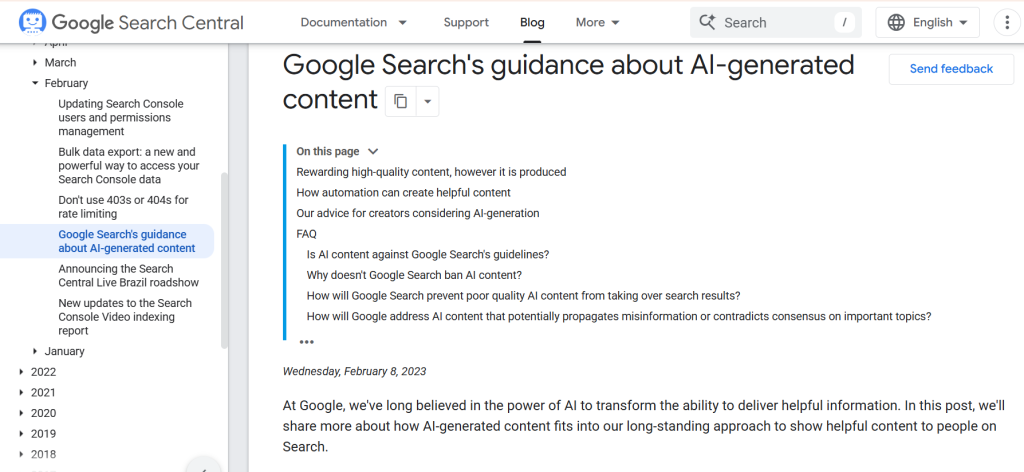
A bunch of SEO teams are still treating Google’s AI Overviews and generative search features like some experimental side project, a little extra you ignore until it gets serious. That’s a mistake. Google released official guidance for optimizing content for generative AI search experiences, including AI Overviews. The key point isn’t just “use AI-friendly formatting.” It is that Google is quietly redefining what “helpful” content means for search. This guidance comes straight from Google Search Central, not a random blog post. If you do SEO for a SaaS company, agency, ecommerce brand, or local business, this shift is already affecting traffic patterns, click-through rates, and content strategy today. Many pages that look great in traditional rankings are not in a good position for AI-generated answers. Google confirms this.
Key Insight
- Google still says the basics matter, like helpful content, how easy it is for crawlers to get in, solid page experience, plus actually showing expertise.
- AI Overviews tend to favor answers that are concise, laid out in a clean way, tied to topical authority, and backed by unique first-hand insights, not just the same keywords repeated.
- For small businesses, there can be real room to win if they lean into experience driven writing instead of generic SEO copy that feels templated.
What did Google really say about optimizing for AI search?
Short version: aim for content that feels helpful and written for people, make sure technical access is there, and deliver genuine added value, not “AI optimization hacks.” That guidance basically reaffirms what was already true, but now it leans harder into content clarity, context, and day to day usability.
Core Recommendations
- Helpful Content: Original, satisfying answers matter because AI summarizes pages that solve user problems.
- Technical SEO: Crawlability and indexing are essential; AI cannot use content it cannot reach.
- Page Experience: Fast, mobile-friendly UX matters as weak experiences reduce trust and engagement.
- Structured Formatting: Headings, lists, and tables help AI extract clean answers.
- Expertise & Trust: Real experience and authority are preferred by AI systems.
Main idea: Google rewards content that behaves like a trustworthy expert, not just a keyword machine.
How Do AI Overviews Change SEO Strategy?
SEO is shifting from “just ranking pages” to “becoming the cited source inside AI-generated answers.” Google may provide answers directly while citing multiple sources. This can increase visibility even if clicks decrease. Being cited in AI results is a brand authority signal.
Effective AI-Visible Content
- Direct answers near the top.
- Clear subheadings phrased as real questions.
- Short explanations first, then deeper detail.
- Lists, comparison tables, and readable layout.
- Original insights or lived experience.
- Supporting examples and data.
Takeaway: The future winners in SEO are brands whose content can be easily extracted, trusted, and cited by AI systems.
What Kind of Content Works Best in Generative AI Search?
Short answer: Content with original experience, clear structure, and high information density has the strongest advantage. Generic content is increasingly ineffective.
High-Value Content Examples
- Original Case Studies: Very High AI visibility; unique data cannot be easily imitated.
- Expert Tutorials: High visibility; strong topical authority.
- Comparison Content: High visibility; AI condenses comparisons.
- First-Hand Reviews: High visibility; experience signals matter.
- Generic Listicles: Low visibility; easy for AI to replicate.
- Thin Affiliate Pages: Very Low visibility; low unique value.
- Keyword-Stuffed Pages: Very Low visibility; weak readability and trust signals.
Supporting examples: screenshots, workflows, metrics, mistakes, setup timelines, pricing tradeoffs, operational lessons.
Takeaway: Content reflecting lived expertise is more defensible in AI-driven search.
Can Small Businesses Compete in AI Search?
Yes, and in some cases they may have an edge over large publishers. AI systems prioritize specificity, experience signals, precise answers, and contextual relevance over generic authority.
Local SEO Example
A small dental clinic publishing real patient financing questions, recovery timelines, treatment comparisons, pricing explanations, and local insurance insights may become highly quotable in AI healthcare queries. Founder-led content explaining real decisions, specific mistakes, or exact customer problems also performs well.
Takeaway: Small businesses can compete by publishing what only they know from lived experience.
What Google’s Guide Does Not Spell Out
Google avoids stating that AI search may reduce clicks. AI Overviews provide answers directly, which can reduce traffic for informational queries.
| Content Type | AI Visibility Potential | Why It Works |
|---|---|---|
| Original Case Studies | Very High | Unique data cannot be imitated as easily |
| Expert Tutorials | High | Clear topical credibility |
| Comparison Content | High | AI often condenses comparison details |
| First-Hand Reviews | High | Real-world experience signals carry weight |
| Generic Listicles | Low | Easy for AI to reproduce |
| Thin Affiliate Pages | Very Low | Little unique value, mostly a wrapper |
| Keyword-Stuffed Pages | Very Low | Thin readability and weak trust signals |
Implications
- Informational Traffic: Top-of-funnel visibility may shrink.
- Brand Visibility: Impressions, mentions, and citations may matter more than clicks.
- Conversion-Focused Content: Transactional and experience-rich pages may outperform broad awareness content.
Takeaway: AI search lowers the value of generic content and raises the value of differentiated expertise.
How Should SEO Teams Adapt Right Now?
Focus on clarity, authority, structured answers, and proprietary insight rather than volume.
Practical Framework
- Rewrite Key Pages: Answer-first introductions, brief paragraphs, clear headings, scannable layout, lists, tables.
- Add First-Hand Experience: Screenshots, practical examples, customer stories, implementation details, real metrics, expert commentary.
- Build Topical Clusters: Related content around one tight topic cluster is more effective than scattered articles.
- Use More Comparison Content: Evaluative pages naturally trigger AI summarization.
- Invest in Original Data: Surveys, benchmarks, statistics, internal trends, operational insights.
Takeaway: The best AI search strategy is creating content AI cannot easily replace.
The Bigger Shift Most SEO Teams Haven’t Accepted Yet
SEO is moving from quantity to credibility, focusing on expertise, originality, brand trust, and real-world experience. Google’s guidance may seem conservative, but incentives are changing quickly. The brands that win will be those publishing the most reference-worthy content, not necessarily the most content.
Takeaway: SEO success is now determined by defensible know-how rather than raw content volume.

Kumar Swamy is the CEO of Itech Manthra Pvt Ltd and a dedicated Article Writer and SEO Specialist. With a wealth of experience in crafting high-quality content, he focuses on technology, business, and current events, ensuring that readers receive timely and relevant insights.
As a technical SEO expert, Kumar Swamy employs effective strategies to optimize websites for search engines, boosting visibility and performance. Passionate about sharing knowledge, he aims to empower audiences with informative and engaging articles.
Connect with Kumar Swamy to explore the evolving landscape of content creation!