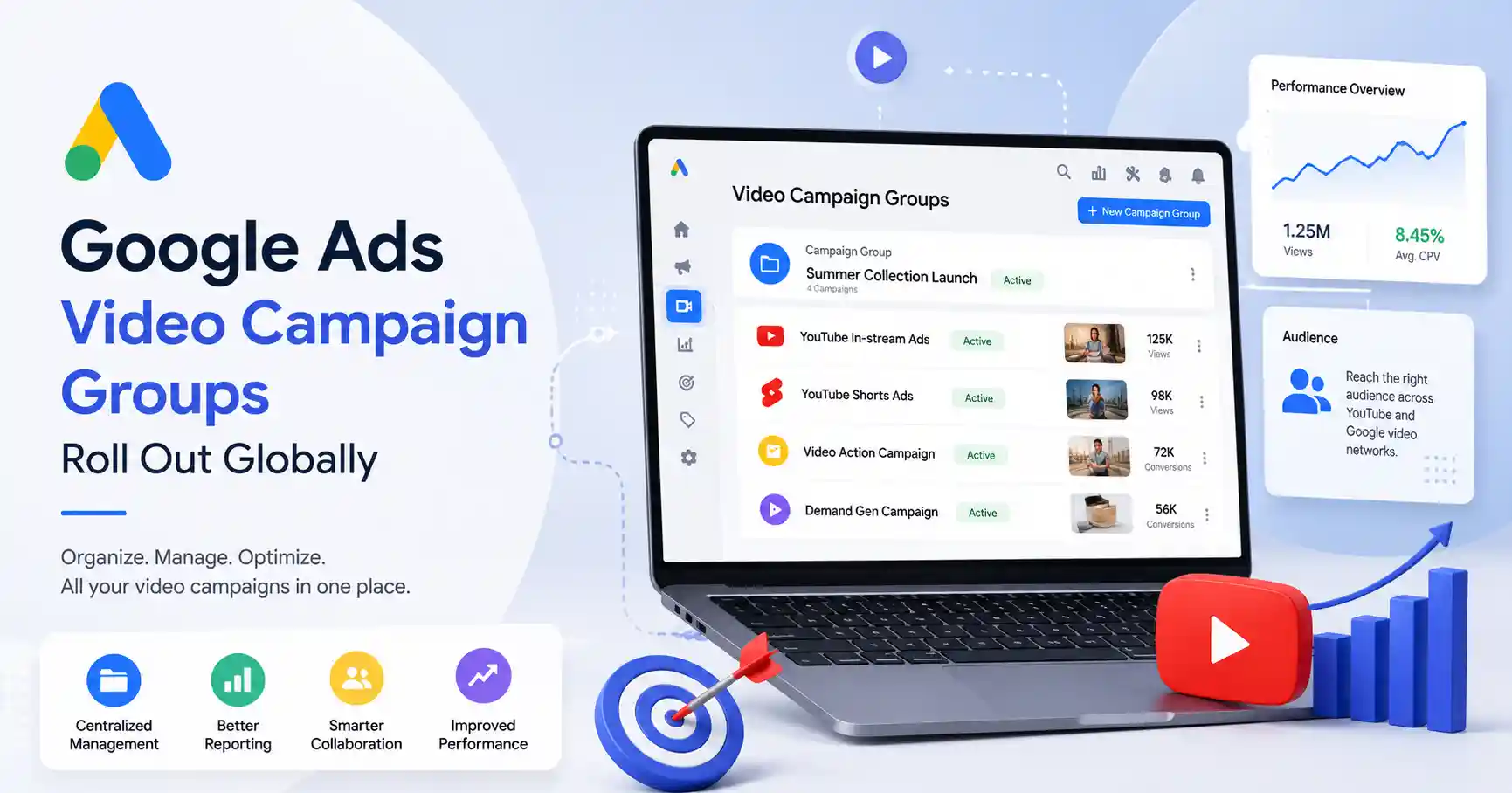
Video has become one of the most effective ways for brands to connect with customers but managing multiple video campaigns across different formats hasnt always been easy. If you have ever had to juggle YouTube ads, in-feed videos, Shorts, and several targeting options in separate campaigns, you know how fast it can get messy, in a real day-to-day way.
Google is now trying to smooth that out with the global rollout of Video Campaign Groups in Google Ads. This new feature gives advertisers a more centralized way to arrange and run multiple video campaigns, so it becomes easier to align creative assets, budgets and results across the different video formats.
For advertisers, agencies, and digital marketers, this update is not merely another interface tweak. It also looks like part of Googles larger push toward smarter campaign management and more efficient video advertising, overall.
What Are Google Ads Video Campaign Groups?
Google Ads Video Campaign Groups allow advertisers to organize multiple video campaigns under one parent group. Instead of treating each campaign like its own isolated thing, marketers can now manage related campaigns together , based on some shared objective. It’s basically less fragmented control, more unified oversight across all those video efforts.
For example, an ecommerce brand launching a seasonal promotion might run:
- YouTube In-Stream Ads
- YouTube Shorts Ads
- Video Action Campaigns
- Demand Gen video campaigns
Instead of handling each campaign separately, they can now arrange everything inside one campaign group, which makes reporting and optimization easier, in practice. It feels less chaotic, like people can keep the full picture without juggling, every little bit, alone.
Marketing strategist Daniel Foster says it like this:
“Campaign management isn’t getting simpler because marketers have fewer campaigns. It’s getting simpler because platforms are finally organizing them in ways that match real marketing workflows.”
Why Is Google Introducing Video Campaign Groups?
Google keeps edging toward campaign structures that lower complexity a bit while making collaboration easier, and overall coordination smoother.
A lot of advertisers are juggling dozens, or even hundreds, of video campaigns at the same time. If there isn’t a proper setup, it gets harder to track budgets, creative variations and performance, because everything starts mixing together.
Video Campaign Groups help solve several common challenges:
- Better campaign organization
- Easier reporting
- Faster creative management
- Improved collaboration across marketing teams
- Simpler optimization for large accounts
Instead of digging through long campaign lists, advertisers can group related campaigns by products, promotions, regions, or business purposes.
This method feels especially helpful for agencies managing several client accounts, and it keeps everything more coherent even when the workload piles up.
How Will Video Campaign Groups Improve Campaign Management?
One noticeable advantage is a more organized workflow, maybe also smoother.
Imagine launching a new smartphone.
Instead of creating separated campaigns for awareness, product demonstrations, YouTube Shorts, and remarketing, marketers can put everything together in one campaign group.
That structure makes it much easier to:
- Monitor campaign performance
- Compare creative assets
- Track overall objectives
- Manage budgets efficiently
- Coordinate seasonal promotions
Since video marketing is now more and more in the middle of digital advertising, better organization helps teams spend less time bouncing around in dashboards, and more time improving campaign performance.
Businesses investing in paid advertising should also remember that strong organic visibility complements paid campaigns. Building a technically optimized website creates better landing pages for advertising traffic. Our guide on Technical SEO ROI explains how technical improvements contribute to stronger long-term marketing performance.
What Does This Mean for YouTube Advertising?
Video consumption keeps going up across YouTube, Shorts, Connected TV, and also mobile devices.
People rarely engage with only one video, before they decide to buy. They could run into a product via a short video, then circle back to watch a more detailed review, and later act on a remarketing message before converting.
Google’s updated campaign structure mirrors that real life behavior.
Rather than treating campaigns as separate islands, advertisers are being asked to think about the entire customer journey.
This matters more and more, especially now that Google’s AI systems can improve how ads are shown across several formats automatically.
How Should Advertisers Prepare?
Even if the current campaigns keep running, marketers should begin to think , about how their existing campaign setup can be helped by improved organization, a bit more tidy, and maybe a more methodical flow.
A few practical recommendations include:
- Group campaigns around business objectives rather than individual formats.
- Keep creative assets organized for easier collaboration.
- Review campaign naming conventions.
- Monitor performance across the entire customer journey instead of isolated campaigns.
- Regularly evaluate landing pages to ensure advertising traffic reaches optimized destinations.
Maintaining high-performing landing pages remains essential for both paid and organic marketing. Regular SEO maintenance ensures visitors arriving from Google Ads enjoy a fast, relevant, and user-friendly experience.
Will Video Campaign Groups Change How Advertisers Measure Performance?
One of the biggest advantages with Video Campaign Groups is better visibility across related campaigns, and honestly it makes things a lot easier.
In the past, marketers would often jump between several reports, trying to piece together how different video campaigns were actually affecting the same business objective. Now grouping those campaigns together means you can look at performance in a wider lens, without all that back and forth.
Like, a retailer running a holiday sale might add awareness videos, YouTube Shorts, remarketing campaigns, and Video Action campaigns inside one campaign group. Instead of checking each campaign separately, marketers can see how the whole initiative performs, then move on to optimization decisions faster.
This setup also pushes businesses to think about overall marketing outcomes more than isolated campaign numbers, it encourages a broader view.
Digital advertising consultant Emily Carter frames it like this:
“Successful video advertising isn’t about finding one winning ad. It’s about building a connected campaign where every video supports the customer’s journey.”
What Are the Best Practices for Using Video Campaign Groups?
Even if the new feature makes campaign management easier, a thoughtful layout is still important, and honestly you can still feel the difference if you miss it a little.
Here are a few best practices marketers should stick with:
Organize campaigns by business goals
Create separate campaign groups for product launches, seasonal promotions, brand awareness, or lead generation rather than grouping campaigns randomly.
Maintain consistent creative messaging
Even when you use different video formats, your messaging should still feel connected, like it makes sense together. Most customers will see multiple ads, before they actually decide to take action, so the story can’t drift.
Monitor audience behavior
Different people see and respond to varied video formats. You can analyze how they engage with YouTube In-stream Ads, Shorts, and Demand Gen campaigns, then try to find out which mixtures give the best outcomes . Focus on the interaction signals, and compare the results across those formats, because not every audience behaves the same way.
Optimize landing pages
Getting people in is only half of it. Visitors should land on pages that load fast , show real value right away, and push for an action.
Review campaign performance regularly
Putting campaigns into groups makes the reporting easier, but it does not remove that ongoing need for optimization. Keep on testing the different creatives, audience segments, bidding approaches, and those calls to action.
What Does This Update Mean for the Future of Google Ads?
Google has been moving, not in a sudden way, but pretty steady toward campaign setups that lean more on automation while still giving advertisers better organizational tools.
Stuff like Performance Max, Demand Gen campaigns, AI-driven bidding and now Video Campaign Groups all look like they’re going toward the same thing: easier campaign administration without taking away the control that advertisers need.
Instead of spending what feels like hours organizing campaigns by hand, marketers can put more time into the creative game plan, audience direction, and performance tuning.
As AI keeps getting better at campaign delivery, a well organized account is going to matter more and more..
For advertisers who want to understand campaign organization and Google’s latest advertising features, Google Ads Help provides detailed implementation guidance.
Conclusion
The global rollout of Google Ads Video Campaign Groups feels like another step toward simpler, more organized campaign management. Instead of managing several video campaigns on their own, advertisers can now group connected campaigns around shared objectives, so reporting, teamwork, and optimization end up being way more efficient, in practice.
For businesses putting money into YouTube advertising and video marketing, this update gives a chance to streamline day to day work while still keeping everything in line with the bigger marketing objectives. When it comes together with solid landing pages, continuous SEO improvements, and good quality creative assets, Video Campaign Groups can help marketers handle increasingly complex advertising approaches with more certainty.
If you already run video campaigns inside Google Ads, it may be a good moment to review your account structure and see where campaign groups can improve your workflow and reporting.
FAQs
1. What are Google Ads Video Campaign Groups?
Video Campaign Groups let an advertiser gather a few video campaigns under one parent group, which makes campaign management and reporting easier, maybe more neat in practice.
2. Who can use Video Campaign Groups?
Google has rolled out that feature globally for eligible Google Ads accounts, managing video campaigns, so it should work across regions.
3. Do Video Campaign Groups affect campaign performance?
The feature itself does not directly shift ad performance, but it supports advertisers in managing, interpreting, and improving those related campaigns more efficiently.
4. Can I group different video campaign types together?
Yes, campaigns like YouTube In-stream Ads, YouTube Shorts campaigns, Video Action campaigns ,and other supported video campaigns can be arranged within the same group, so they all sit together.
5. What secondary keywords are relevant to this topic?
Useful extra phrases are things like YouTube advertising, video marketing, how to manage Google Ads, Demand Gen campaigns, and a video advertising strategy approach.

Kumar Swamy is the CEO of Itech Manthra Pvt Ltd and a dedicated Article Writer and SEO Specialist. With a wealth of experience in crafting high-quality content, he focuses on technology, business, and current events, ensuring that readers receive timely and relevant insights.
As a technical SEO expert, Kumar Swamy employs effective strategies to optimize websites for search engines, boosting visibility and performance. Passionate about sharing knowledge, he aims to empower audiences with informative and engaging articles.
Connect with Kumar Swamy to explore the evolving landscape of content creation!