For years, marketers have leaned on attribution data, to understand how people discover brands, engage with content, and then convert. If someone searched on Google , tapped a result, landed on a website, and finished an action, analytics platforms could usually tie those touchpoints together, in a clean way.
That model is beginning to break down.
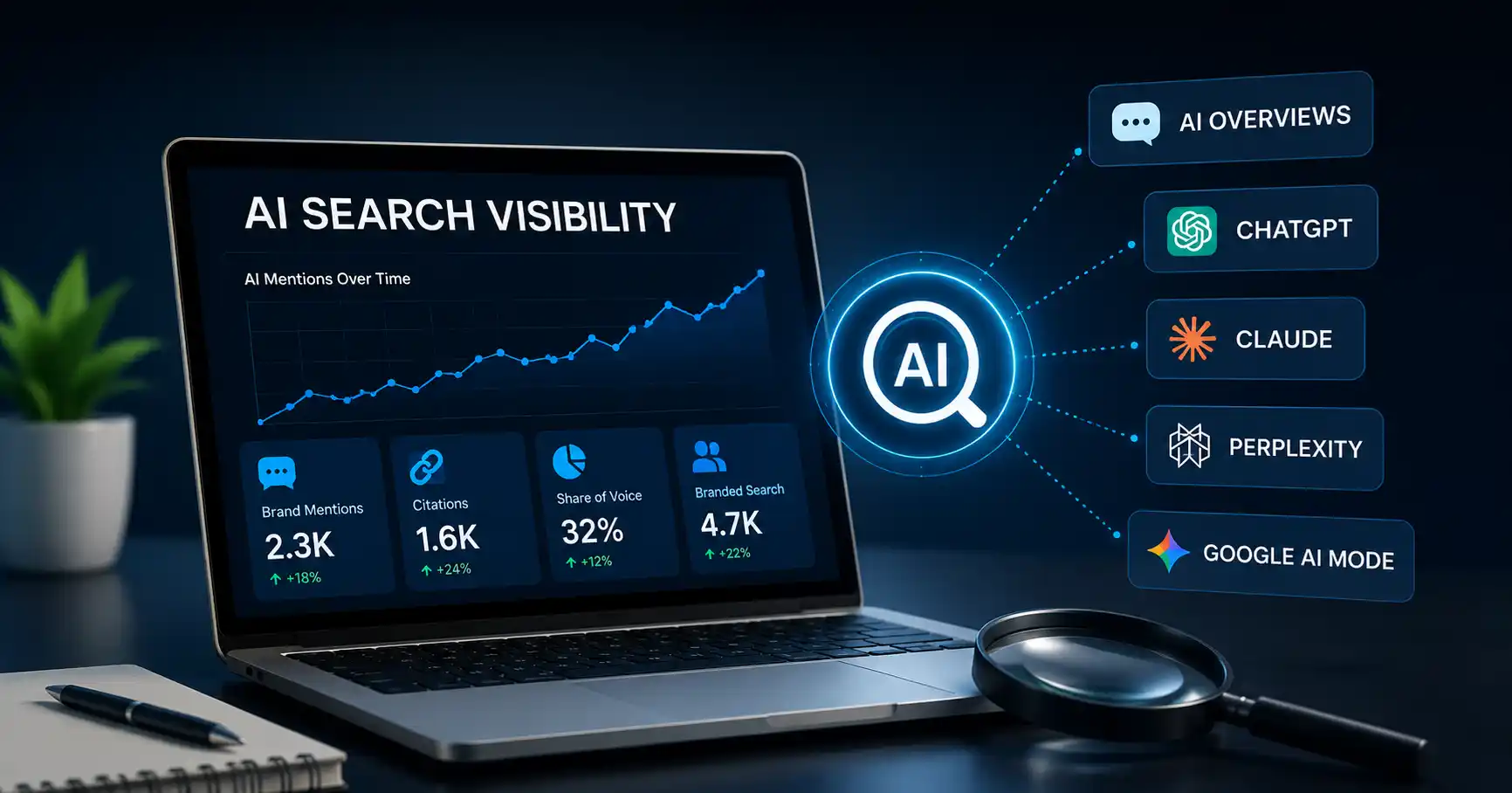
The surge of AI powered search platforms, like ChatGPT, Google’s AI Mode, AI Overviews, Claude, and Perplexity, has added another layer to customer discovery that often happens without any website click. People can ask complicated questions, get thorough recommendations, and make choices from AI generated answers, before they ever land on a site.
Because of this, many companies are noticing that the old attribution reports, do not tell the whole story. The trouble is not just counting traffic anymore. It’s figuring out how frequently your brand shows up, gets mentioned, and guides decisions across these AI search settings, even when there’s no obvious path to a landing page.
Why Is Traditional Attribution Becoming Less Effective?
Traditional attribution models depend on trackable user actions. A user searches, clicks, browses, and converts.
AI search changes that journey completely.
Imagine someone asks an AI assistant:
- What are the best SEO training institutes in India?
- Which digital marketing course provides real-world experience?
- What are the top agencies for local SEO?
The AI gives recommendations immediately, the user scans the answer, remembers a couple of brands, then later goes straight to the site, or searches it on Google. Most times, the analytics software will tag the conversion as direct traffic or branded search instead of the AI interaction that helped steer the decision.
This creates a visibility gap that many marketers are only beginning to recognize.
“The biggest challenge in AI search isn’t ranking. It’s proving influence when users never click.”
How Can Businesses Measure AI Search Visibility More Accurately?
Instead of focusing solely on traffic metrics, marketers need to start measuring visibility, in a more careful way
AI visibility is basically how often your brand, content, products, or expertise show up inside AI produced answers. This can include recommendations, citations, brand mentions, and side by side comparisons that AI systems provide
As AI search keeps evolving, it becomes more important to grasp the gap between AI driven discovery and traditional search traffic. Our guide on AI Search vs Organic Traffic explains how the path users take feels different between these channels, and also why marketers should watch each one on its own
Brands that regularly appear in AI generated responses tend to build awareness and trust well before a user ever lands on their website
What Metrics Matter Most When Attribution Data Is Missing?
When traditional attribution falls short, marketers should focus on influence-based signals.
Brand Mentions
One of the clearest indicators of AI visibility, is how often your brand shows up in AI generated responses, because really this repeats itself. If several AI platforms keep mentioning your company when they answer those industry related questions, it usually means your authority is getting stronger and people are more willing to trust you.
Citation Frequency
AI systems often point back to trusted sources when they produce answers. Watching how many times your content is cited, whether in a prompt or in some follow up, can help show your visibility in AI ecosystems.
Share of Voice
It’s also important to compare your visibility against competitors.
Ask common industry questions across AI platforms and evaluate:
- Which brands are mentioned?
- Which brands are recommended first?
- Which competitors receive the most detailed responses?
These observations provide valuable insights that traditional analytics tools cannot offer.
Topic Authority
AI systems increasingly favor content that comes from websites that show real depth of expertise within one specific domain area, not just surface level info.
Businesses that keep publishing strong high quality materials about a narrow niche topic tend to get more citations and referrals ,and they are also more likely to be suggested to readers.
Can Branded Search Growth Reveal Hidden AI Influence?
In many cases, yes.
Users often stumble on brands via AI recommendations, and then go do branded searches later . So the whole interaction with AI shapes the choice, but the conversion shows up under a different channel, which makes the attribution feel a little weird.
Marketers should closely monitor:
- Branded keyword impressions
- Branded search clicks
- Direct traffic growth
- Returning visitors
- Lead inquiries
Many marketers are also noticing significant behavioral differences between Google’s AI experiences and traditional search journeys. Understanding how users behave differently in AI Overviews vs AI Mode can help businesses adapt their visibility and attribution strategies more effectively.
When branded search volume increases without major ranking changes, AI-driven discovery may be contributing more than traditional reports suggest.
Why Are Customer Surveys Becoming Relevant Again?
For years, digital marketers relied almost entirely on analytics platforms to understand customer acquisition.
Ironically, AI search is making customer surveys valuable once again.
Simple questions such as:
“How did you first hear about us?”
can uncover insights that attribution reports often miss.
Possible responses may include:
- ChatGPT
- Google AI Mode
- AI Overviews
- Perplexity
- Traditional Google Search
- Social Media
- Referral
Businesses that combine analytics data with direct customer feedback gain a more complete understanding of modern discovery journeys.
“Sometimes the most accurate attribution source is the customer, not the dashboard.”
How Does Generative Engine Optimization Improve AI Visibility?
As AI powered search gets more influential, Generative Engine Optimization, GEO , is starting to look like an important offshoot of traditional SEO.
GEO is about making it more likely that AI systems will cite or mention your content, and that they will recommend it too.
Key GEO practices include:
- Publishing authoritative content
- Demonstrating expertise
- Building strong brand entities
- Earning citations from trusted websites
- Creating structured, factual content
- Maintaining consistency across platforms
Recent findings from the Generative Engine Optimization (GEO) Research Study suggest that content structure, source credibility, and authority signals can, significantly improve visibility within AI generated responses, overall.
Companies that invest in GEO right now are basically placing themselves for stronger visibility across future AI driven search experiences.
What Should SEO Professionals Focus on Moving Forward?
The future of search measurement extends beyond rankings and clicks.
SEO professionals should begin monitoring:
- AI search visibility
- Citation frequency
- Brand mentions
- Share of voice
- Branded search growth
- Customer-reported discovery sources
Success in AI search will, increasingly depend more on authority and trust, expertise and the ability to generate recommendations rather than on traditional rankings alone.
Organizations that adapt early will be in a better position as AI search keep influencing how people discover , and evaluate brands out there online.
Final Thoughts
AI search is basically reshaping the customer journey. Even if classic attribution still delivers useful signals, it no longer accounts for each small touchpoint that helps steer a purchase choice.
The top marketers are now broadening their measurement approach to cover AI visibility, citations, brand mentions, plus recommendation frequency. That’s where the real picture lives, not only in the old click based reporting.
Rather than asking just if people clicked, companies should also ask whether their brand got recommended in those AI responses.
This shift could end up defining the next era, of SEO performance.
If you want to stay ahead of AI Search, GEO, SEO, and digital marketing trends, keep following iTech Manthra for practical insights and strategies that are built for the future of search.

Kumar Swamy is the CEO of Itech Manthra Pvt Ltd and a dedicated Article Writer and SEO Specialist. With a wealth of experience in crafting high-quality content, he focuses on technology, business, and current events, ensuring that readers receive timely and relevant insights.
As a technical SEO expert, Kumar Swamy employs effective strategies to optimize websites for search engines, boosting visibility and performance. Passionate about sharing knowledge, he aims to empower audiences with informative and engaging articles.
Connect with Kumar Swamy to explore the evolving landscape of content creation!