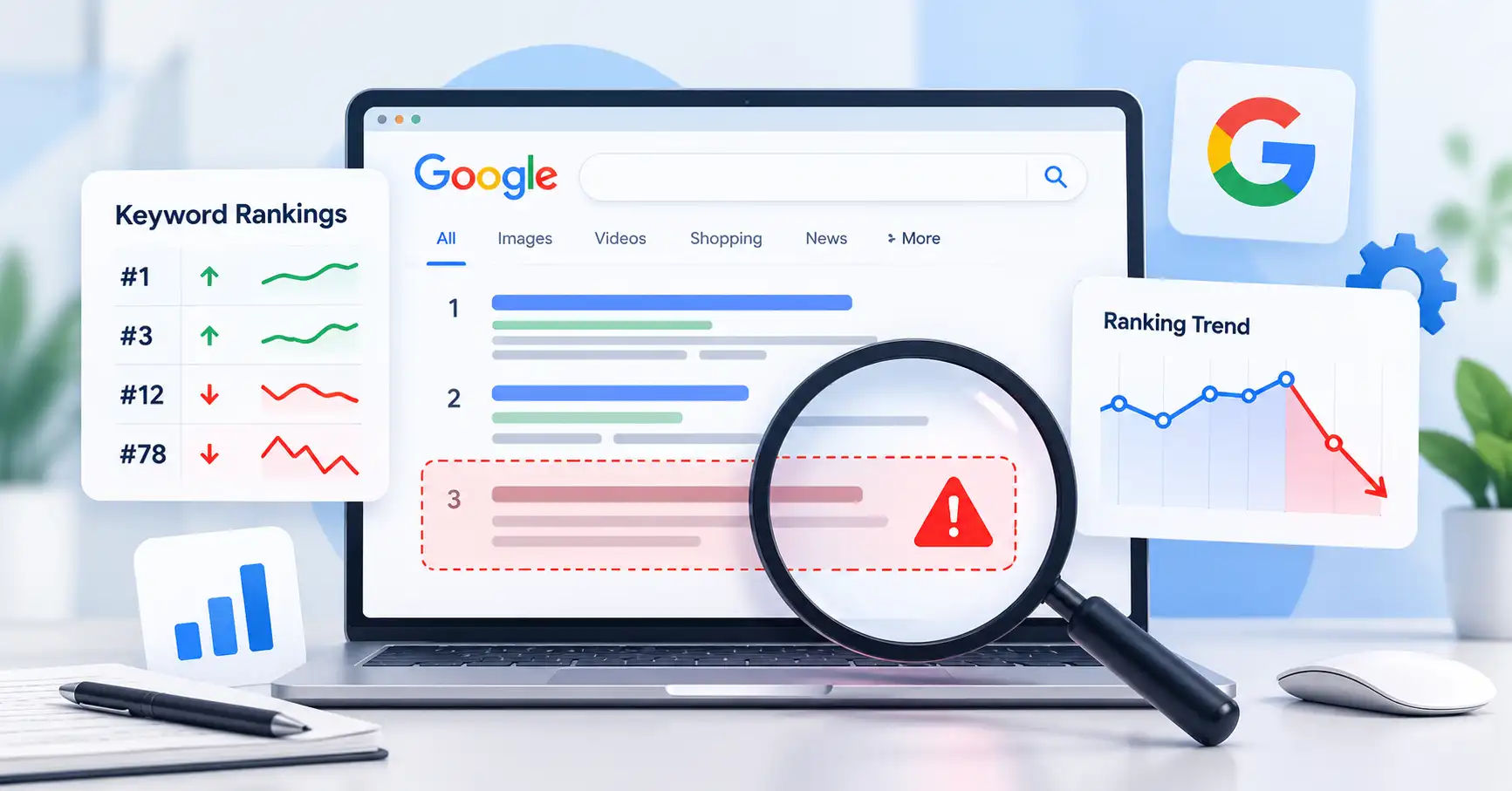
SEO professionals use rank tracking tools to monitor keyword positions, assess campaign performance, and spot opportunities to improve search visibility. But what happens when the Google results these tools collect are incomplete, unusual, or potentially inaccurate?
A suspicious result can make it look as though a keyword has vanished from search results when the actual situation is less clear. Acting on that information too quickly can lead to unnecessary website changes, misleading client reports, and poor SEO decisions.
Recent industry coverage has examined how rank tracking providers say they identify and manage suspect Google results. Their approaches include validating unusual data, running additional checks, and correcting affected historical records. However, safeguards vary between providers, and their effectiveness shouldn’t be taken for granted without supporting evidence. Read the report from Search Engine Journal.
For marketers and website owners, the key question is simple: how do you tell whether a ranking change is genuine or the result of a data quality problem?
What Are Suspect Google Search Results?
Suspect Google Search results are results that a tracking provider considers potentially unreliable, incomplete, or abnormal. They may not accurately reflect the search results the tool was supposed to measure.
Rank trackers collect search data for specific keywords, locations, devices, and times. When that data is incomplete or contains unexpected information, the tool may report a ranking position that doesn’t accurately reflect the situation.
How suspect results affect rank tracking
Imagine a website that consistently ranks on the first page for an important keyword. One morning, its rank tracker reports that the keyword has dropped outside the top 100 results.
That could indicate a genuine ranking loss. It could also point to incomplete data collection or a temporary technical issue.
It’s important to distinguish these possibilities from ordinary Google SERP volatility. Rankings can change because of competition, content updates, shifts in search intent, location, and other factors. A discrepancy in tracking data alone doesn’t tell you which explanation is correct.
Why rankings differ between tools and Google
Even when a rank tracker works as intended, its results may differ from what someone sees in a browser. Location, device type, measurement time, and search configuration can all affect the comparison.
Google also explains that Search Console’s average position is an aggregated metric, not a guarantee that a website will appear at one fixed position for every search. Keep this in mind when comparing Search Console data with a rank tracker’s position for an individual keyword.
The aim is to identify a consistent pattern before concluding that a website has lost visibility.
How Rank Trackers Detect and Handle Incorrect Results
Rank tracking providers use different safeguards to identify potentially unreliable data. The exact methods depend on the platform.
1. Historical SERP comparisons
A provider can compare newly collected results with earlier observations for the same keyword and search configuration.
For instance, if a keyword has held a similar position for weeks but suddenly returns an unexpected result, the system may flag it for further checks.
Historical comparisons can help identify anomalies, but they aren’t conclusive. A genuine algorithm update or a competitor moving ahead can also cause a sudden ranking change.
2. Repeat checks and replacement results
Some providers collect the search results again when the initial data looks suspicious. If the new collection appears more reliable, they may use it instead of the original result.
This approach can help limit the impact of temporary collection problems. Still, a second check doesn’t automatically guarantee accuracy. The provider needs a sound process for validating the replacement data.
3. Historical data corrections
Sometimes, a problem becomes apparent only after a report has been generated. Providers may then review affected records, correct earlier results, or reprocess historical rankings.
This is particularly relevant to agencies and businesses that rely on ranking exports for monthly reports. Corrected historical data can change how a previous performance trend looks.
Before assuming an old report has been fixed, check whether the provider updated historical records or simply improved its process for future measurements.
How Major SEO Tools Say They Handle Suspect Results
Rank tracking providers have described different approaches to validating and correcting potentially unreliable rankings. The table below summarizes their reported practices it isn’t the result of independent testing.
| Provider | Reported approach | Important limitation |
| Ahrefs | Filters abnormal results, requests replacements, and reports cleaning up potentially affected historical data. | The full scope of affected dates and reports isn’t specified in the reported announcement. |
| AccuRanker | Re fetches suspicious results and compares new observations with recent ranking history. | Some keywords may not have enough historical data for these comparisons. |
| SEOmonitor | Introduced additional validation and reprocessed keywords affected by reported incidents. | Its incident details cover specific periods and don’t guarantee that every suspect result will be caught. |
| BrightLocal | Works with existing data suppliers and adds alternatives to improve resilience. | Using multiple suppliers doesn’t automatically establish that every result is accurate. |
| SerpApi | Reported changes intended to reduce suspect results returned through its API. | Customers may still need additional validation, depending on the safeguards available to them. |
Sources: SE Ranking’s ranking troubleshooting guidance.
Why vendor accuracy claims need context
Providers don’t always measure accuracy in the same way. One might report the percentage of incoming results flagged for review, while another measures keyword days that trigger historical anomaly checks. These figures describe different things and shouldn’t be compared as though they represent the same accuracy metric.
There’s also a meaningful difference between identifying a suspect result and correcting data already stored in a dashboard or exported report.
When evaluating a provider, ask three questions:
- Does it validate results before saving them?
- What does the dashboard show while a result is being checked?
- Are affected historical records and API exports corrected, or do the changes apply only to future checks?
These answers provide a clearer picture of data reliability than a single headline percentage.
How to Verify a Sudden Google Ranking Drop
When a keyword suddenly disappears from your rank tracker, investigate the evidence before making changes to the page.
Step 1: Inspect the saved SERP
If your tool stores search result snapshots, open the relevant record and check whether your website appears where the report says it should. Look for unusually short result pages or familiar websites that are missing from the collected results.
SE Ranking recommends checking saved results and manually rechecking affected keywords when investigating this type of issue.
Step 2: Repeat the check under consistent conditions
Check the same keyword again using the same location, device type, and target country. Changing these settings can introduce differences unrelated to data quality.
A second measurement provides useful evidence, but it isn’t definitive proof. Search results can change legitimately between observations.
Step 3: Compare Google Search Console data
Open Google Search Console and review clicks, impressions, and average position for the affected query and landing page over comparable periods.
Google’s guide to diagnosing search traffic drops recommends examining patterns across queries, pages, countries, devices, and search appearances rather than focusing on a single ranking figure.
Consider a keyword that your tracker suddenly reports as outside the top 100 results. Search Console, meanwhile, continues to record impressions and clicks for the same query.
That doesn’t automatically mean the tracker is wrong. The query may generate impressions from different positions or search contexts. However, the discrepancy is a good reason to investigate before concluding that the page has lost all visibility.
Step 4: Look for patterns across keywords
Determine whether the issue affects one keyword, a group of related terms, or a large portion of your tracked keywords.
A single unexpected result could reflect a genuine ranking change or a measurement issue. If unrelated keywords show implausible movements at the same time, take a closer look at the provider’s data collection.
Step 5: Document the result before reporting it
If you manage SEO campaigns for clients, retain the original report, note when the issue appeared, and record any subsequent corrections.
Before updating an older report, ask the provider whether the affected historical records have been corrected. This helps prevent different versions of the same report from presenting conflicting information.
For more guidance, see iTechManthra’s article on building a reliable SEO reporting process.
What This Means for SEO Reporting and Client Decisions
A rank tracker is a measurement tool, not a complete picture of organic performance. Rankings help explain search visibility, while clicks, impressions, conversions, and revenue provide additional context about business outcomes.
If a suspicious change appears, resist the urge to immediately rewrite content, change titles, or build new backlinks. First, establish whether the movement is genuine and whether it affects actual search performance.
iTechManthra’s guide to making Google Search Console work harder offers a useful starting point for investigating changes in search performance.
The appropriate response depends on the evidence. A verified ranking decline may warrant a content or technical SEO review. An unreliable tracking result calls for data validation instead.
FAQ’s
Rank trackers can report inaccurate positions when collected search results are incomplete or abnormal. Rankings can also differ because of location, measurement time, device settings, and normal search result volatility.
Yes. A keyword may appear missing if the collected results don’t include the website, even though it remains visible in actual searches. Inspect the saved SERP, repeat the measurement, and compare the results with Search Console data.
Check the tracking timestamp and saved results, repeat the search under consistent conditions, and review Search Console trends for the affected query and page. Look for a sustained pattern rather than relying on a single observation.
Some providers have reported reprocessing affected keywords or cleaning up earlier results. The scope varies by provider and incident, so confirm which dates and reports were corrected before relying on older exports.
Conclusion
Suspect Google results highlight an important point: reliable SEO decisions depend on reliable evidence. Rank trackers remain useful, but unexpected movements should be checked before they lead to changes in content, technical SEO, or client strategy.
Compare historical rankings, inspect saved SERPs, repeat suspicious checks, and review Google Search Console data together. It’s also worth asking your provider how it detects anomalies and whether it corrects previously stored results.

Kumar Swamy is the CEO of Itech Manthra Pvt Ltd and a dedicated Article Writer and SEO Specialist. With a wealth of experience in crafting high-quality content, he focuses on technology, business, and current events, ensuring that readers receive timely and relevant insights.
As a technical SEO expert, Kumar Swamy employs effective strategies to optimize websites for search engines, boosting visibility and performance. Passionate about sharing knowledge, he aims to empower audiences with informative and engaging articles.
Connect with Kumar Swamy to explore the evolving landscape of content creation!