
Introduction:
- The main focus for the March 2026 Core Update was shifted towards user experience enhancement with a high premium now placed on page quality compared to the amount of just plain content thrown at the end-user.
- Some smaller businesses may well be on the verge of decline if not able to fit into the new age UX need.
- However, these updates could also favor websites already with high DA (Domain Authority), while some of the smaller websites may have a struggle to compete.
The Google March 2026 Core Update is now live, and the modifications are proving tumultuous for many businesses. Google will continue to tweak its algorithm to increasingly focus on website quality and the user experience. What does this mean to you as a company and how can you get ahead with these changes?
In this post, we shall delve into what has been changed immensely by the Core Update of March 2026, what its implications are with some strategies, and how all business sizes have to know and work so they aren’t left out.
What’s New with the March 2026 Core Update?
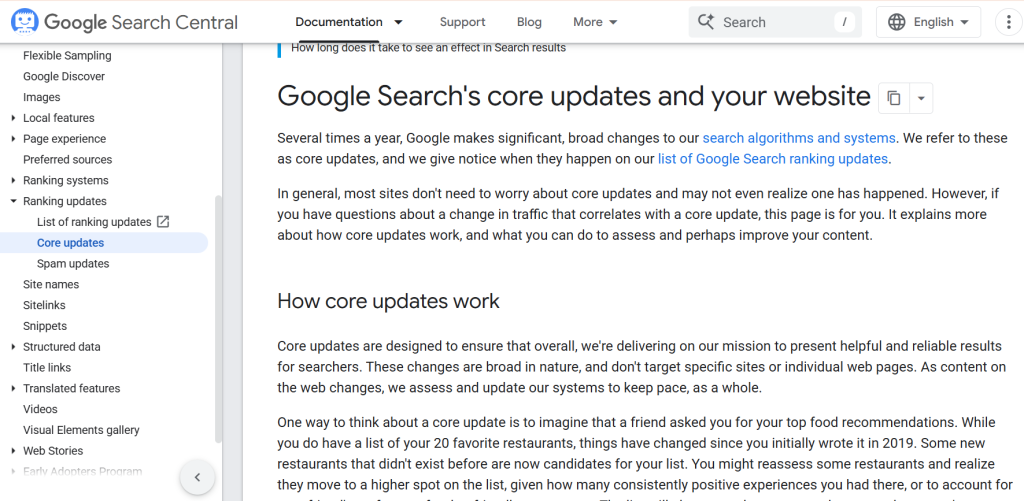
March 2026 Google Core Update is putting even more emphasis on user experience signals, enhancing the status of Core Web Vitals, mobile-friendliness, and overall interactivity in the context of your site. Google has also tuned its metrics to adapt better to what is regularly evolving in online behavior spaces, where the need is triggered for load speeds and seamless navigation.
In short: user satisfaction is the king now.
Further to the consequences, this criterion will cause a shift in the SEO strategy that doesn’t make room for the keyword and backlink approach to the table anymore; it is now essential that businesses make sure their website is an effortless and inviting experience right from the time a user lands on the page. If your website does not correspond to user-centric design as per Google’s expectations, watch for possible downward leap in ranking.
This Impact Will Be Amplified For Small Businesses, How?
The harsh reality about small business reacts in the form of the latest March 2026 update. Small businesses that do not pay heed to these two ranking factors namely user experience and site speed see their rankings painfully slipping away. Google has reached a stage where it now evaluates not only the volume of content but the manner in which the content is viewed.
The Effects on Small Business SEO
First and foremost, small businesses, which are challenged by limited resources, will find it difficult or almost impossible to address all the new ranking elements set forth by Google. Smaller businesses that lack on-campus resources for content preparation, website optimization, and technical SEO will find it difficult to remain on the brighter side.
Real-Life Example:
What if we take your local cafe, which operates with an outdated website that is extremely slow? Although there are a decent Google My Business listing and some nice local reviews, this core update indicates that mobile-unfriendly websites that load slowly can cause serious disadvantages.
The bottom line is that small enterprises need to ensure UX and site speed are placed on topmost priority if they have to strive and live in the rapidly changing SEO environment.
Detail Some Changes That Are Specifically Made in March 2026
This is where it literally gets technical in nature. The Google core algorithm update does not merely modify just a sole aspect but fine-tunes multiple elements.
Core Web Vitals Emphasis
It is very hard to not put all one’s emphasis into the core web vitals (LCP, FID, CLS) in the rankings algorithm set up by Google. These metrics indicate the user experience and also set the edge on load speed, interactivity, and visual stability from the very first updates by Google but now, compromises cannot be opted for in their regard.
- LCP (Largest Contentful Paint): An LCP is considered as the point in time when the largest content can skyrocket. The target is to have an LCP under 2.5 seconds.
- FID (First Input Delay): An FID could essentially get measured as a user’s timeliness or the lead time of site responsiveness, i.e. the gap between any input and the response obtained. A good FID value is under 100 milliseconds.
- CLS (Cumulative Layout Shift): A measure of stability during loading. Try to hit a CLS score lower than 0.1 to get spared from a penalty.
The bad performance in any of these three core web vitals as explained earlier, will pull down a website’s ranking. Hence, consider site speed and other such metrics if a site is not performing as required.
How Can Small Firms Counter the Update?
Admitting that small businesses do lack big financial muscles that could withstand huge intricate strategies implemented in big brands is fair enough. Nevertheless, it is not entirely gloom and doom for sespecially those can readily implement practical steps to adapt the Google Core update of March 2026:
- Boost Your Site Load Speed
- Always apply image compression and WebP next-generation formats.
- Do not focus on leaving any large crowds of JavaScript or CSS rules.
- Use lazy loading to ensure that content is displayed at loader-run time itself.
- Mobile Optimization
- Responsive your website.
- Test the mobile display regularly to make sure it is user-friendly.
- Google’s mobile-first indexing implies that your mobile site has more significance than before.
- Improve UX Design
- Discard aggressive pop-ups and ads
- Reconstruct your navigation in view of user comfort.
- Make sure interactive gestures, such as buttons and links, work commendably across devices.
- Structured Data Integration
- Include schema markup for Google to better comprehend your site content.
- This will enhance visibility in the SERPs, particularly for products or services.
By focusing on these few principles, small businesses can have an edge in not only surviving the update but thriving.
How Do Large Enterprises Stand to Benefit from this Update?
The flip side is that large companies with abundant resources could be redirecting teams at improving site speed, user experience, and content delivery optimization. They are likely to reap benefit rather than suffer losses from this update.
A case in point would be a giant e-commerce platform such as Amazon that have been profiting from the Google Core Update of March 2026, given that the platform is already quite fast, has good user experience, and is mobile-friendly. The platform has separate teams of specialists working on internally synergizing closely with people from other departments to improve these aspects. In short, everything that March 2026 update is thought to rate well on will pave the foundation of the site’s standing being stronger than ever.
Comparison Table: Big vs Small Business Adaptation
| Factor | Big Businesses | Small Businesses |
|---|---|---|
| Resources | Significant (SEO teams, dev teams) | Limited (often a small team) |
| Speed Optimization | Advanced (CDN, image compression) | Needs improvement (can be costly) |
| Mobile Optimization | Fully responsive | Potentially outdated, needs a redesign |
| UX Focus | User-centered, constant updates | Often lacks attention to detail |
| Structured Data | Extensive schema usage | Often overlooked |
Key Insight: Big businesses will adapt fairly easily to the March 2026 Google Core Update given that they have the means to leverage very fast websites with great user experience. Small businesses will undergo a sea change in order to invest in performance optimization of their websites.
What Did the Source Miss?
While indicating technical details about the recent update, the original essay does not seem to capture one of the most important aspects: there is an unequivocal need for content diversity while the throat-cutting competitions change daily. Content creators will now have to evolve with the passing of time to create more engaging, interactive, and dynamic content that matches up with what Google is stepping up its game with on the front of the user experience.
The Case Study: Factors on Dynamic Content
A simple example could be an entertainment site like BuzzFeed. Whereas such a site already performs very well, it further improves itself by dragging prodigious audiences with quizzes, interactive polls, or videos. A website like BuzzFeed doing so well by keeping audiences engaged with exciting content is a big winner in the eyes of the update as of March 2026 thereafter. Increased engagement on their part will not only result in higher UX scores but also prop their content much higher in search rankings.
Conclusion: Deciding the Future of SEO
In the eyes of small businesses, the March 2026 Google Core Update might be a steep hill to clamber on, but it is also a beneficial moment for improvement. The tilt in favor of user experience means that businesses inclined towards quality over quantity will be rewarded. Laying emphasis on website speed, connectivity from mobile phones, and a conducive user journey ensure the gestation of small businesses in competitiveness beyond the update.
Fix up well, as bound to be an equalizer, no matter the size of the boats up for competition. Start holding the faster it to the top. Google will grow more proactive in boosting user satisfaction as a criterion in ranking the search results, hence upsetting those businesses that do not adapt.

Kumar Swamy is the CEO of Itech Manthra Pvt Ltd and a dedicated Article Writer and SEO Specialist. With a wealth of experience in crafting high-quality content, he focuses on technology, business, and current events, ensuring that readers receive timely and relevant insights.
As a technical SEO expert, Kumar Swamy employs effective strategies to optimize websites for search engines, boosting visibility and performance. Passionate about sharing knowledge, he aims to empower audiences with informative and engaging articles.
Connect with Kumar Swamy to explore the evolving landscape of content creation!