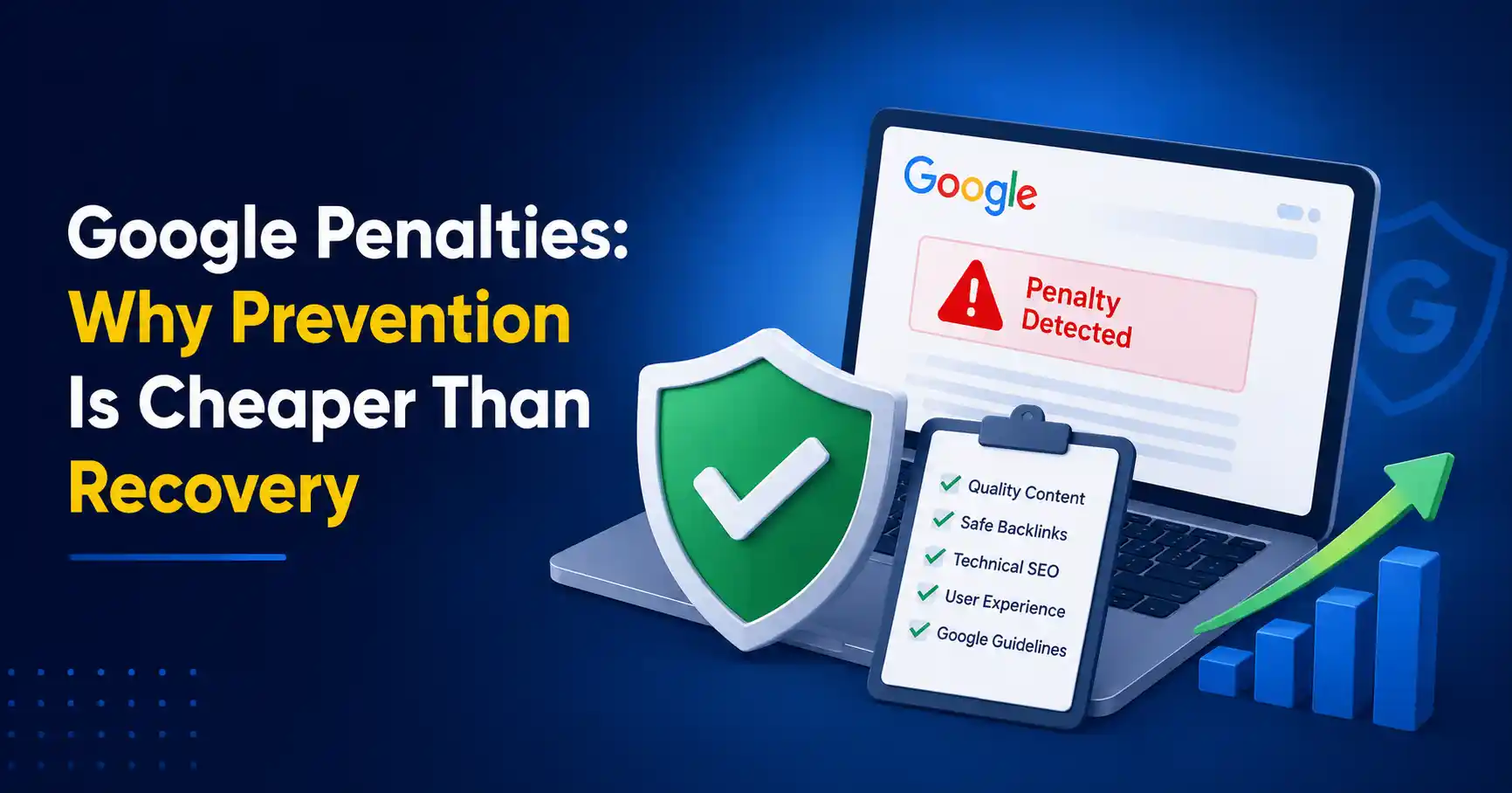
Have you ever looked at your website analytics and then, boom, seen traffic fall off a cliff overnight? No warning at all , no clear culprit. Just less visitors, less interest, and in the end, less money.
For a lot of site owners, that is the very first signal of a Google penalty or some serious visibility problem tied to the algorithm.
The tough part is that getting back to former rankings can take months of focused work. Meanwhile stopping the damage usually just takes steady SEO upkeep and solid content habits. This is why seasoned SEO people keep repeating the same thing: prevention is always cheaper than recovery.
As Google keeps refining its search machinery and rewarding real, high grade quality content, learning how to dodge penalties becomes more than a “nice to have” for companies that depend on organic traffic , because at some point the algorithm notices everything.
What are Google penalties and how do they affect search rankings?
A Google penalty occurs when a website violates Google’s quality guidelines or triggers signals that reduce trust in its content.
Penalties generally fall into two categories:
- Manual actions applied by Google’s review team
- Algorithmic impacts caused by ranking system updates
Both can seriously affect search rankings.
When a penalty occurs, websites often experience:
- Traffic declines
- Ranking losses
- Reduced visibility
- Fewer leads and conversions
- Lower brand trust
Sometimes businesses don’t even realize they have a problem until revenue begins falling.
This is why understanding Google’s expectations matters. Recent updates discussed in Google SEO guidance for SEO tools and agencies emphasize the importance of creating people-first content instead of chasing ranking shortcuts.
As SEO strategist Nina Lopez says:
“The cost to recover lost trust is almost always higher than the cost to earn it.”
And yeah this is pretty much especially true in modern search optimization, where reputation signals and brand credibility pile up in the background.
Why is prevention more effective than penalty recovery?
Many businesses focus heavily on growth but spend very little time protecting their existing rankings.
That’s a mistake.
Recovering from a penalty often involves:
- Comprehensive SEO audits
- Content rewrites
- Backlink cleanup
- Technical fixes
- Reconsideration requests
- Ongoing monitoring
The process can consume weeks or months.
By comparison, following SEO best practices requires much less effort.
Preventive SEO includes:
- Publishing helpful content
- Monitoring website health
- Maintaining technical SEO
- Reviewing backlink quality
- Following Google’s guidelines
Think of it like regular health checkups.
Preventive care is cheaper than emergency surgery.
The same principle applies to SEO.
What are the most common causes of Google penalties today?
Google’s ranking systems have become increasingly sophisticated.
Many tactics that worked years ago now create significant risks.
Low quality content
Content written solely for rankings often struggles today.
Google rewards content that demonstrates:
- Experience
- Expertise
- Authority
- Trustworthiness
Unnatural backlinks
A poor backlink profile remains one of the most common causes of manual actions.
Examples include:
- Purchased links
- Link exchanges
- Private blog networks
- Spam directory links
Keyword stuffing
Repeating keywords excessively makes content difficult to read and provides little value to users.
Thin or duplicate content
Publishing large amounts of similar content can reduce quality signals across an entire website.
Chasing unnecessary SEO trends
Website owners often find themselves stuck on technical adjustments that give only small outcomes for rankings, while meanwhile they leave the fundamentals untouched. It can feel like little tweaks and there and here will fix everything, but actually the core stuff still matters more than only other mechanics, honestly.
For example, as explained in Google says LLMS txt files wont help search rankings, not every new SEO trend affects search performance.
The most successful websites focus on proven quality signals instead of temporary hype.
How can technical SEO help prevent penalties?
Technical SEO acts as the foundation of a healthy website.
Even great content can fall a bit flat if technical troubles stop search engines from crawling and understanding your site in a proper way.
Strong technical SEO includes:
- Fast page speed
- Mobile responsiveness
- Proper indexing
- Clean site architecture
- Secure HTTPS implementation
- Structured data where appropriate
Regular technical audits help identify problems before they become larger issues.
Website owners should routinely check for:
- Broken pages
- Redirect chains
- Crawl errors
- Duplicate URLs
- Indexing problems
Preventive maintenance often prevents future ranking losses.
How do Google algorithm updates expose hidden SEO problems?
One reason penalties and traffic drops feel sudden is that problems may exist long before they’re discovered.
A website can appear successful until a major Google update arrives.
When updates occur, Google often becomes better at identifying:
- Low-value content
- Manipulative link practices
- Poor user experience
- Weak authority signals
This is why many websites lose visibility after updates even when they haven’t received a manual action.
Sites built on shortcuts often struggle.
Sites built on quality usually remain stable.
Barry Adams, a respected SEO consultant, has mentioned many times that long-term SEO success really comes from assembling reliable websites, rather than attempting to game search engines. It is more about steady credibility, and less about tricks.
That way of thinking still feels like one of the safest buffers against penalties.
If website owners want to get a clearer view of what “good quality” means, Google Search Essentials offers useful direction for making content that actually helps people and for staying within Googles own standards.
What should businesses do if they suspect a Google penalty?
The first step is staying calm.
Not every traffic drop is a penalty.
Start by investigating:
Search Console notifications
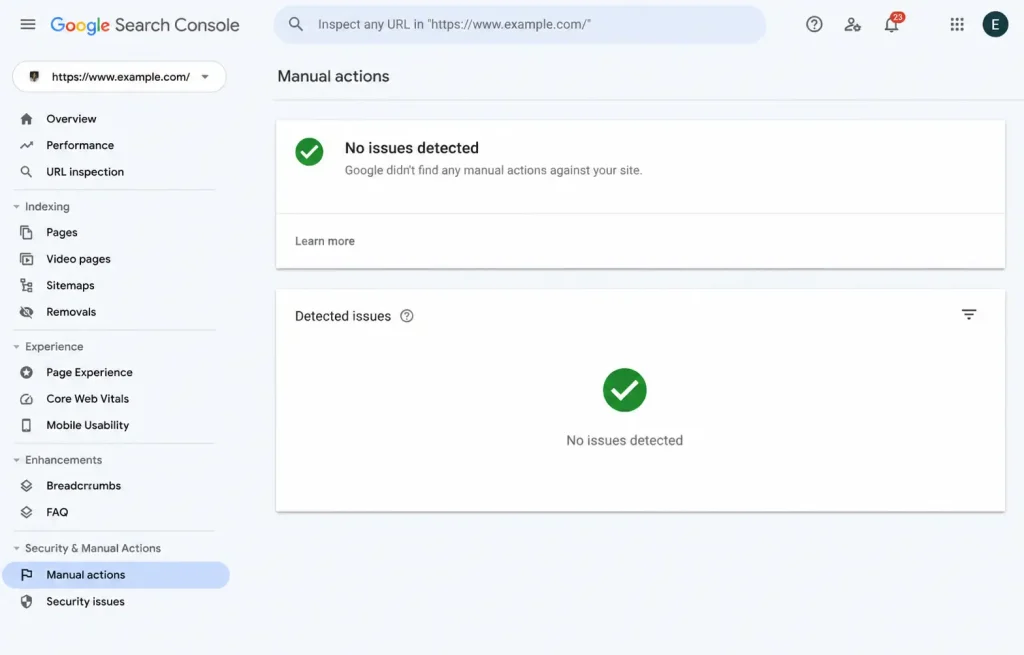
Manual actions are typically reported through Google Search Console.
Traffic trends
Identify when the decline began.
Recent website changes
Review updates that may have affected performance.
Backlink quality
Look for suspicious or spammy links.
Content quality
Evaluate whether content genuinely helps users.
If issues are discovered, prioritize fixes and focus on rebuilding trust.
Recovery takes time, but once the sites that actually make worthwhile improvements start showing small progress , you tend to see good results eventually. It is not instant, yet the better refinements lead to clearer outcomes later on.
Why does prevention matter even more in the AI search era?
AI-powered search experiences are changing how search engines evaluate content.
Systems are becoming better at assessing:
- Content usefulness
- Expertise
- Authority
- Trustworthiness
This means low-quality tactics become easier to identify.
As search evolves, web site optimization is going more and more towards building genuinely worthwhile experiences, not just gaming the algorithms, and it feels slightly more personal every year.
The sites that keep leaning hard into the end users, usually end up performing the best for the long run, even when the ranking rules change.
That direction is unlikely to go away.
Final Thoughts
Google penalties can be really expensive, a lot frustrating, and yes, time-consuming to get back from, once they hit.
Good news though: most penalties are preventable.
If you stay aligned with SEO best practices, keep watch on technical health, publish material that is truly high quality, and avoid the quick shortcuts, businesses can reduce their risk a lot, most of the time.
The most intelligent SEO plan is not only about chasing rankings. It is also about guarding them, maintaining that momentum.
Because when Google penalties show up, stopping the cause will almost always cost less than attempting to recover later.
Have you ever seen a huge ranking decline or gotten hit with a Google penalty? Drop what occurred in the comments, also share the lessons you learned.
FAQs
What is a Google penalty?
A Google penalty is a reduction in search visibility caused by guideline violations, spam signals, or quality-related issues.
How long does penalty recovery take?
Recovery can take anywhere from a few weeks to several months depending on the issue and the corrective actions taken.
Can AI-generated content cause penalties?
No. Google focuses on content quality rather than how content is created.
How can I avoid Google penalties?
Focus on quality content, technical SEO, natural link building, and compliance with Google’s guidelines.
Are algorithm updates the same as penalties?
No. Algorithm updates can reduce rankings, but they are different from manual penalties issued by Google’s review team.

Kumar Swamy is the CEO of Itech Manthra Pvt Ltd and a dedicated Article Writer and SEO Specialist. With a wealth of experience in crafting high-quality content, he focuses on technology, business, and current events, ensuring that readers receive timely and relevant insights.
As a technical SEO expert, Kumar Swamy employs effective strategies to optimize websites for search engines, boosting visibility and performance. Passionate about sharing knowledge, he aims to empower audiences with informative and engaging articles.
Connect with Kumar Swamy to explore the evolving landscape of content creation!