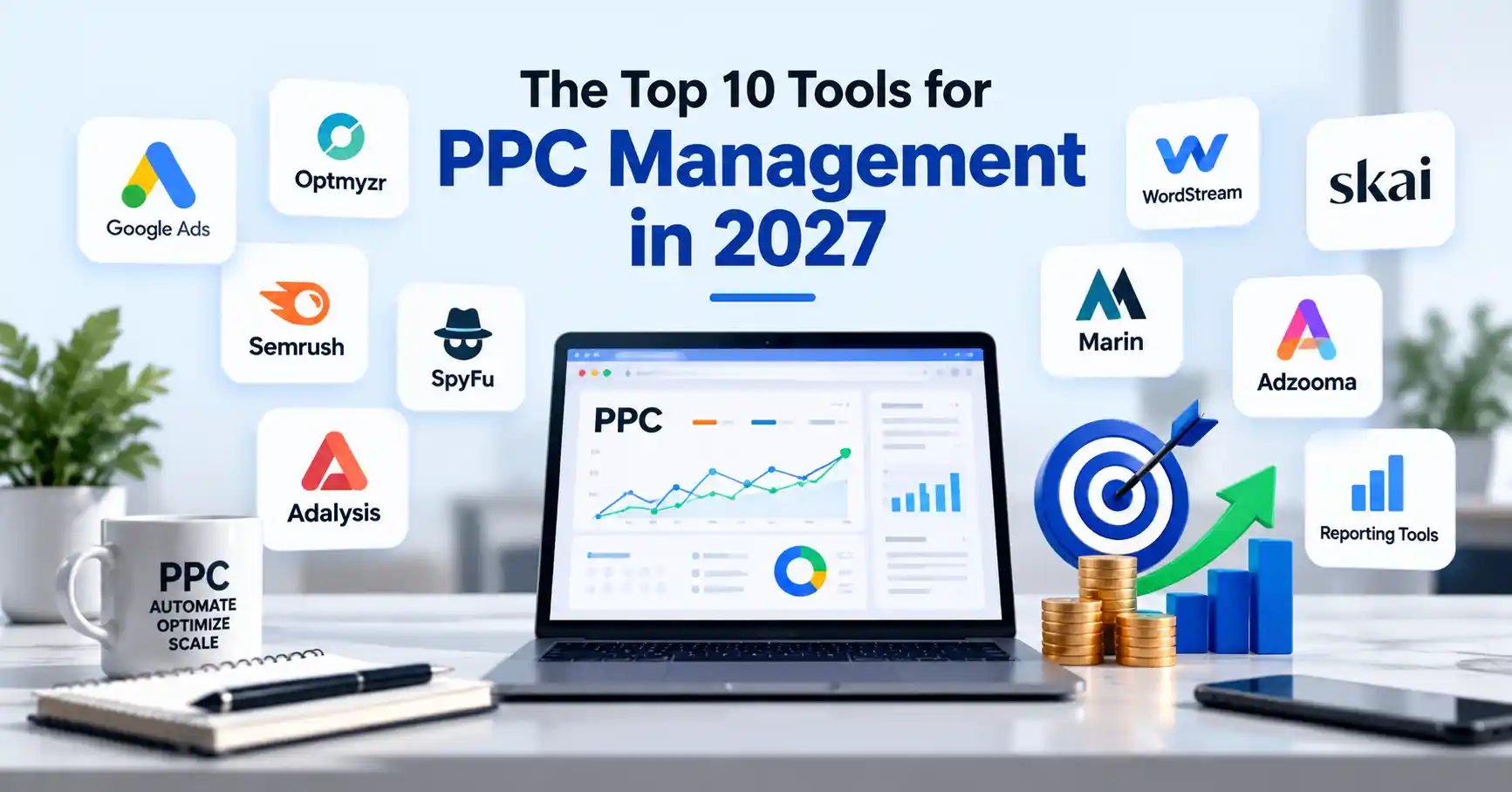
Still jumping between Google Ads, Microsoft Ads, spreadsheets, reporting dashboards, and five different browser tabs just to figure out where your PPC budget actually went?
You are certainly not alone in that mess.
PPC management stopped being just about picking keywords, writing ad copy, and tinkering with manual bids long ago. AI bidding algorithms, Performance Max, automated campaign types, complex cross channel setups, shifting attribution models, and endless reporting demands mean marketers have to operate completely differently now.
That is precisely where modern software pulls its heavy weight.
Top tier platforms don’t just automate everything blindly while you pray for good results. Instead, they hunt down wasted spend, speed up campaign building, track performance closely, take over mind numbing chores, and hand you sharper data for real strategy.
Ten options worth checking out.
What should you look for in PPC management software in 2027?
Before diving in, remember one truth. The ultimate PPC tool simply does not exist, Period.
A freelancer juggling three Google Ads accounts needs something totally different than a massive agency running a hundred. An ecommerce brand focuses heavily on Shopping feeds and pure profit, whereas a B2B business cares way more about lead quality, pipeline velocity, and messy CRM data.
Your ideal software should genuinely make at least one specific part of your daily grind noticeably easier.
Keep an eye out for campaign automation, bid management, budget tracking, keyword analysis, custom reporting, competitor research, alerts, bulk edits, and cross platform support. Artificial intelligence matters more by the day, yet you should never buy a subscription just because it wears a trendy tech badge. Does the automation actually help you make sharper moves?
Here is the ultimate rule of thumb, Automation should kill repetitive busywork, never replace human judgment.
Which are the top 10 tools for PPC management in 2027?
1. Google Ads Editor : Best free tool for bulk campaign management
If you mostly run Google Ads, pause. Don’t pay for another tool yet.
Google Ads Editor is a totally free desktop app meant for managing campaigns offline. It lets you knock out bulk edits, run search and replace, import raw data, and review every single change safely before it actually goes live.
That muscle matters. You need it when sorting through massive keyword lists or pushing the exact same tweak across dozens of separate ad groups at once.
Stop wasting hours changing hundreds of headlines one by one.Instead, execute sweeping bulk adjustments and carefully inspect every single change before pushing them live to the server.
Best for: Independent creators, business brands, and agencies pushing Google traffic.
Google considers Ads Editor the vital engine for bulk campaign tweaks without losing your sanity.
2. Optmyzr : Best for PPC automation and optimization
Optmyzr, seriously, it’s for advertisers who crave some real automation muscle. It handles the heavy stuff: account audits, bid tweaks, budget pacing, plus custom reports and automated workflows. Agencies buried under client accounts? It’s a godsend. Manually reviewing campaigns, one by one, Forget it. This tool squashes that headache.
The biggest advantage isn’t that it replaces the PPC manager. It’s that it can reduce the amount of repetitive work surrounding campaign optimization.
Best for: Agencies and experienced PPC professionals managing multiple accounts.
3. Semrush : Best for PPC research and competitor intelligence
Semrush usually gets talked about as an SEO tool. Still, its paid search features matter quite a bit if competitive intelligence and PPC research drive your daily workflow.
You can dig into what rivals are doing, uncover paid keywords, look at ad history, and tie all that PPC data right back into broader search marketing numbers.
Campaign planning becomes a lot sharper because of it.
Instead of just asking which keywords deserve a bid, you start asking deeper questions. What messaging are they running, Where is the actual opening for us?
Best for: Marketers desperately crave unified SEO and PPC intelligence.
4. Adalysis : Best for PPC audits and ad testing
Adalysis focuses heavily on Google Ads and Microsoft Ads optimization.
Its strength is ongoing account analysis. Why wait until month end to spot trouble? Advertisers can deploy automated alerts to immediately catch ad slip ups, keyword trouble, budget leaks, and flagging campaigns. It is a wonderfully handy setup for teams simply aiming for steady control while testing out fresh creative.
Best for: PPC pros want deep audits, tests, and workflows.
5. SpyFu : Best for PPC competitor research
Sometimes the fastest way to improve your PPC strategy is to understand what competitors are doing.
That’s where SpyFu can be useful.
This platform targets keyword and ad research. You comb through rival search terms, paid campaigns, and historical data to spot strategic gaps.
Avoid treating it like some magic button designed to blindly clone competitors. Use it wisely. Competitor data is a starting point. Your own conversion data should ultimately decide what stays in the account.
Best for: Smart keyword research, fierce competitor analysis, robust PPC.
6. WordStream : Best for simpler PPC management
WordStream focused on advertisers seeking simpler paid campaigns, Nobody wants clunky dashboards. That practical approach really clicks for lean businesses and harried marketers who desperately need genuine guidance alongside their grueling daily campaign management tasks, not just another complicated tool to learn.
The important thing here is usability. A powerful tool that nobody on your team wants to use isn’t actually powerful for your business.
Best for: Small businesses and marketers looking for a more approachable PPC workflow.
7. Skai : Best for enterprise PPC management
Big advertisers, though? They’ve got a whole other animal. Juggling massive budgets across search, social, and a dozen retail channels and markets isn’t just marketing it’s a true operational nightmare.
Skai is aimed at this enterprise level environment, with capabilities around cross channel advertising, optimization, measurement, and budget management.
It’s probably overkill for a small advertiser. But for large organizations, centralized management can become extremely valuable.
Best for: Massive corporations direct huge promotional budgets.
8. Marin : Best for cross channel bid and budget management
Marin is another solid option for brands running paid media at serious scale. The main draw?It pulls campaign management, bid tweaks, budget workflows, and optimization into one hub spanning various networks. Huge win once your PPC setup outgrows basic Google Ads. When your team juggles multiple channels and demands clarity, this unified tool completely beats wrestling a dozen separate dashboards daily.
Best for:Big spenders juggle tangled, sprawling communication networks.
9. Adzooma : Best for straightforward PPC automation
Adzooma streamlines campaign tweaks and uncovers hidden angles without forcing you to meticulously tear down an entire account yourself. That makes it a massive draw for lean teams craving automation minus the bloated footprint of giant enterprise PPC suites. The core philosophy is delightfully straightforward. Let algorithms sniff out the mundane routine, then let the human marketer judge what serves the bottom line.
Best for: Marketers, and small businesses too, craving easier PPC tweaks..
10. Reporting and dashboard tools : Best for PPC reporting
PPC management doesn’t stop when the campaign is optimized.
Someone eventually asks, “So, what did we actually get for the money?”
That is precisely why PPC reporting software belongs in your toolkit. Tools like Reporting Ninja, AgencyAnalytics, Whatagraph, and Supermetrics gather, display, and push out ad data. Which one fits best? It depends. Do you need client ready PDFs, cross channel dashboards, raw data pipelines, or deep analysis? Automation rescues agencies countless monthly hours.
Best for: Agencies, consultants, and teams need dependable, regular pay per click reports.
How are PPC automation tools changing campaign management?
The biggest shift heading into 2027 isn’t simply the number of tools available. It’s how much advertising platforms themselves are automating.
Algorithms run the show now. Machine learning devours the grunt work. Bidding, creative tweaks, targeting, and daily triage have completely vanished. Managers can finally stop agonizing over endless manual adjustments. Instead, just steer the machine. Feed it proper signals, targets, and tight constraints. That is your new job.
This changes the role of the PPC manager.
Instead of constantly asking, “What should I manually change today?”, a better question is, “Is the system receiving the right data and optimizing toward the right business outcome?”
That’s a much more strategic job.
Our 2027 guide tackles three PPC imperatives. So data must be clean, machines smart, and channels wide. Markets, they just move too fast.
Which PPC tools are best for agencies and which are better for small businesses?
Independent advertisers should skip the bloated enterprise suites. Agencies love pushing them, but you don’t need them. A lean team running a handful of ad sets gets by just fine using native campaign dashboards and Ads Editor. Toss in a third party spy tool when you actually need market intelligence.
At agency scale, though? When juggling dozens of demanding clients, deep automation, instant audit logs, scheduled reports, and hawk eyed budget safeguards easily justify that stinging monthly software bill.
Match the tool to your actual workload. That is the only calculation that matters here.
Small advertiser: Master Google Ads, Ads Editor, and crucial reporting.
Growing team: Google Ads + PPC automation + competitive research + reporting
Agency: Multi account management + automation + auditing + reporting
Enterprise: Cross channel management + bid management + measurement + governance
Software yields to your workflow, Never bend your process for any tool.
What should you check before choosing a PPC management tool?
Before you commit to any pay per click platform, stop and ask yourself five key things.
First off, does it actually work with the advertising channels you’re running on? A tool that only hooks into Google Ads is pretty useless if you’re sinking half your budget into Microsoft, Meta, Amazon, or somewhere else entirely.
Does it actually automate something you are doing by hand right now? If a fresh tool fails to buy you serious time or point you toward smarter choices, why clutter your workflow with it? Drop it.
Then look at reporting, Are those generated reports useful, or are you just staring at pretty charts? You need metrics tied straight to real business results. Vanity numbers won’t pay the bills.
Scalability matters, too, Can the software grow right alongside your accounts? Check the limits on users, spend caps, account totals, and future reporting needs before you sign anything.
And the big one, Can you still call the shots? Sure, automation sounds great. Just do not blindly follow every single suggestion it spits out at you.
Don’t forget about free, built in options. Google Ads Editor, for example, lets you do bulk edits and offline work without adding yet another monthly bill.
For more solid advice, check out our Google Ads strategy guide it breaks down how campaign structure and automation really work together.
What is the best PPC management tool for 2027?
Optmyzr’s PPC automation is a godsend for agencies drowning in client tasks. It’s a solid tool, no doubt. But there’s a significant drawback. It doesn’t quite nail every single specific operational need. So, some companies will have to keep searching.
Google Ads Editor wins for free bulk management. Semrush is stronger for broader search intelligence. SpyFu is useful for competitor research. Adalysis is attractive for audits and testing, while Skai and Marin make more sense when advertising operations become genuinely large and cross channel.
The smartest PPC setup in 2027? Probably not one huge platform, but a bunch of different tools working together.
That’s the main takeaway, honestly. Don’t grab software just because it talks up automation, Get it because it actually fixes a problem you have with your ads.
FAQ’s
Advertisers rely on specialized PPC software for bids, budgets, audits, keywords, and reporting tasks.It streamlines cross channel campaigns entirely, Honestly? It just makes the whole exhausting job so much easier.
Google Ads Editor? It’s a solid start. Free, you know, Plus, it makes managing a bunch of campaigns way easier all at once. Once things get complicated, beginners can then bring in the pros.
Grinds happen. Especially with multiple accounts or brain numbing tasks. But it really boils down to a simple question: does this software actually give you enough time back, or boost results enough, to justify the cost?
Google Ads still runs the show. Sure, other tools help with automation, sharper reports, spying on rivals, or juggling multiple accounts. Absolutely. But Google is primary.
Not completely. AI handles boring, repetitive tasks, sure. Real strategy, profound vision, fierce accountability, and that elusive human touch, Simply irreplaceable.
Conclusion
By 2027, running PPC won’t mean micromanaging every single campaign anymore. Instead, your job shifts to steering raw data, automation, budgets, and creative directly toward actual business targets. Pick the right software now, claw back precious hours, and catch costly fires before they spread. Pick wrong? You’ve just added one more useless dashboard to your morning routine.
Start with your specific pain point, Compare options through that lens. And honestly? Keep your stack simple.

Kumar Swamy is the CEO of Itech Manthra Pvt Ltd and a dedicated Article Writer and SEO Specialist. With a wealth of experience in crafting high-quality content, he focuses on technology, business, and current events, ensuring that readers receive timely and relevant insights.
As a technical SEO expert, Kumar Swamy employs effective strategies to optimize websites for search engines, boosting visibility and performance. Passionate about sharing knowledge, he aims to empower audiences with informative and engaging articles.
Connect with Kumar Swamy to explore the evolving landscape of content creation!