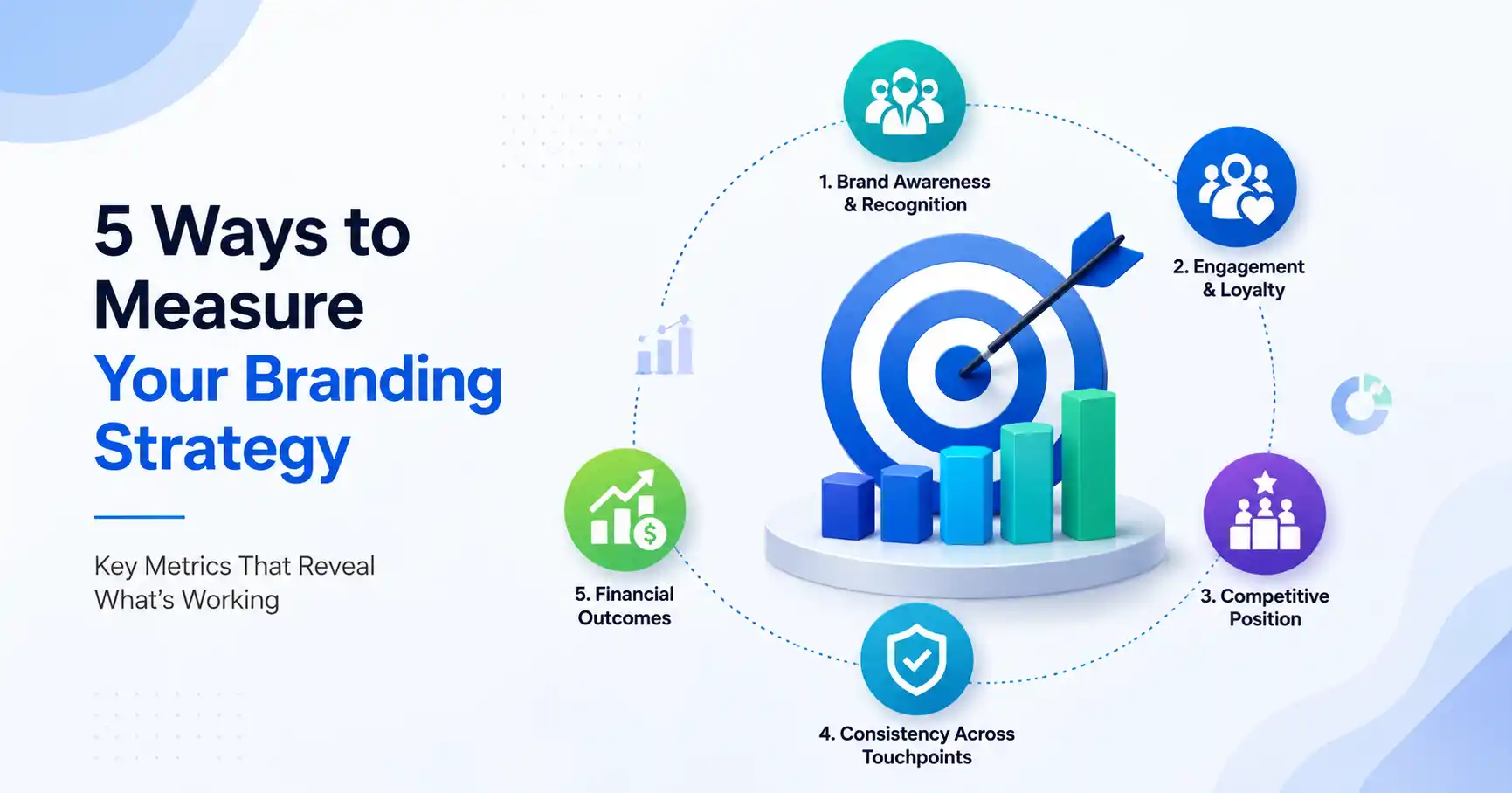
Here’s the thing nobody says aloud. You’ve poured real money, real hours, real energy into branding and the needle still might not have moved. Frustrating? Absolutely. Also remarkably common. Marketers end up fiddling with things that weren’t broken while the root problem sits there, untouched. So: five concrete methods that expose whether your branding strategy is earning its keep or quietly draining resources.
Track Brand Awareness and Recognition
Without awareness, everything else collapses. Watch social follower growth, site traffic, and search mentions but pay special attention to how often people type your brand name directly into a search bar. That number is different from all the others. This is also where a brand-led SEO strategy becomes useful, because consistent visibility across search results can strengthen familiarity and recognition over time. Tools that log branded search volume week over week will surface a trend quickly: climbing, flat, or dropping. Raw data only goes so far, though. Run surveys. Ask your actual target audience whether they recognize your brand, which words surface immediately, how they’d stack you against competitors. That qualitative layer catches what the dashboards can’t.
Look at Engagement and Loyalty Signals
Recognition gets you in the door. Real connection? That’s a different fight entirely. Engagement metrics social interaction rates, email opens, return visits, retention reveal whether your messaging lands or just arrives. High engagement means people are motivated. Coming back by choice. Loyalty is harder to manufacture. Dig into repeat purchase rates, customer lifetime value, Net Promoter Score. NPS doesn’t cushion anything it asks customers flat out how likely they are to recommend you. No preamble. When someone drops an unsolicited positive review, or advocates for your brand with zero nudge from you, that’s the signal worth chasing. Watch these over months. Upward trends are evidence. Flat or falling numbers demand a much harder look.
Measure Where You Stand Against Competitors
Your branding doesn’t exist in isolation. It gets compared consciously or not against every competitor chasing the same audience. Track your market share. Monitor sentiment around your brand versus theirs. Are customers picking you more often? Describing you in better terms? This pressure is especially sharp in crowded professional fields. Reputable law firms in seo build digital visibility lean hard on competitive positioning data to see whether branding is gaining ground in search and with the right people. Direct comparison surveys, where respondents rate brands on attributes like trust or quality, give you concrete benchmarks. And sales data doesn’t flinch: capturing more market share means branding is shaping real decisions.
Audit Consistency Across Every Touchpoint
Inconsistency doesn’t announce itself. It erodes things slowly until customers walk away with a vague feeling that your company seems scattered, unreliable, hard to pin down. Audit everything. Website, social channels, email, marketing materials, how customer service reps actually talk to people. Does it hold together? Does it feel like one company with a coherent identity? Customer feedback often surfaces the answer faster than any internal review will. People notice when something feels off, even when they can’t articulate exactly why. Check whether different departments are delivering the same core message. Gaps between your intended brand promise and the real customer experience tend to show up here first and they compound if you don’t catch them early.
Connect Branding to Financial Outcomes
Eventually, branding has to show up in the numbers. Revenue growth, customer acquisition costs, profit margins, return on marketing investment these are what justify the spend. Strong branding tends to push all of them in the right direction. Customers choose you more readily. They pay a premium without much pushback. They stick around longer. Compare financial performance before and after major branding efforts to isolate what branding actually contributed versus other variables in the mix. Look at which customer segments carry the highest lifetime value and stay the longest then ask honestly whether your branding speaks directly to those people. If it does, and the numbers back it up, you have your answer.
Conclusion
No single metric tells the whole story. Awareness without engagement is hollow. Engagement without financial impact? Just noise. Measurement has to be layered brand awareness, customer loyalty, competitive position, consistency, and business results all functioning as a system. Each method catches what the others miss. Tracked consistently over time, they build a real picture of whether your strategy is working or just running in place. And as markets shift, your measurement approach has to shift with them always calibrated to what actually matters about your brand’s performanc

Nishanth Kumar is the Lead SEO Strategist at iTech Manthra. With over a decade of experience in the digital marketing landscape, he specializes in technical SEO, link-building strategies, and search engine algorithms. Nishanth has helped hundreds of businesses scale their organic presence through data-driven marketing and sustainable “white-hat” techniques. He is passionate about decoding Google’s ever-changing updates to help brands stay ahead of the competition.