Introduction
Ever looked at your Google Merchant Center numbers, then opened Google Ads and wondered why the two reports refuse to match? You are far from alone.
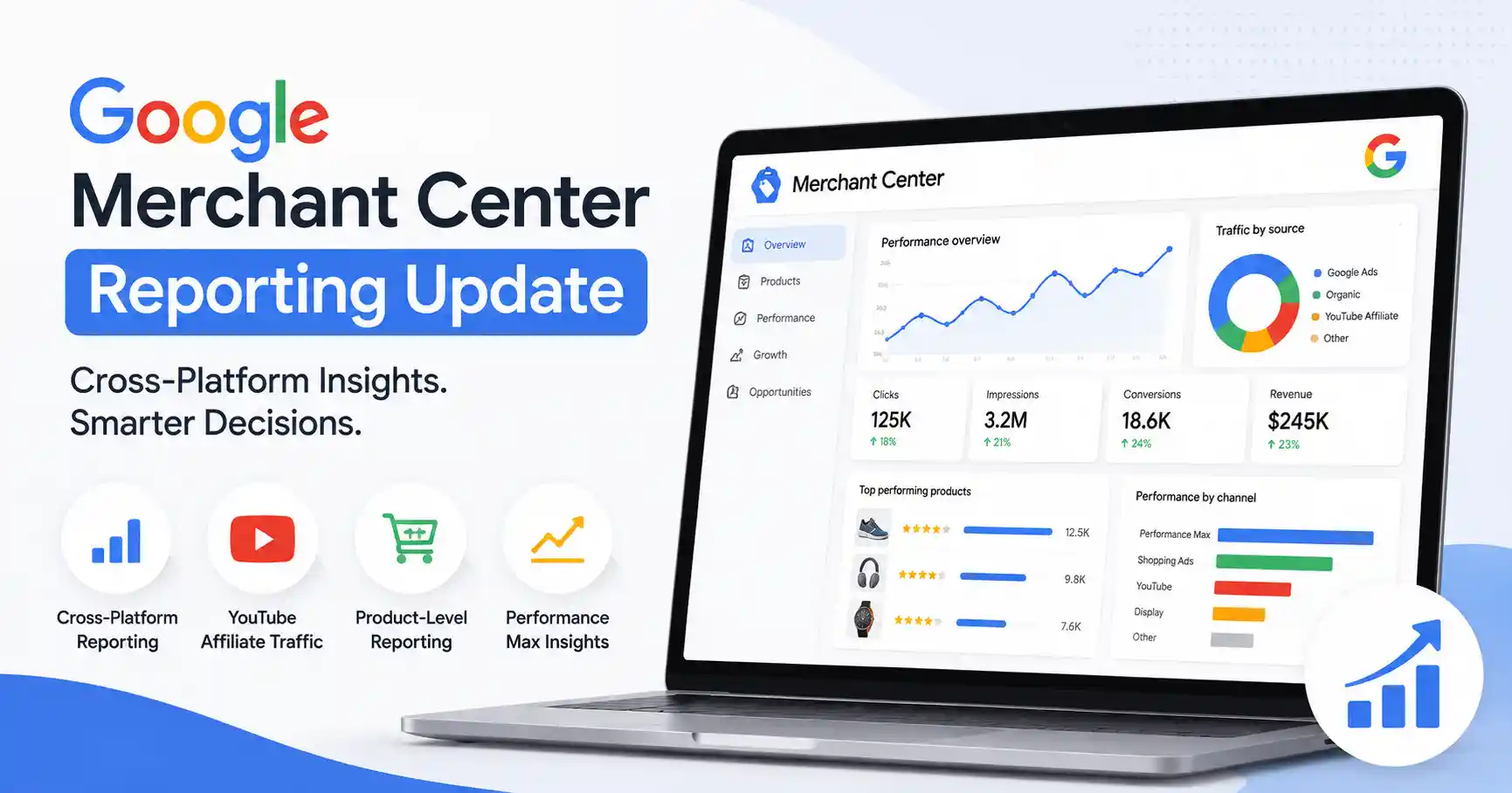
Google is rolling out a noticeable tweak to Merchant Center reporting that aims to make product performance data easier to digest across both ad spaces and organic listings.
Beginning August 24, 2026, the platform will debut fresh traffic groups, wider product data, and eventually a way to slice performance by Google network.
Sounds like routine housekeeping. It is not.
Some shop owners might watch their organic traffic figures drop, while others will see impressions spike simply because extra ad campaign data gets pulled into the mix.
Past records will shift too, meaning your historical charts will look rather odd post launch.
What precisely is Google tweaking, and why should digital retailers care?
What Is Changing in Google Merchant Center Reporting?
The main objective here is harmony.
Google claims Merchant Center metrics are getting revamped to sync up neatly with Google Ads and YouTube dashboards. Retailers should finally get a coherent view of product success across different Google environments without toggling constantly between separate tabs.
Three core pieces make up this overhaul:
- A brand new YouTube affiliate traffic tier
- Broader product data
- An upcoming network reporting dimension
That first shift grabs attention because YouTube affiliate clicks will vacate the standard organic category entirely.
Instead, qualified traffic originating from creators in Google’s affiliate scheme will show up under YouTube affiliate traffic.
A mere cosmetic label switch? Hardly.
It changes how you evaluate the true roots of your incoming shoppers.
Google also noted that past records dating back to July 1 will get recalibrated.
So do not freak out when older reports mutate right after the rollout.
Why Is Google Separating YouTube Affiliate Traffic From Organic Traffic?
Consider an item highlighted by a YouTube creator.
A viewer tunes into the video, gets hooked, and clicks straight through to the store.
When that visit hides inside a massive organic bucket, figuring out the genuine return on creator partnerships becomes a guessing game.
The fresh classification clears up that blur.
Google is also altering how YouTube organic views and clicks are calculated to line up with YouTube’s native analytics.
Because of this adjustment, certain merchants might notice an abrupt slump in their stated organic traffic.
Keep this in mind: a downward blip on a chart rarely means your actual audience vanished overnight.
The underlying math and sorting rules simply shifted.
Merchants should take this as a warning against stacking old reports directly against new ones without reading the fine print.
Stay calm when the dashboard suddenly wears a new face.
How Does the New Product Level Reporting Work?
This is likely the bit advertisers care about most.
Google is stretching product level metrics to pull in performance numbers from a wider array of ad campaigns and channels.
The upgraded coverage embraces:
- Performance Max
- Video promos
- App drives
- Demand Gen pushes
- Various other ad formats leaning on Merchant Center product feeds
Historically, product reports lacked that kind of universal depth across every campaign style.
Now, Google warns that brands might spot a sudden surge in impressions and clicks purely due to this extra campaign data flooding the main view.
This consolidation is a blessing because product success often gets sliced into tiny pieces.
A single item might pop up via standard Shopping, Performance Max, YouTube, or alternative placements.
Inspecting just one campaign type tells a half truth.
The expanded reporting helps answer a much better question:
How is this exact product holding up across the entire Google ecosystem?
That insight beats staring at isolated campaign silos every single day.
What Does This Mean for Performance Max Reporting?
Performance Max advertisers need to watch this update closely.
PMax already scatters products and ads all over various Google surfaces, meaning product level reporting gets infinitely more useful when you can actually view those distinct sources together.
Google’s upgraded product reporting pulls in data from all Performance Max networks instead of hiding behind a limited slice of campaign activity.
The Google Ads API docs also back this up, confirming wider product reporting covering Performance Max, Video, App, Demand Gen, and Shopping related campaign data.
Spotting items that pull traffic across multiple placements just got simpler.
It fits right into Google’s wider push for transparent campaign analysis.
If you are already digging into where your PMax results originate, our guide on Google Ads product campaign tracking dives deeper into product level performance, reporting, and conversion tracking.
The big catch?
Do not assume extra reporting automatically translates to better performance.
It simply hands you raw information, and you still have to figure out what to do with it.
What Is the Future Network Reporting Dimension?
Google is not stopping with this initial reporting expansion.
Word is a brand new Network reporting dimension is slated for down the road.
The concept is pretty simple: merchants will eventually break down product performance by Google network in a way that feels a lot more like standard Google Ads reporting.
Advertisers running broad Performance Max campaigns will find this especially handy.
Instead of staring at one blended product performance number, marketers might finally understand which specific Google networks actually drive that traffic.
There’s a catch worth noting, though: the Network reporting dimension is not here yet.
So merchants should not expect that full breakdown immediately following the August 24 rollout.
Right now, the priority stays on wider product coverage and tidier traffic classification.
How Should Merchants Prepare for the Reporting Changes?
You can skip tearing apart your ecommerce strategy over this update.
Still, a quick reporting check is wise.
Start by locking down your current numbers prior to August 24.
Save key reports covering impressions, clicks, organic traffic, paid traffic, conversions, and top tier products.
Once the update drops, stack the new data up against your old benchmarks carefully.
Keep a simple checklist handy:
- Save your current benchmarks: Keep a record of important product and traffic metrics before the change.
- Watch organic traffic classifications: Pay attention to how YouTube related traffic is categorized.
- Check your product level reports: Look for changes in impressions, clicks, conversions, and other metrics.
- Review Performance Max data: Your reported numbers may increase because additional campaign data is included.
- Do not compare numbers blindly: A change in reporting does not always mean a change in actual performance.
- Check your Google Ads data too: Use Google Ads reporting alongside Merchant Center rather than relying on one dashboard.
- Keep conversion tracking clean: Accurate conversion data becomes even more important when more campaign information is being combined.
- Review your product feed: Strong product titles, descriptions, images, pricing, availability, and identifiers still matter.
- Look at trends rather than one day changes: Give the new reporting time to settle before making major budget decisions.
Google also recommends verifying analytics reporting against Merchant Center performance reporting when tracking product clicks and traffic.
If you want to understand how channel level visibility helps with Performance Max optimization, our guide to Google’s Channel Performance report makes a solid next step.
Does This Make Google Merchant Center Reporting More Useful?
Yes, absolutely, especially for retailers juggling products across multiple Google channels.
The real win is not simply dumping more numbers on your screen.
It is finally getting a connected view of how products perform.
Google has slowly steered Merchant Center toward deeper analytics over time, rolling out competitor visibility, organic versus paid traffic comparisons, custom reports, and product level insights.
Merchants can already compare visibility across Shopping ads and organic traffic using the Competitors section in Merchant Center Analytics.
This latest shift lines up directly with that bigger picture.
Instead of treating Merchant Center as a boring digital drop box for a product feed, Google is evolving it into a serious performance and analytics workspace.
Smaller retailers benefit here too, and you do not need a massive data team to use clearer reporting.
The simpler it gets to see which products and channels pull their weight, the easier your choices about budgets, feeds, promotions, and inventory become.
As Google’s reporting documentation essentially shows, the goal is giving merchants a complete picture of product performance across Google surfaces so nobody has to piece everything together manually anymore.
What Should Ecommerce Marketers Watch After August 24?
The first few weeks after the rollout will be more about understanding the data than making dramatic changes.
Watch for:
- Changes in reported organic traffic
- New YouTube affiliate traffic
- Increases in product level impressions
- Changes in reported clicks
- Performance Max reporting differences
- Product level conversion trends
- Differences between Merchant Center and Google Ads
- Changes in top performing products
One thing I’d avoid is immediately changing campaign budgets because a single number moved.
Give yourself enough time to understand why it moved.
If Google changes how traffic is classified or expands the amount of campaign data included in a report, historical comparisons can become misleading.
That is why maintaining your own benchmarks is going to be especially useful during the transition.
FAQ’s
The changes are scheduled to begin rolling out on August 24, 2026.
They may. YouTube affiliate traffic will receive its own classification, and Google is also changing how organic YouTube clicks and impressions are measured.
Yes. Product level reporting is expanding to include broader Performance Max data along with Video, App, and Demand Gen campaign data.
Yes. Google says historical data going back to July 1, 2026 will also be updated for the relevant reporting changes.
Not immediately. First compare your old and new reporting, understand the changes, and then decide whether the new data suggests an actual performance problem or simply a reporting difference.
Conclusion
Google’s Merchant Center reporting update may look like a technical reporting change, but for ecommerce businesses, it could make product performance much easier to understand.
The separation of YouTube affiliate traffic should provide cleaner attribution.
Expanded product level reporting should give retailers broader visibility across Google Ads campaigns.
And the planned Network reporting dimension could eventually make Performance Max data easier to break down.
The main takeaway is simple: Don’t judge your store’s performance by a single number.
When the update rolls out, check what changed in the reporting definitions, compare your new data with your saved benchmarks. And then use the broader picture to make smarter decisions.
Have you noticed any changes in your Merchant Center reporting yet? Share your experience or questions in the comments.

Kumar Swamy is the CEO of Itech Manthra Pvt Ltd and a dedicated Article Writer and SEO Specialist. With a wealth of experience in crafting high-quality content, he focuses on technology, business, and current events, ensuring that readers receive timely and relevant insights.
As a technical SEO expert, Kumar Swamy employs effective strategies to optimize websites for search engines, boosting visibility and performance. Passionate about sharing knowledge, he aims to empower audiences with informative and engaging articles.
Connect with Kumar Swamy to explore the evolving landscape of content creation!