Have you ever sat there for hours, building ad creatives, then thinking like, which one will actually pull in the most conversions?
That struggle shows up for almost every digital marketer.
You put together persuasive ad assets, rotate multiple variants, read reports and then optimize the campaign. But all of it can be surprisingly time-consuming and demanding on resources. As ad spaces get more competitive by the day, marketers need quicker ways to craft stronger campaigns while making wiser choices from their performance data.
That’s exactly where Google’s latest Demand Gen update comes in.
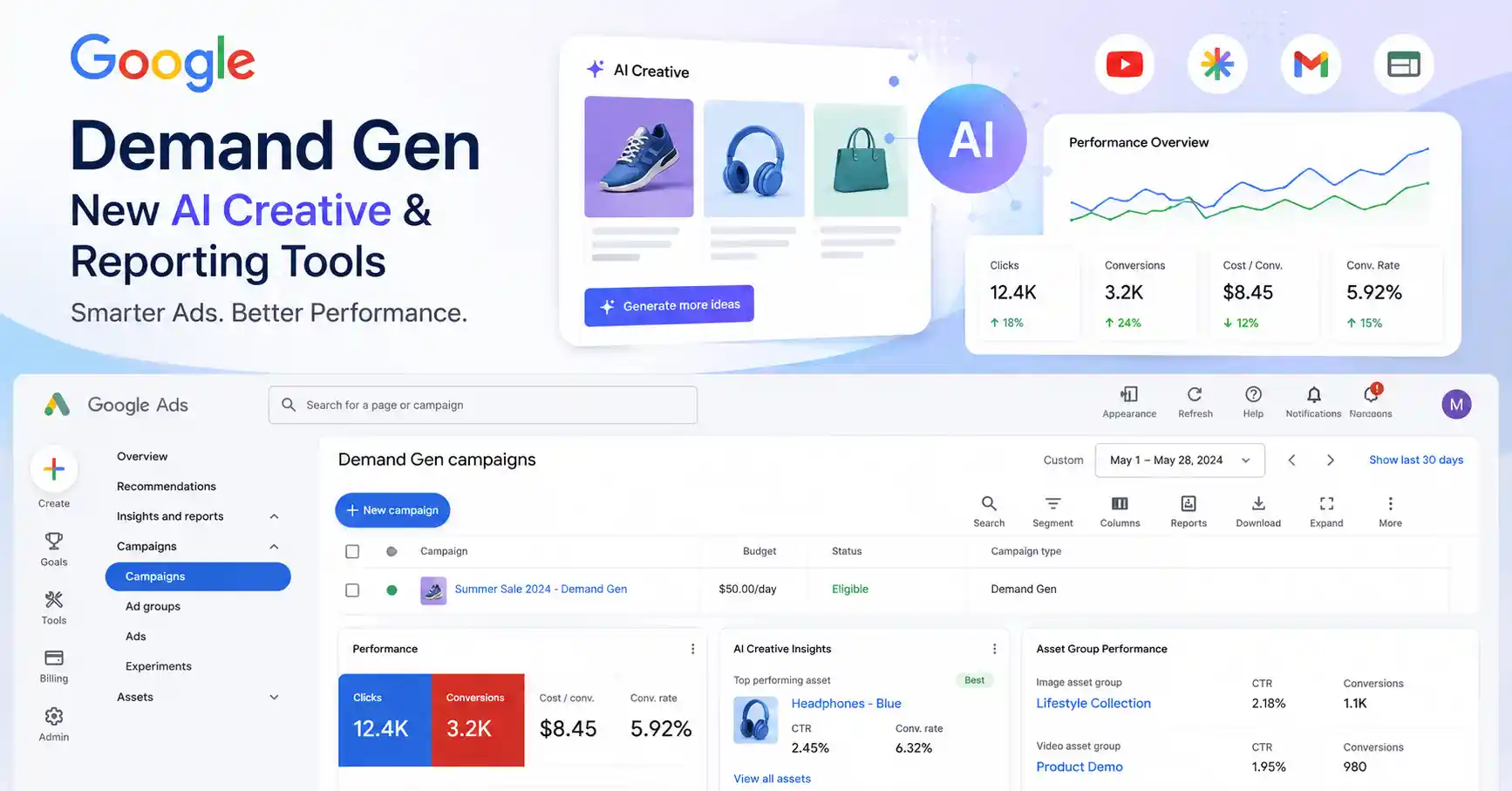
Google has rolled out fresh AI creative and reporting tools for Demand Gen campaigns, so advertisers can churn out stronger creative assets, dig deeper into the reporting picture, and boost campaign outcomes with less manual work.
For businesses already putting money into Google Ads, this feels like another big nudge toward AI-driven advertising.
What are Google’s new AI creative and reporting tools for Demand Gen?
Google’s Demand Gen campaigns were designed to help advertisers reach users across Google’s most visual and engaging platforms, including:
- YouTube
- Discover
- Gmail
- Google Display surfaces
Now Google is making these campaigns even smarter.
The latest update introduces AI creative tools alongside improved reporting capabilities that help advertisers understand campaign performance more effectively.
Some of the new capabilities include:
- AI-assisted creative generation
- Improved asset optimization
- Better campaign reporting
- Enhanced performance insights
- Smarter creative recommendations
Instead of leaning only on manual testing, advertisers can now use AI to speed up making campaigns and tightening performance, a little more than before.
As digital advertising strategist Nina Lopez puts it:
“The future of advertising belongs to marketers who spend less time creating assets and more time sharpening strategy.”
Google’s newest update nudges advertisers toward that future.
Why are AI creative tools becoming essential for advertisers?
Modern advertising demands constant experimentation.
Businesses often need:
- Multiple image variations
- Different headlines
- Alternative descriptions
- Audience-specific messaging
- Platform-specific creatives
Creating all of these manually requires significant time.
This is where AI creative generation becomes valuable.
AI can help marketers:
- Produce creative variations faster
- Adapt messaging for different audiences
- Test more combinations
- Improve creative efficiency
- Reduce production time
Rather than replacing creative teams, AI acts as a productivity tool that accelerates campaign development.
This allows marketers to focus more on strategy and customer experience.
How do the new reporting features improve campaign optimization?
Reporting has become just as important as creative production.
Without accurate insights, even great campaigns can struggle.
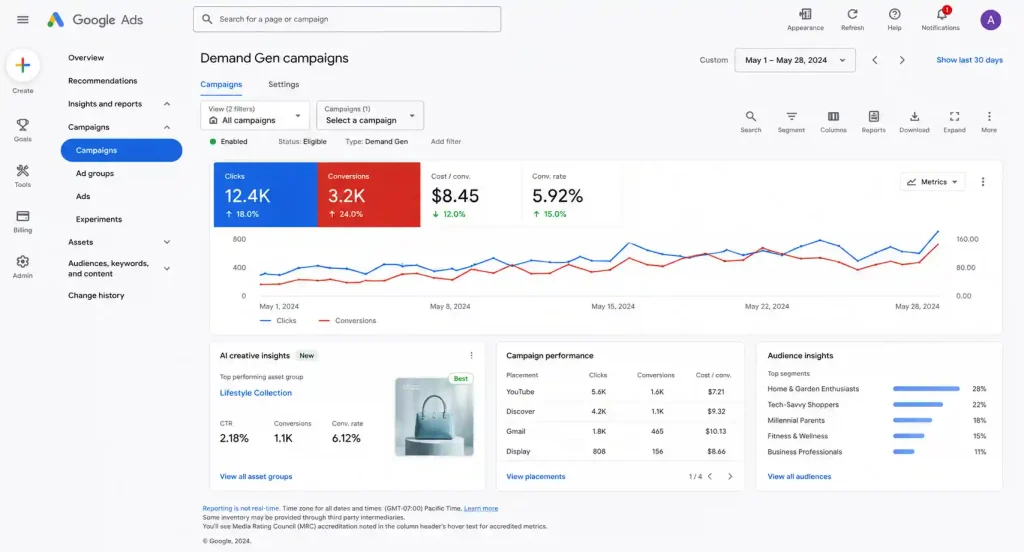
The updated Google Demand Gen reporting provides advertisers with deeper visibility into campaign performance.
Marketers can better evaluate:
- Asset performance
- Audience engagement
- Conversion trends
- Campaign effectiveness
- Creative impact
These insights help advertisers figure out which creative assets bring back the best kind of outcomes.
Rather than leaning on guesses, optimization turns into a more data driven process.
If a business is looking into wider advertising automation, it might also want to read about Google launches AI agent for Ad Manager, which describes how Google is extending AI throughout campaign management.
Taken together, these changes highlight Google’s steady long-term dedication to AI powered advertising, and not just a short lived push.
How can AI improve Demand Gen campaign performance?
Successful Demand Gen campaigns depend on relevance.
The better an advertisement matches user interests, the greater its potential performance.
Using AI powered advertising, Google can help advertisers improve:
Creative relevance
AI suggests stronger creative combinations.
Audience targeting
Campaigns reach users more likely to engage.
Performance optimization
AI continuously evaluates campaign effectiveness.
Asset testing
Multiple creative versions can be tested automatically.
These upgrades help marketers scale campaigns more efficiently while cutting down on the manual optimization grunt work, you know.
For organizations running huge advertising accounts, automation can very noticeably boost productivity.
Should marketers still create campaigns manually?
Absolutely.
AI enhances marketing but doesn’t replace strategic thinking.
Successful advertisers still need to define:
- Campaign objectives
- Brand messaging
- Audience strategy
- Budget allocation
- Creative direction
AI simply makes execution faster.
The most successful marketing teams combine human creativity with AI-powered optimization.
Organizations following Google’s broader AI developments should also explore Google Ads updates target based bidding for budget limited campaigns, which highlights how automation continues improving advertising performance.
What does this update mean for the future of Google Ads?
Google continues investing heavily in AI across its advertising ecosystem.
Recent improvements now include:
- AI-generated creatives
- Smart bidding
- Automated reporting
- Performance recommendations
- Audience optimization
Demand Gen campaigns represent another major step toward intelligent campaign management.
As these capabilities keep maturing, advertisers will spend less time juggling technical things and more time attending to business growth, in general.
For marketers who want official guidance on Demand Gen campaigns, the Google Ads Demand Gen Campaigns Help Center includes extensive documentation and practical implementation best practices.
Final Thoughts
Google’s fresh AI creative and reporting tools make Demand Gen campaigns feel more intelligent, more efficient,and more grounded in data.
When you blend AI driven creative help with improved reporting, Google is basically helping advertisers put together stronger campaigns, while making optimization a lot easier.
This update also points to a larger shift happening in the background.
Artificial intelligence is getting woven into every part of digital advertising, from early planning through final tweaks.
Companies that take time to pair AI automation with a solid marketing strategy will likely be in the best position to sharpen campaign performance in the coming years.
How do you think AI will change campaign creation over the next few years? Drop your thoughts in the comments below.
FAQs
What are Google Demand Gen campaigns?
Demand Gen campaigns help advertisers reach potential customers across YouTube, Discover, Gmail, and other Google properties using visually engaging advertisements.
What are Google’s new AI creative tools?
They help advertisers generate creative assets, improve campaign efficiency, and optimize advertising performance using artificial intelligence.
How do the new reporting tools help marketers?
The updated reporting provides deeper insights into asset performance, audience engagement, conversions, and campaign optimization.
Can AI replace creative teams?
No. AI supports creative production, while marketers continue providing strategy, messaging, and brand direction.
Should businesses use AI for Google Ads?
Yes. AI can improve efficiency, accelerate testing, and help optimize campaigns while still requiring human oversight for strategic decisions.

Kumar Swamy is the CEO of Itech Manthra Pvt Ltd and a dedicated Article Writer and SEO Specialist. With a wealth of experience in crafting high-quality content, he focuses on technology, business, and current events, ensuring that readers receive timely and relevant insights.
As a technical SEO expert, Kumar Swamy employs effective strategies to optimize websites for search engines, boosting visibility and performance. Passionate about sharing knowledge, he aims to empower audiences with informative and engaging articles.
Connect with Kumar Swamy to explore the evolving landscape of content creation!