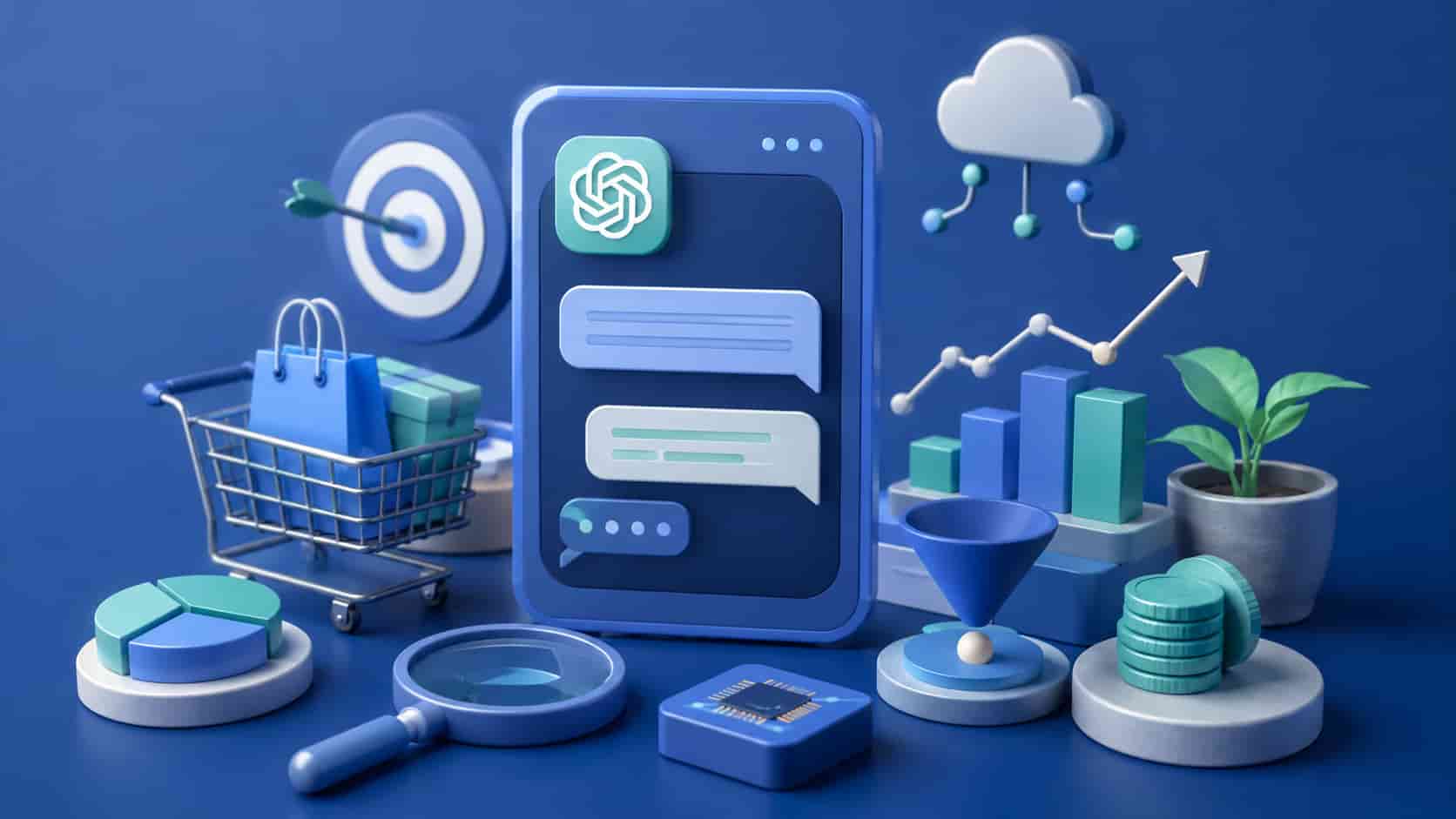
A decade ago, businesses were clawing for visibility on Google’s search results page. Now, I think millions of people ask ChatGPT for product recommendations, software comparisons, travel advice, and buying guidance before they ever land on a website.
That change is opening up a new marketing opening, and OpenAI is getting ready to monetize it.
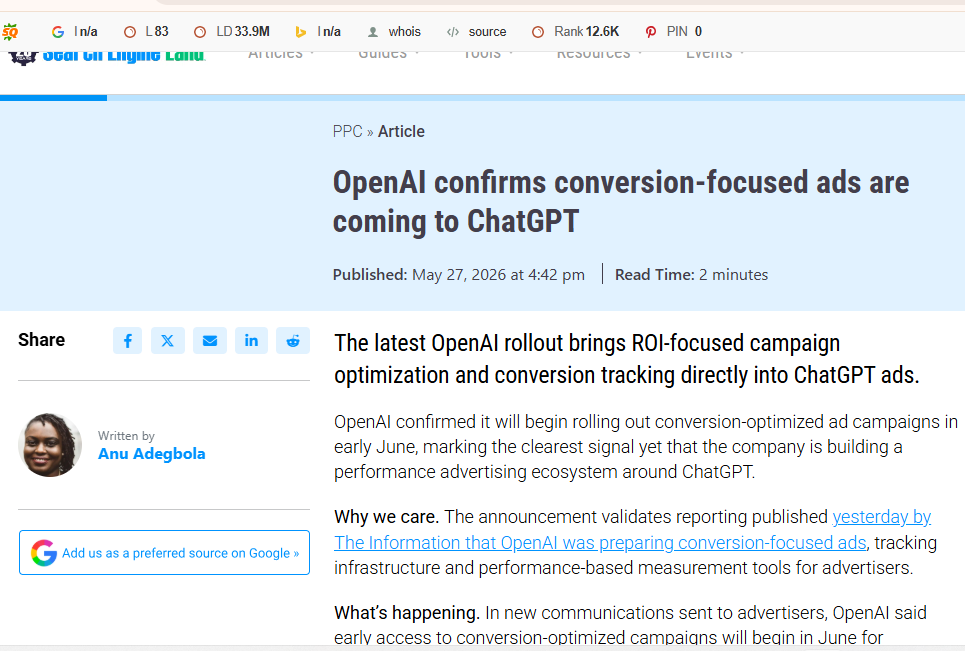
The company has said that conversion centered advertising features are on the way for ChatGPT. This includes capabilities built to help advertisers track and improve for actual business results like leads, signups, and purchases.
A lot of the reporting has leaned into the ad story. That makes sense. Still, the larger signal is what this suggests about the future of digital marketing.
We’re moving away from a system that’s mainly built on keywords, and into one that is increasingly guided by dialogue.
Key Introduction
- OpenAI is putting together ad infrastructure that aims at measurable business outcomes, not just impressions.
- ChatGPT might become a real heavyweight competitor for performance marketing budgets that are still mostly going to Google and Meta.
- It could grab that spend faster than people think.
- Businesses that notice conversational intent early on may get a clearer edge because AI-driven discovery just keeps expanding.
Why Is OpenAI Introducing Conversion-Focused Ads?
Quick version: OpenAI needs a revenue stream that can keep going, and ads aimed at conversions are one of the strongest levers to bring in serious marketing budgets.
Advertisers care about outcomes. Sure, impressions count, and clicks matter too, but in the end most companies want sales, leads, subscriptions, bookings, or something measured as revenue.
So, that is why basically every major ad platform ends up building more advanced conversion tracking systems. Marketers want evidence that what they spend actually leads to business results.
OpenAI’s move signals that ChatGPT is evolving beyond an AI assistant and toward a fully developed advertising ecosystem. Instead of just offering exposure, the platform wants to hand advertisers measurable performance data, like actual results not just reach. It feels familiar, almost like a playbook that people have seen before.
First, platforms build audiences, then they bring in advertising. After that, measurement and optimization come next. Finally, they go after marketing budgets aggressively, and suddenly everybody is bidding, testing, resizing, trying again.
ChatGPT already has a key advantage though: highly engaged users who actively seek answers, suggestions, and fixes. That kind of involvement is seriously valuable, because the intent is already there, not buried under guesswork.
Quotable Summary: Conversion tracking is often the turning point where a digital platform becomes less of a media property and more of a performance marketing channel.
How Would ChatGPT Advertising Differ From Google Ads?
Short answer: Google mainly understands search queries, while ChatGPT can understand the context inside ongoing conversations.
That shift could reshape how marketers think about intent, what it really means, and when it shows up. Traditional search advertising works because people give away intent using keywords, not just the vibe.
Like this:
- Best accounting software
- Buy running shoes
- Affordable CRM platform
Google then lines advertisers up with those specific searches.
ChatGPT interactions feel more dynamic, because it’s not only what someone types once.
A user might start by talking about a business challenge, and then the thread continues.
Over time the conversation clarifies goals, pain points, spending limits, priorities, and what actually counts during the decision.
So by the time a recommendation lands, the system may understand the person way better than any single search query could ever do.
ChatGPT Ads vs Google Ads
| Factor | Google Ads | ChatGPT Ads |
|---|---|---|
| Main Signal | Keywords | Conversation Context |
| User Intent | Explicit Searches | Emerging Intent |
| Customer Insights | Limited Query Data | Multi-Step Dialogue |
| Discovery Method | Search Results | AI Recommendations |
| Decision Journey | Shorter | Often Longer |
| Optimization Potential | Keyword-Based | Context-Based |
Key Takeaway: Search shows what users type. Conversations show what users truly need.
This doesn’t mean ChatGPT will replace Google.
Instead it adds a new layer inside the customer journey that marketers have to learn how to walk through, a bit awkward at first.
Quotable Summary: The next generation of advertising might be built around talk and back-and-forth rather than keywords, in practice.
What Does This Mean for Small Businesses?
Short answer: Small businesses may reach exceptionally qualified prospects without going head to head with enterprise-level advertising budgets.
This part is often missed completely, even though it is right there in plain sight.
Big brands usually take over broad search terms because they can outspend smaller competitors.
But AI-driven conversations change the rhythm.
Picture a local financial advisor, for example.
If they chase a wide keyword like “financial planning”, the costs can climb fast, and the competition is intense.
Now picture a person who spends several minutes discussing retirement goals, investment worries, and long-term money planning.
That kind of exchange paints a much sharper intent profile.
The user is no longer browsing casually.
They are actively exploring solutions, not just checking stuff.
For small businesses this could mean improved targeting opportunities and possibly better quality leads.
Industries That May Benefit Include
- Professional services
- Local businesses
- Healthcare providers
- SaaS companies
- Education platforms
- Specialized ecommerce brands
Obviously competition will eventually creep up once more advertisers enter the platform.
That is why experimentation matters a lot during the early stages, especially when budgets are still constrained.
Quotable Summary: Early adopters often see the strongest results when a totally new advertising channel starts to appear.
Will ChatGPT Ads Convert Better Than Traditional Search Ads?
Short answer: It is still too early to know, but the potential is there because AI conversations tend to uncover richer intent signals.
Intent has always been the core of effective advertising.
The more you understand a potential customer, the easier it is to offer the right deal at the right moment.
Scenario One
A user searches:
“Project management software”
Scenario Two
A user says to ChatGPT:
“I run a remote group of 20 employees. We’re using spreadsheets, we keep missing timelines, and we need something that connects with Slack. It also has to stay within a 250 dollar monthly budget, because that is the limit.”
In this case the platform can pick up on more details, like:
- The size of the team
- The current pain points
- The budget boundaries
- The integration asks
- The end goals
That extra level of context opens the door to suggestions that feel more relevant. And it can also lead to improved conversion results, or at least better odds.
Still, higher conversion rates are never promised. Nothing is automatic.
It will depend on how OpenAI balances advertising with the actual user experience.
If ads come off as intrusive, or just plain mismatched, people may engage less.
But if the recommendations seem useful and clearly grounded in what the user shared, advertisers might see stronger outcomes.
Quotable Summary: Conversational intent could become one of the most useful targeting signals for modern marketing.
What Marketing Skills Will Matter Most in an AI-Driven Advertising Age?
Quick version: Really getting customers will matter more than memorizing each platform trick.
A lot of marketers spend years learning tactics that belong to one specific place, one interface, and a few dashboards.
But then the platform changes.
Consumer habits shift.
New technology shows up.
And suddenly what was “best practice” yesterday feels a little outdated today.
The people who do well for the long run tend to lean on basics, fundamentals. Not just channels. Not just tools.
1. First-Party Data Gathering
Companies that can collect clean customer data will keep a clear edge, especially as privacy expectations keep changing.
2. Conversational Content
Copy and formats meant to answer actual questions will grow more valuable in AI-powered environments.
3. Customer Path Analysis
When you understand how a prospect moves from awareness toward purchase, you can respond better to conversational discovery and intent signals.
4. Attribution and Measurement
AI-assisted decision making can stretch journeys and add extra steps, so brands need measurement that stays useful and doesn’t break when behavior gets messy.
5. AI Visibility Optimization
Showing up in AI-generated recommendations can start to matter just as much as standard search visibility.
A Basic Framework
- Make content that is truly helpful.
- Nurture trust with audiences.
- Gather quality first-party data.
- Watch results and measure carefully.
- Keep improving using customer behavior signals.
Also, notice how none of these rely on one particular advertising platform.
The reason is pretty plain: knowing the customer stays the most durable competitive advantage.
Quotable Summary: The future marketing winners will understand customers better than they understand algorithms.
What Is the Biggest Challenge OpenAI Faces?
Quick answer: Trust.
Every ad platform eventually hits a tradeoff between revenue and user experience.
AI assistants run into an even bigger hurdle, because users sometimes treat the response as a recommendation rather than a message.
People trust AI tools to provide usable information.
That trust creates real, lasting value.
It also creates this kind of risk, that people notice.
If advertising turns overly aggressive, users may start doubting how credible the recommendations feel.
That’s why relevance really matters, not just the vibe.
Helpful advertising can improve overall experiences.
On the other hand, bad advertising can mess with them.
OpenAI’s long-term success depends on keeping a balance between monetization and trust.
Without trust, user engagement tends to fall.
Without engagement, advertising becomes less valuable.
The relationship is deeply intertwined, in practice it’s connected all the way through.
Quotable Summary: The future of AI advertising will rely less on technology and more on protecting user trust.
The Bigger Shift Marketers Should Be Watching
The announcement about conversion-focused advertising is important, but it’s only one thread in a far larger shift.
Consumers are getting more comfortable treating AI assistants as discovery helpers.
- They ask questions, and they keep asking.
- They compare products, side by side.
- They search for guidance or recommendations.
- They explore solutions, sometimes right there.
In many cases these back-and-forth conversations happen before a traditional search ever shows up, or even gets started.
That behavior change matters.
Conclusion
For years, marketers optimized around search engines.
Now the next phase in digital marketing may demand optimizing for AI-driven conversations too. And no, this does not mean SEO goes away entirely. It also does not mean Google loses relevance. It does not mean every bit of advertising money migrates toward ChatGPT.
What it does mean is that conversational discovery is turning into a real, meaningful segment of the customer journey.
Companies that start looking at this shift now will likely be more ready to use it once the ecosystem matures.
The launch of conversion-focused advertising isn’t the finish line. It is more like the most obvious signal yet that conversational marketing is becoming an actual business pathway. For marketers who can adapt, that pathway may end up being among the most important avenues for growth in the coming decade.

Kumar Swamy is the CEO of Itech Manthra Pvt Ltd and a dedicated Article Writer and SEO Specialist. With a wealth of experience in crafting high-quality content, he focuses on technology, business, and current events, ensuring that readers receive timely and relevant insights.
As a technical SEO expert, Kumar Swamy employs effective strategies to optimize websites for search engines, boosting visibility and performance. Passionate about sharing knowledge, he aims to empower audiences with informative and engaging articles.
Connect with Kumar Swamy to explore the evolving landscape of content creation!