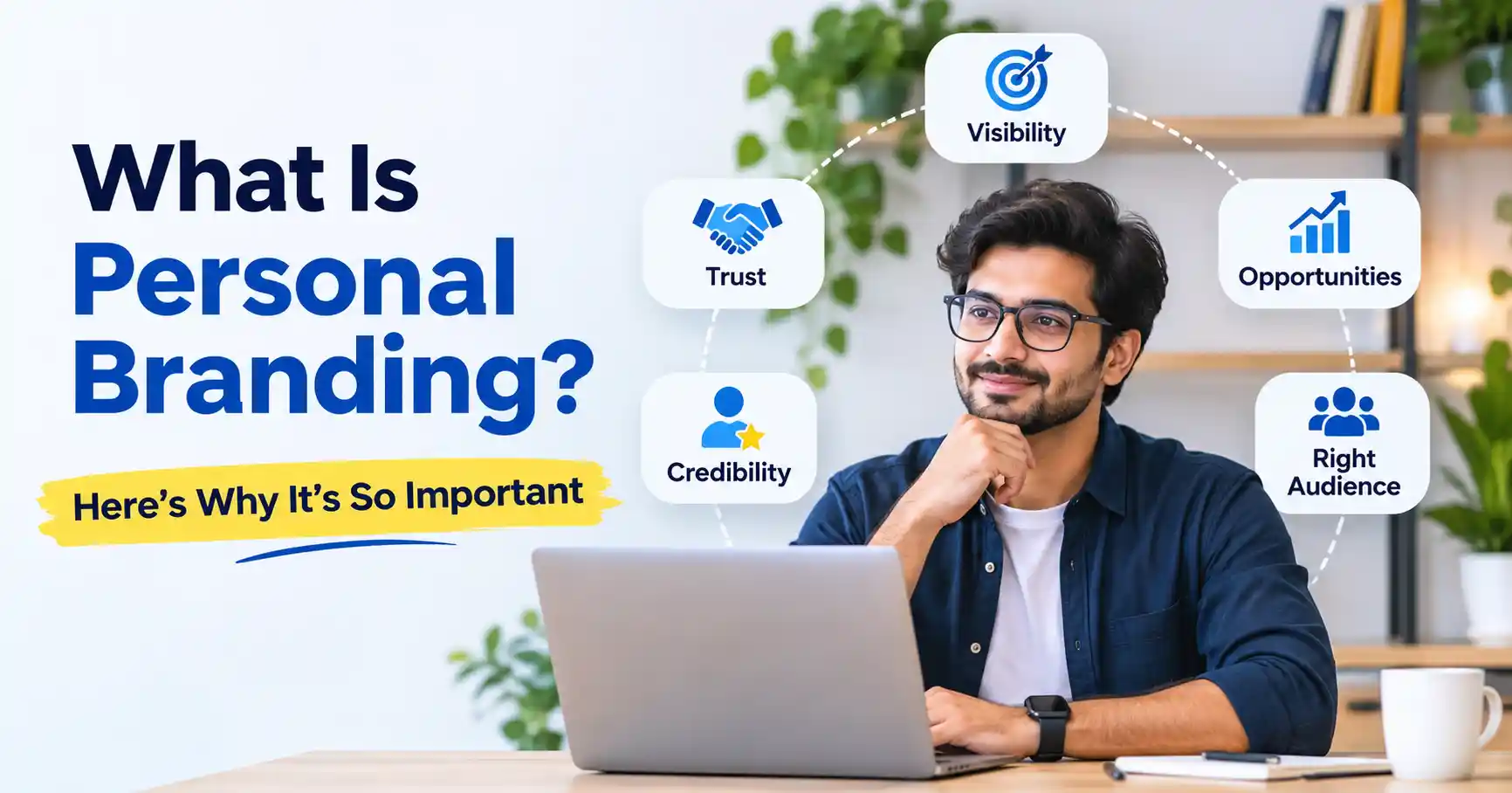
Personal branding isn’t just for influencers, celebrities, or people with large social media followings. It’s equally relevant to bloggers, marketers, business owners, freelancers, and professionals who want their expertise to be recognized and their work to be trusted.
Think about the last time you searched for a service provider, read a blog post, or considered following someone in your industry. You probably wanted to know more than their name. You wanted to understand what they knew, whether their advice was useful, and whether they were someone worth listening to.
That impression is part of their personal brand.
A strong personal brand helps people understand what you do, what you stand for, and why your work matters. It can support professional relationships, business visibility, and career opportunities. But building one involves more than publishing content regularly or having a polished online profile.
Here’s what personal branding means, why it matters, and how to start building one.
What Is Personal Branding?
Personal branding is the process of communicating your expertise, values, personality, and professional identity so people develop a clear understanding of who you are and what you offer.
Your personal brand is the impression people form about you. Personal branding is the ongoing effort to shape that impression through your work, communication, content, and relationships.
Consider a few examples. A digital marketer might become known for explaining complicated SEO concepts in simple language. A business owner might earn a reputation for honest advice and dependable service. A blogger might be recognized for practical tutorials that help readers solve specific problems.
In each case, the personal brand develops through a consistent pattern of useful work. A logo, tagline, or social media bio can help communicate that identity, but none of them can build a credible reputation on their own.
Personal branding also differs from corporate branding. Corporate branding focuses on how people perceive a business, while personal branding centers on an individual. The two can reinforce each other, particularly when a founder’s expertise and reputation are closely connected to their company.
Why Is Personal Branding Important?
Personal branding helps people understand what makes you relevant and gives them reasons to remember and trust you. Its value extends well beyond visibility.
It Helps You Stand Out in a Competitive Market
When professionals offer similar services or cover similar topics, a clear personal brand helps people understand what makes your approach different.
Imagine two freelance content writers. One describes their services as “writing blogs for businesses.” The other explains that they help SaaS companies turn complex product features into useful, search focused content.
Both may have similar writing skills, but the second description communicates a more specific area of expertise. It gives potential clients a clearer idea of what the writer does and whether their services are a good fit.
You don’t need to be completely different from everyone else. You need to make your strengths and perspective easy to recognize.
It Builds Trust and Professional Credibility
Before acting on someone’s advice or hiring them, people often look for signs that the person knows what they’re talking about.
Useful articles, thoughtful explanations, relevant work samples, and honest communication can demonstrate expertise. Over time, these signals make it easier for others to evaluate your capabilities.
But credibility doesn’t come from appearance alone. A polished website might attract attention, yet inaccurate information or unreliable work can quickly undermine that impression.
The strongest personal brands connect what someone says with what they consistently do.
It Creates Career and Business Opportunities
A recognizable professional reputation makes it easier for others to understand your capabilities and recommend you when relevant opportunities arise.
For a marketer, that could mean an invitation to contribute to an industry publication. A business owner might find that potential customers discover their expertise before contacting the company. A blogger could connect with another creator and explore a collaboration.
These outcomes aren’t guaranteed. Personal branding is better approached as a long term investment in professional visibility and relationships than as a shortcut to immediate results.
It Helps You Attract the Right Audience
A personal brand communicates who you serve and what kind of value you provide.
A content creator who focuses on practical marketing tutorials may attract readers looking to improve their campaigns. A business consultant who shares operational insights may connect with founders facing similar challenges.
Knowing your audience also helps you decide what not to publish. Not every trend, topic, or platform deserves your attention.
It Gives You More Control Over Your Professional Reputation
People will form opinions about you whether you actively manage your online presence or not.
A consistent personal brand gives you more opportunities to communicate your expertise, values, and work accurately. It can also reduce confusion when someone encounters your profile, website, or content for the first time.
You can’t control every perception, but you can make your professional identity easier to understand.
Who Needs Personal Branding?
Personal branding is useful for anyone whose work depends on being recognized, trusted, or recommended.
- Bloggers and content creators: A recognizable voice and clear subject focus help readers understand what to expect from your content.
- Digital marketers and professionals: Sharing useful insights and relevant work helps communicate your expertise to potential employers, clients, and collaborators.
- Entrepreneurs and business owners: A founder’s reputation can help customers understand the people and values behind a company.
- Freelancers and consultants: A clear professional identity makes it easier for prospective clients to understand your services and experience.
You don’t need to maintain a presence on every social media platform. A focused website, a useful portfolio, and consistent activity where your audience spends time may be more valuable than several inactive profiles.
What Makes a Strong Personal Brand?
A strong personal brand brings together several elements that help people understand who you are and what you offer.
| Element | What it communicates |
| Expertise | What you know and can help others do |
| Audience | Who benefits from your work |
| Values | What matters to you and how you approach your work |
| Communication | How you explain ideas and interact with people |
| Consistency | Whether your actions and messages reinforce the same identity |
A useful starting point is a personal brand statement:
“I help target audience achieve desired outcome through expertise or approach.”
For example: “I help small businesses improve their online visibility through practical SEO strategies and content marketing.”
You don’t need to use this statement word for word across every platform. Think of it as a reference point for your profile, content, and professional activities.
How to Start Building Your Personal Brand
You don’t need a complete rebrand or a large content budget to get started. A few deliberate steps can help you establish a clear professional identity.
1. Identify Your Expertise and Goals
Start by thinking about the work you enjoy, the skills you’ve developed, and the problems you can help solve.
Then consider what you want your personal brand to support. Perhaps you want to attract clients, establish yourself as a subject expert, grow your professional network, or build recognition for your business.
Your goals will influence what you communicate and where you focus your effort.
2. Define Your Target Audience
Be specific about the people you want to reach.
A blogger writing for beginner marketers will make different content choices from a consultant targeting experienced marketing leaders. Understanding your audience helps you choose relevant topics, examples, and language.
You don’t have to exclude everyone else. You simply need a clear starting point.
3. Optimize Your Online Presence
Review the places where people are most likely to learn about you.
Update your professional bio, profile image, website, and portfolio so they communicate a consistent identity. Make sure your descriptions explain what you do and who you help.
Visual consistency matters, too. iTechManthra’s guide to Instagram profile picture optimization explains how to approach this part of your online presence.
A profile image is only one element of personal branding, but it can help people recognize you across platforms.
4. Create Useful Content Consistently
Content gives people a way to understand your expertise before they work with you or follow your advice.
Depending on your audience and area of expertise, you could share:
- Practical tutorials that solve a specific problem
- Lessons from projects or professional experiences
- Explanations of industry changes
- Thoughtful opinions supported by evidence
- Answers to questions your audience regularly asks
The key is to choose a publishing schedule you can maintain. One useful article or post each week is a more practical starting point than an ambitious schedule you can’t sustain.
5. Build Relationships and Participate in Your Industry
Personal branding isn’t just about publishing content. It’s also about how you interact with people.
Respond thoughtfully to relevant discussions, collaborate with others, share useful resources, and follow through on professional commitments.
These interactions give people a chance to experience your values and expertise directly, rather than relying only on how you describe yourself.
6. Measure Progress and Refine Your Approach
Look at whether your efforts are reaching the right people and supporting your goals.
Useful signals might include relevant profile visits, inquiries, referrals, invitations, and engagement from your intended audience. For a business owner, qualified leads may matter more than an increase in followers.
It’s also worth reviewing whether people understand what you do when they encounter your profile or website.
For more guidance, read 5 ways to measure whether your branding strategy is working.
Common Personal Branding Mistakes to Avoid
Personal branding becomes less effective when appearance takes priority over substance.
- Trying to appeal to everyone: A broad message can make it difficult for people to understand what you offer.
- Copying another person’s style: Learn from others, but develop a perspective that reflects your own expertise and values.
- Chasing followers: A smaller, relevant audience may be more useful than a large audience with little interest in your work.
- Posting only promotional content: Give people a reason to follow you by sharing useful information, not just announcements.
- Making unsupported claims: Let your work, examples, and accurate descriptions demonstrate your capabilities.
- Being inconsistent: Your content, professional behavior, and public descriptions should reinforce the same identity.
The guiding principle is simple: your personal brand should reflect your professional work, not act as a substitute for it.
FAQ’s
Personal branding is how you communicate who you are, what you know, and what makes your work valuable. It helps people develop a clearer understanding of your expertise and professional identity.
Yes. A personal brand can develop through a professional website, blog, portfolio, industry events, referrals, and meaningful relationships. Social media can help, but it isn’t a requirement.
There is no fixed timeline. Building a recognizable reputation depends on your goals, audience, expertise, and how consistently you demonstrate your value.
Rather than expecting immediate results, focus on developing a clear identity and maintaining it over time.
Personal branding focuses on an individual’s reputation, expertise, and identity. Corporate branding focuses on how people perceive a company, including its values, products, services, and customer experience.
A founder’s personal brand can strengthen a company’s identity, but the two are not the same.
Conclusion
Personal branding helps people understand what you do, what you stand for, and why your expertise matters. When it’s backed by useful work and genuine relationships, it can support trust, professional visibility, and meaningful opportunities.
You don’t need to become an influencer or publish content every day. Start by identifying what you want to be known for, defining the audience you want to help, and communicating your expertise consistently.
Your personal brand should grow alongside your skills and experience. The goal isn’t to create a perfect image. It’s to build a professional reputation that reflects the value you provide.

Kumar Swamy is the CEO of Itech Manthra Pvt Ltd and a dedicated Article Writer and SEO Specialist. With a wealth of experience in crafting high-quality content, he focuses on technology, business, and current events, ensuring that readers receive timely and relevant insights.
As a technical SEO expert, Kumar Swamy employs effective strategies to optimize websites for search engines, boosting visibility and performance. Passionate about sharing knowledge, he aims to empower audiences with informative and engaging articles.
Connect with Kumar Swamy to explore the evolving landscape of content creation!