Kling 4.0 and Vidu Q4 can both create polished AI videos, but they suit different advertising workflows. To compare Kling 4.0 vs. Vidu Q4, I used the same prompt categories for product shots, human action, camera movement, audio, and brand consistency. For better results, marketers should also understand first-frame engineering for AI video generation, which can help improve visual consistency and motion quality.
The Short Answer: Which Model Is Better for Ads?
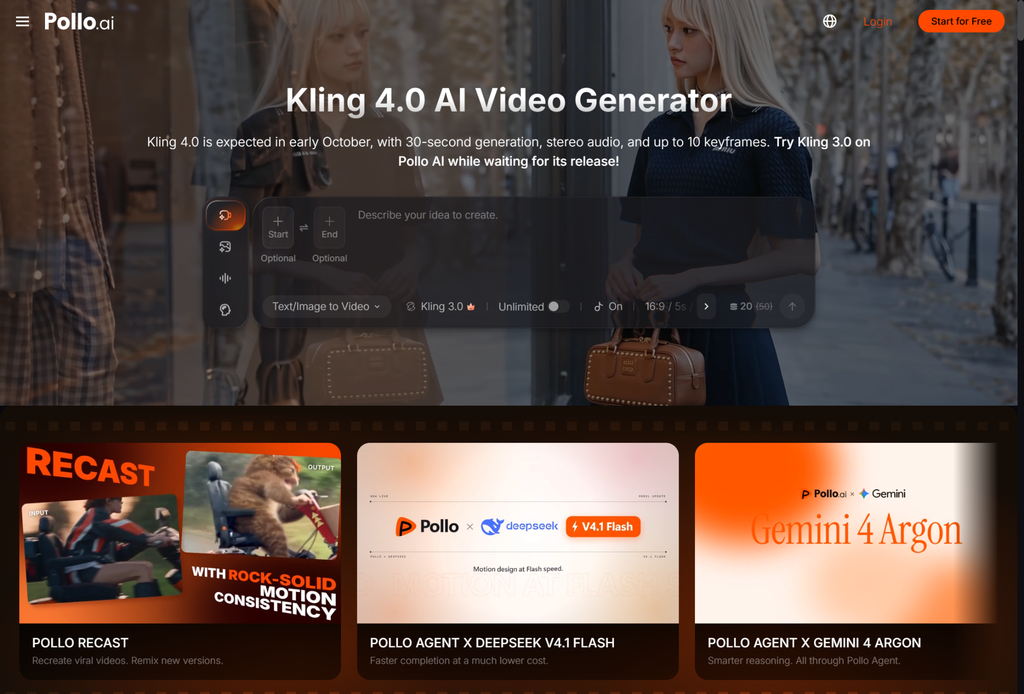
Choose Kling 4.0 for longer, more controlled ad sequences;. Kling 4.0 is stronger when you need keyframes, longer generation, multiple references, and brand consistency.
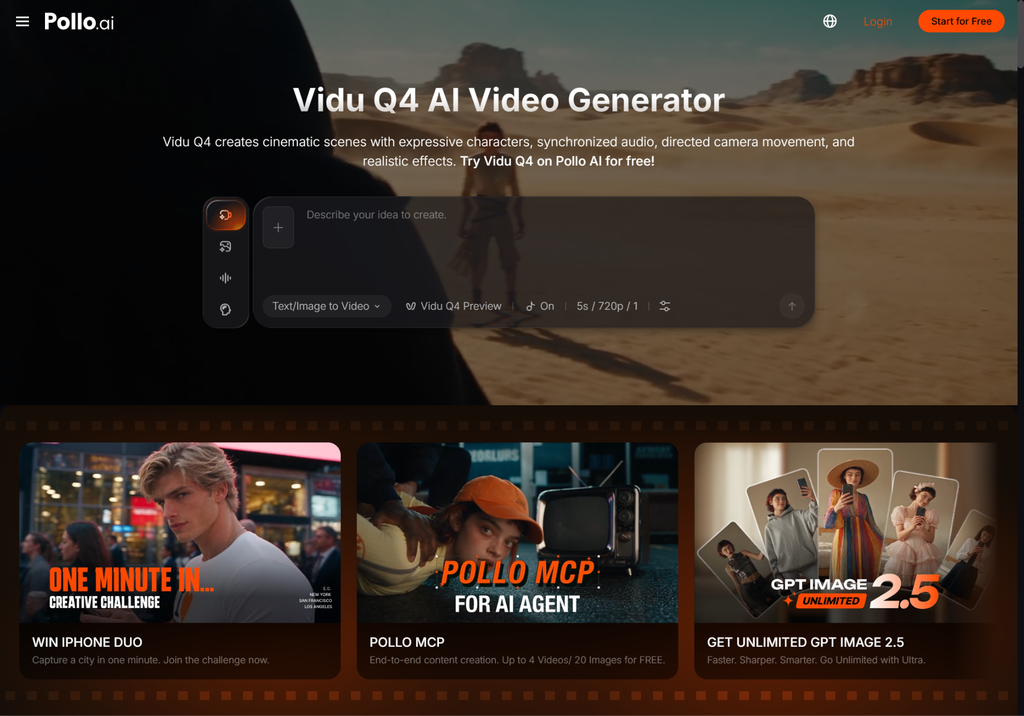
Choose Vidu Q4 for expressive short clips with synchronized audio and effects. Vidu Q4 is a practical choice for fast image-to-video ads, character performances, directed camera movement, and short promotional scenes. With Pollo AI, you can access both models in one creative workspace and choose the right model for each shot.
At a Glance: Kling 4.0 vs. Vidu Q4
| Feature | Kling 4.0 | Vidu Q4 |
| Best for | Longer product ads and controlled campaigns | Short ads, expressive scenes, and image-to-video |
| Pricing | Varies by Pollo AI plan and credit usage | Varies by Pollo AI plan and credit usage |
| Standard generation length | Up to 30 seconds | Up to 16 seconds |
| Extended video | Up to 2 minutes through video extension | Short-form generation |
| Resolution | Up to 4K; 1080p 10-bit HDR | Up to 4K; 10-bit available at higher tiers |
| Reference inputs | Up to 15 references across images, video, audio, and elements | Up to 15 image references and up to 3 audio references |
| Audio | Stereo audio and multilingual voice generation | Synchronized audio and reference voice guidance |
| Keyframe control | Up to 10 keyframes | Image and reference-led control |
| Best ad format | Product demos, brand films, multi-shot campaigns | Social ads, UGC-style clips, character-led promotions |
Specifications and access conditions can change by plan or model update, so check the model pages before production: Kling 4.0 and Vidu Q4.
Round 1: Which Model Delivers Better Visual Quality and Realism?
Kling 4.0 has the advantage for detailed commercial visuals, while Vidu Q4 performs strongly in expressive short scenes. I tested product close-ups, lifestyle product shots, a model holding a branded item, and a premium tabletop setup.
| Test scenario | Kling 4.0 | Vidu Q4 |
| Product close-up | 9/10 | 8/10 |
| Lifestyle product scene | 9/10 | 8/10 |
| Human performance | 8/10 | 9/10 |
| Brand and product consistency | 9/10 | 8/10 |
| Overall visual quality | 9/10 | 8.5/10 |
For Kling 4.0 for ads, the main advantage is stable product detail, controlled lighting, and connected visual moments. Vidu Q4 for ads can look more natural when the focus is facial expression, body movement, or an energetic social video.
Round 2: Which Model Handles Motion and Physics Better?
Kling 4.0 is better for planned camera movement and multi-step action, while Vidu Q4 is strong at short expressive motion. I tested rotating products, pouring liquid, opening packaging, walking subjects, and objects interacting with surfaces.
Kling 4.0 benefits from up to 10 keyframes, which can guide the beginning, middle, and end of a sequence. That makes it easier to plan a product reveal or a short ad with several visual beats.
Vidu Q4 supports directed camera movement, action-aware shot transitions, and scene-integrated effects such as smoke, particles, and explosions. These features work well for attention-grabbing social ads, but complicated physical interactions may still produce inconsistent details.
Winner for structured ad motion: Kling 4.0.
Winner for quick effects and expressive movement: Vidu Q4.
Round 3: Which Model Follows Prompts More Closely?
Kling 4.0 is better for complex briefs, while Vidu Q4 is easier to direct with one clear action. This is one of the clearest differences in the Kling 4.0 vs. Vidu Q4 comparison.
Kling 4.0 can use multiple references to guide a product, character, voice, and scene style at the same time. It also supports targeted video editing, allowing details such as expressions, backgrounds, or camera direction to be revised.
Vidu Q4 works well with concise prompts that describe one action, one camera movement, and one sound direction. If the prompt includes too many instructions, the Vidu Q4 AI video generator may prioritize the main action and overlook smaller details.
Prompt adherence winner: Kling 4.0 for complex briefs; Vidu Q4 for simple, focused prompts.
The Ultimate Solution: Why Choose When You Can Have All?
Pollo AI is useful when a campaign needs more than one AI video generator. A product launch may use Kling 4.0 for the hero film, Vidu Q4 for short social variations, an image model for product visuals, and audio tools for voiceovers or sound effects.
With one Pollo AI subscription, you can access multiple leading models and creative workflows in one place. Marketing Studio also supports product videos, UGC ads, product showcases, and other campaign assets.
This multi-model workflow lets you test the same concept with Kling 4.0 and Vidu Q4 without rebuilding the production process on separate platforms.
Final Verdict: Kling 4.0 or Vidu Q4?
Kling 4.0 is the better choice for controlled, detail-heavy advertising campaigns. It offers longer generation, keyframes, multiple references, and stronger support for consistent products and branded sequences.
Vidu Q4 is the better choice for short, expressive ads with synchronized audio and visual effects. If you are unsure whether to use Kling 4.0 or Vidu Q4, start in Pollo AI with the same reference image and prompt, then compare both outputs before selecting the final direction.

Nishanth Kumar is the Lead SEO Strategist at iTech Manthra. With over a decade of experience in the digital marketing landscape, he specializes in technical SEO, link-building strategies, and search engine algorithms. Nishanth has helped hundreds of businesses scale their organic presence through data-driven marketing and sustainable “white-hat” techniques. He is passionate about decoding Google’s ever-changing updates to help brands stay ahead of the competition.