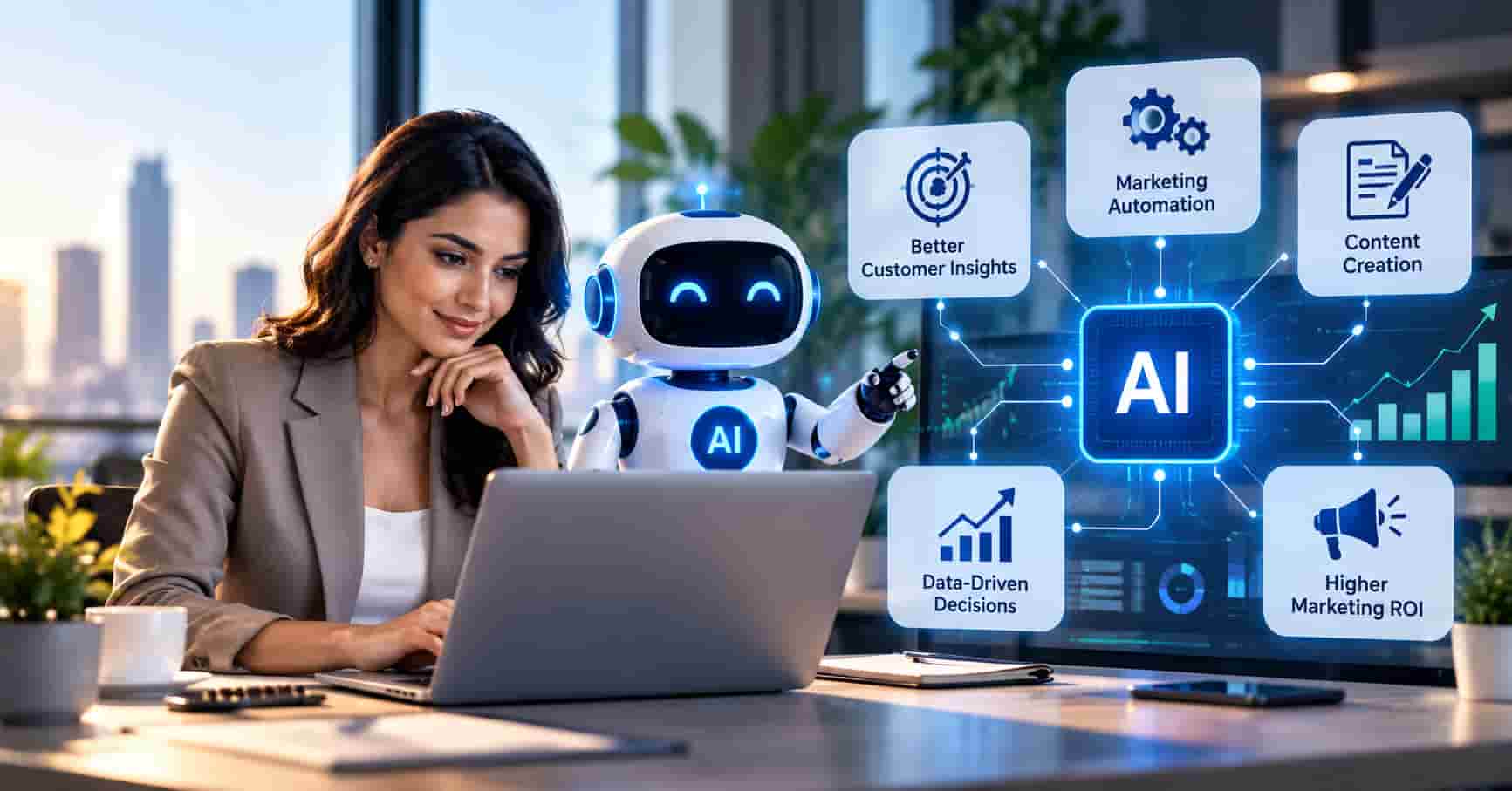
AI, in a blink, went from a cool new gadget to a workhorse for businesses every single day. Look at digital marketing: it helps companies figure out their customers, cuts down on boring chores, whips up content, and squeezes more juice from all that data.
Sure, you still need human smarts. But more and more, companies see AI as a solid sidekick, beefing up their marketing plans. Why’s it sticking around, here’s the gist of it. Businesses can also explore how AI in digital marketing is reshaping modern marketing strategies, from automation and personalization to data-driven decision-making.
Creating More Efficient Marketing Processes
Digital marketing, for all its pizzazz, involves a heap of drudgery. Sifting through mountains of data, unearthing keywords, organizing facts, spotting trends, doing all that laboriously just consumes your entire day.
But get this: AI accelerates much of that. This frees marketers to zero in on what truly matters. Creativity. Sharp decision-making. Big-picture thinking.
Efficiency does not necessarily mean replacing people. Instead, businesses can use AI to reduce administrative workloads while allowing experienced professionals to focus their attention where it provides the greatest value.
Understanding Customers More Effectively
Marketing success hinges on knowing what shoppers actually want, AI chews through massive data chunks, unearthing hidden patterns. You would miss them completely otherwise.
Businesses grab these insights to grasp what buyers dig, how they act, and what they prefer. That intel steers everything. From tailored content strategies to precise ad spending.
Plus, this deep vision enables hyper-personalization, Forget slapping generic messaging on everyone. Companies can craft bespoke experiences that genuinely resonate with distinct demographic segments, driving loyalty through the roof.
Supporting Modern Search Strategies
Search marketing is another area where AI is becoming increasingly important. Search engines keep getting smarter at decoding what people actually want, that changes the math for businesses. Just stuffing keywords into a webpage won’t cut it anymore. Quality matters. Topical depth matters. Authority and user intent? Those things carry real weight now.
Companies exploring how AI can complement their search strategy may use resources such as the Click Intelligence ordering portal when considering additional AI-focused SEO support alongside their internal marketing activities.
Producing and Improving Content
AI shifted how companies make content. It helps brainstorm angles, sketch outlines, boil down research, and spit out early drafts.
Still, leaning only on automation brings trouble. Human eyes are non-negotiable to keep facts straight, value high, and the brand voice sounding like actual humans.
The best play mixes both worlds. AI brings the speed and heavy lifting, while marketers inject true originality, real-world grit, and solid editorial judgment.
Making Faster, Data-Informed Decisions
Digital marketing spits out mountains of data. Website visits, conversions, engagement rates, and search performance are just a few metrics businesses might juggle.
AI tools sort through this mess and pull out actual trends. Because of that, marketing teams pivot way faster when a campaign stalls or a fresh chance pops up completely out of nowhere. That is the real power.
AI Is Becoming Part of the Standard Toolkit
AI won’t make old school marketing smarts obsolete. Not a chance. Instead, it is turning into just another tool to help marketers speed up their work and make better calls.
Companies that treat AI with care can mix machine muscle with real human creativity and sharp strategy. As marketing keeps shifting, that exact mix helps businesses stay flexible and keep bringing value straight to their audiences.

Nishanth Kumar is the Lead SEO Strategist at iTech Manthra. With over a decade of experience in the digital marketing landscape, he specializes in technical SEO, link-building strategies, and search engine algorithms. Nishanth has helped hundreds of businesses scale their organic presence through data-driven marketing and sustainable “white-hat” techniques. He is passionate about decoding Google’s ever-changing updates to help brands stay ahead of the competition.