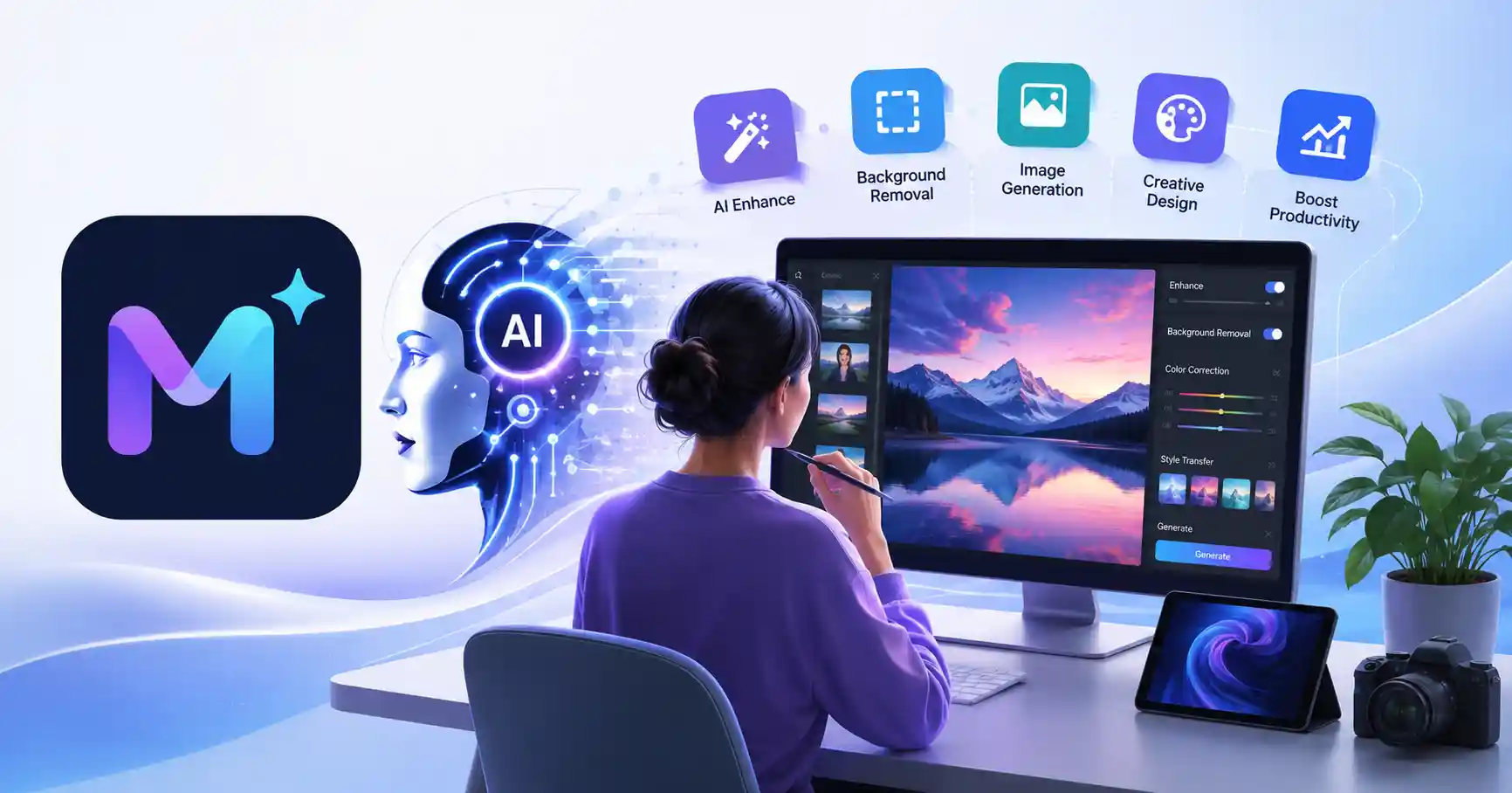
demand real design chops and hours at the computer can now come together in minutes. Marketers, designers, educators, casual social media users, pretty much everyone’s leaning on smarter tools these days to get decent visual content out the door without the old learning curve.
As this keeps developing, platforms like Imagvio AI are part of a bigger shift toward making visual creation something more people can actually do, not just trained designers. The point is not to replace creativity, but to take the repetitive bits off someones plate, speed things up, and open up pathways that were not really practical before. If you understand how these tools really work, it becomes a lot easier to figure out whether , and in what way to add them to your own workflow.
Where AI-Driven Visual Design Came From
Visuals always carried a lot of the weight in communication, though you know, businesses lean on imagery to build a brand and educators use it so ideas click, and regular folks share photos to tell their own stories. For a while, producing anything polished meant knowing your way around design software, photo editing, or at least having a decent camera.
That has shifted. AI models can now read prompts, recognize what is actually inside an image, and generate or revise visuals quickly enough that someone with almost no technical background can put something together that looks genuinely good. They can do it without ever touching a complicated editing suite, and honestly it feels like the barrier just dropped.
That shift has also reset expectations. Nobody wants to spend an hour manually color-correcting or cutting out a background anymore when a system can just handle it.
How AI Actually Fits Into a Creative Workflow
Good AI-powered visual tools aren’t really trying to take over creative decisions, they’re mostly there to speed up that technical grind. The person still brings the idea , the intent and the taste ,and the overall direction, even if the machines help in the background a bit. AI just handles the parts that are repetitive or technically fiddly. For creators looking to compare the latest AI-powered editing platforms, our guide on Best AI Image Editors of 2026 explores the top tools for image enhancement, background removal, restoration, and AI-assisted design, making it easier to choose the right solution for your workflow.
That usually looks like:
- Sharpening up image quality
- Pulling out unwanted backgrounds
- Fixing lighting and color
- Turning a text prompt into a visual concept
- Helping restore old or damaged photos
- Spinning out quick design variations
- Generally speeding up the editing process
None of this really replaces the creative work, it just makes more room for it, so people can spend more time on the actual storytelling, branding, and strategy instead of getting stuck in all the technical weeds.
Why Accessibility Actually Matters Here
One of the biggest wins with AI visual tools is just how much more accessible they’ve made this whole space. A lot of people who found traditional editing software genuinely intimidating can now do the basics through a simple, friendly interface.
Small business owners, students, freelancers, content creators are people who usually don’t have a big budget or a ton of spare time. AI closes that gap, giving them access to editing capability that used to require years of training just to use competently.
And when more people can actually experiment with visual communication, you end up with more creativity floating around in general, not less, which is honestly the opposite of what a lot of people initially worried about with this technology.
Why Quality Visuals Actually Matter More Than Ever
In a scrolling, skimming world good visuals do a lot of heavy lifting, images grab attention faster than text ever will. They can, in many ways, decide whether someone actually stops to engage with something or just keeps scrolling past it, and that small moment matters.
Solid visual design tends to improve:
- How clearly a message actually lands
- How much people engage with the content
- How recognizable a brand becomes
- How easy content is to read and process
- How much of it people actually remember
Whether it’s an educational graphic, a business deck, a blog header or a social post, the quality of the visuals shapes how credible and professional the whole thing feels , sometimes even more than the words do.
AI can help with this by keeping visual quality consistent without forcing the same repetitive manual work , every single time .
Where AI Actually Moves the Needle on Productivity
A lot of modern content work involves cranking out a huge volume of images across different platforms, and yeah it can get pretty intense. Marketing teams might need dozens of graphics a week, and online stores are always refreshing product shots, plus promotional materials too. In practice, this means production has to stay quick, and the images keep moving from one place to another, sometimes daily.
This is where AI genuinely earn its keep. Automating the repetitive stuff means people aren’t redoing the same adjustment fifty times over a task that used to eat up an afternoon can now happen in a fraction of the time.
That efficiency scales in both directions too. Bigger teams get to streamline their whole production pipeline, while individuals just get more breathing room to focus on planning, ideas, and actual strategy instead of grunt work.
Tools like Imagvio AI are a good example of where the industry’s heading is overall blending automation with real creative flexibility, so people can move faster on visual projects without giving up control over how the final result actually looks.
Using AI Responsibly Still Matters
As AI-created images become more common, the proper use of them matters more, not less. It means following copyright rules, paying attention to privacy and being transparent where it counts.
People should always confirm they truly have the right to edit or share an image, and they should avoid making anything misleading or deceptive. AI works best as a creative companion, not as a shortcut for misinformation or content nobody actually gave permission to create.
Keeping to those basics helps preserve trust in the space while these tools keep evolving.
Human Creativity Isn’t Going Anywhere
For all that progress, human creativity still isnt something AI can fully replace. It can toss out ideas fast and handle the technical grind, sure but it does not bring lived experience, emotion, cultural context, or real artistic intent. Those things still come from people.
The projects that actually work well tend to blend human imagination with whatever efficiency AI brings to the table. Designers, photographers, educators, marketers, artists, they’re still the ones making the real calls on style, message, composition, and what’s actually going to land with an audience.
AI isn’t competing with creators here. It’s more of a support system that widens what’s possible, rather than narrowing who gets to be creative.
Where This Is Probably Headed
The future of visual content creation will likely involve even more collaboration between people and AI, not less. As machine learning continues to improve, expect better image generation, sharper editing precision, more personalisation and workflows that automate more of the busywork.
Down the line, that probably means AI getting better at actually understanding what someone’s asking for, multiple AI systems working together more smoothly, and tools that adapt more specifically to different industries. Education, business, healthcare, media all of these are going to keep leaning further into AI-assisted visual production as the tech matures, and it feels like that shift is going to happen in layers.
As more folks adopt these tools, the programs that find the right balance between automating tasks and preserving real creative control are the ones that will actually stick around and help people ship professional quality visuals faster than they ever could before.
Wrapping Up
AI is reshaping visual content creation by bringing more advanced editing and design capability within reach of a much wider set of people than before. AI-powered platforms handle the complicated technical work, speed up production, and let creators put more of their focus into ideas rather than the process.
Even as technology keeps moving forward though, human creativity is still the part that makes visual communication feel real and engaging. AI tends to work best as a collaborator, where it boosts output without pushing past artistic judgment. Tools such as Imagvio AI, evolving alongside the rest of the industry, are a decent illustration of how AI can truly support current creative efforts while helping people stay current with how much high-quality visual content the world seems to be asking for now.

Nishanth Kumar is the Lead SEO Strategist at iTech Manthra. With over a decade of experience in the digital marketing landscape, he specializes in technical SEO, link-building strategies, and search engine algorithms. Nishanth has helped hundreds of businesses scale their organic presence through data-driven marketing and sustainable “white-hat” techniques. He is passionate about decoding Google’s ever-changing updates to help brands stay ahead of the competition.