
One of the reasons that AI goes wrong is how marketers fail to deliver a proper prompt.
What I mean to say is, the AI is not useless in itself; it actually assists the maker. It is how it is directed. Anything other than just thinking and actually asking for those questions out loud such as what the audience wants will really make a difference.
At the moment, thinking is the source of the power we have over marketers. If you can think clearly about yourself, AI will just be a supporting tool.
Insights
- Performance of ad comes from good prompts and not from the tools
- Amplify rather than replace your thinking with AI
- Precise prompts can help an army of a few outperform armies of many
What does an advertising campaign fall through the cracks?
- Briefly, the marketing prompts are shallow.
- Most of them are:
- “Write a Facebook ad for my product.”
Ideally, AI is just an instrument for assisting, not the carte blanche.
One way or another, AI doesn’t acutely recognize your audience, positioning, or even where you are in the funnel. It then jumps to the safest results in the absence of context because of obvious generic patterns. The result is that most machine generated ads can be interchanged amongst one another.
It is the lack of structured thinking, not really AI that is at fault. AI only magnifies this pitfall.
In short:
- Poor use of thinking leads to average performance at a grand scale
- Good prompts transform performance quickly
- AI amplifies any level of thinking for any direction
Great adrolls do not come for free; they are rooted in structured thinking.
What constitutes a high quality prompt?
The short answer is that an effective prompt would possess insights about the audience, contextual understanding, constraints, and strong objectives.
High performing prompts are very specific and guide the AI the way a strategist writing a brief does before messaging creatives.
Here is how the best marketers set things up:
- Defining audience
Give some deep thought to who exactly the audience is. Get:
- Because: they may not be identical; however experience, extrinsic opinions of buying an item, and decision making may be somewhat similar.
- Context framing
Where the ad appears:
- Platform (Google, Meta, LinkedIn)
- Funnel stage (cold, retargeting, conversion)
- Format (headline, carousel, video script)
- Constraints
To help delegating quality into limits:
- Character limits
- Tone and brand voice
- Keywords or compliance rules
- Desired outcome
Herding the AI toward an outcome:
- Clicks
- Leads
- Conversions
Examples:
Weak:
“Write a Google ad for accounting software.”
Strong:
“Write 5 Google Search ads for a cloud accounting SaaS targeting small business owners in India who currently use manual accounting or Tally. Highlight GST compliance, automation, and time saving. Include urgency and a demo CTA. Keep headlines under 30 characters.”
The second request would not just write the copy but set the right message.
The stronger prompts never ask AI to write. They let it first understand how it should write.
How can AI reminders be used by smaller companies?
Brief: By focusing on accuracy and speed over budget.
Larger corporations tend to depend on scale, that is, large budgets, agencies, and slower processes. But the converse can be the case for small businesses speed is their game; smaller inputs and quicker outputs.
AI plays out in a manner that diminishes the scale and magnifies the gains in clarity.
Illustration
Consider this Direct To Consumer (D2C) skin care startup:
One AI (structured prompts) track versus one agency driven track.
- CC/BF Ad spends amounted to a high $200,000 per month.
- Ais steadily increased by 38% in sex laws after 30 days right from 300s.
- Its CPA dropped by 22% after 30 days.
- Five times more creatives were used compared to normal times in sixty day periods.
It’s not the tool, but how quickly they can validate an idea makes the extreme difference.
Where small businesses can generate leverage:
- Accelerated iterative cycles
- Founder level insights built into the prompts
- Niche targeting, no agency overhead
- Course corrections in the form of iteration daily than monthly
AI gives small teams leverage if they think better than they spend.
What are the best AI prompt strategies for different ad platforms?
The short answer: different prompt for different platforms due to changing user intent. You can’t just re purpose the same prompt, because a Google search user is altogether a different user compared to someone scrolling through Instagram.
The brief must take into consideration user intent as well as the platform it appears on.
Example Prompts
Google Ads:
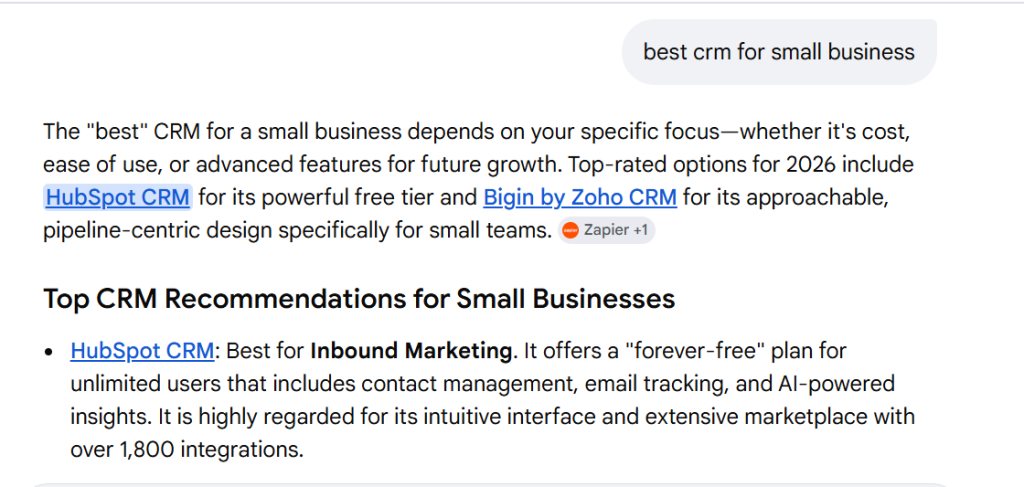
“Create ten high converting headlines with targeting for ‘best CRM for small business‘ complete with urgency and differentiation.”
Meta Ads:
“Write your first scroll stopper ad, targeting startup founders who have difficulties in tracking leads. Lead in with a pain point, end with a CTA demo.”
| Platform | User Intent | Prompt Focus | Output Type | Key Constraint |
|---|---|---|---|---|
| Google Ads | High intent | Keywords + urgency | Headlines + snippets | Character limits |
| Meta Ads | Passive discovery | Hooks + emotions | Primary text + CTA | First 2 lines matter |
| LinkedIn Ads | Professional | Value + credibility | Thought leadership | Formal tone |
| YouTube Ads | Engagement | Story + retention | Video script | First 5 seconds |
| Display Ads | Low attention | Simplicity | Short copy | Minimal text |
Great ads fit intent great prompts design intent first.
How does one develop a progressive AI driven ad creation work plan?
Simple: Use a structured framework to turn prompts into scalar assets.
AI shines beyond mere cognition when it belongs within a particular avenue.
The Playbook
- Define the campaign goal.
Awareness, lead, conversion, retargeting
- Establish a reusable prompt template.
Include audience, context, constraints, and objective.
- Create consecutive variations of these prompts
Never settle for fewer than five outputs up to ten.
- Refinement of prompts, as marked.
Any non authentic generalization in sent text should be removed, considering brand voice or overall tonality.
- Experimental Testing and Refinement Process
Performing this testing exercise and applying the insights not only improves the model but also ensures the model practices are fine tuned for updating purposes.
Pro Tip:
Develop a prompt library.
With time, your prompts will become a repeatable instrument causing a consistent lift in performance in campaigns.
You’re not seeking out one great ad you’re on the search for a system that gives you access to great ads all the time.
What was mostly neglected in discussions on prompt AI?
In Brief: They were all about the execution, with no considerations to long term strategy or differentiation.
Content, save the discussed source, also promotes the occurrence of prompts, perhaps one of the most important elements in performance optimization. Yet an incomplete picture emerges, where prompts should be formulated:
- Prompt libraries are intellectual property
Those prompts are real assets whenever they move the needle.
Highest performing teams do not share: they refine and scale.
- AI fatigue is rising
With more AI in use, most content across the board starts to look the same.
Differentiation will come from:
- First party data
- Unique insights
- Clear positioning
- Dependence invites accidents
AI does possess the possible risks in its functionality:
- Misleading claims
- Generic tone
- Tone inconsistencies
AI can only be a multiplier and not a judgment repealer.
| Scenario | AI Role | Human Role |
|---|---|---|
| Performance ads | Primary | Optimization |
| Brand campaigns | Support | Creative direction |
| New market strategy | Research | Decision-making |
| Compliance-heavy ads | Drafting | Validation |
Conclusion
The pure marketers will stay past AI use.
They should:
- Ask better questions
- Build better systems
- Think better
AI now equates to the new level of accessibility.

Kumar Swamy is the CEO of Itech Manthra Pvt Ltd and a dedicated Article Writer and SEO Specialist. With a wealth of experience in crafting high-quality content, he focuses on technology, business, and current events, ensuring that readers receive timely and relevant insights.
As a technical SEO expert, Kumar Swamy employs effective strategies to optimize websites for search engines, boosting visibility and performance. Passionate about sharing knowledge, he aims to empower audiences with informative and engaging articles.
Connect with Kumar Swamy to explore the evolving landscape of content creation!