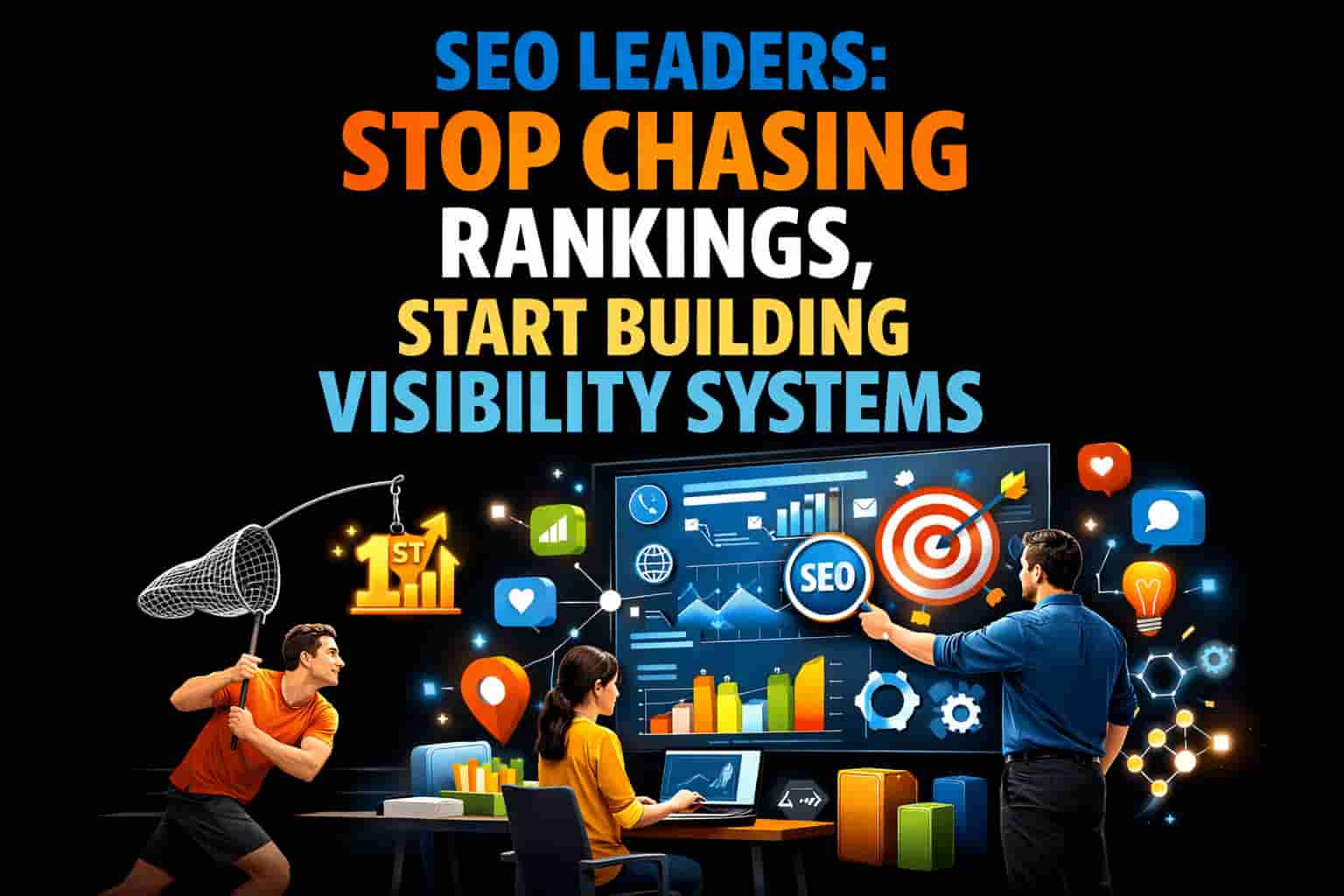
The chase for ranking never seems to halt as digital permutations are always evolving. We have been there before too: obsessed with Google and ranking and monitoring our stats. But is that all there is to analysis? What if alternative pathways could be trodden to establish solid long-term visibility and steady traffic for websites? Actually, the true game-changer is to transfer the focus from chasing rankings to building visibility systems. The article addresses the essence of why this shift is important and further informs SEO practitioners on how they may design more robust SEO strategies beyond mere reputation management.
Why SEO Leaders Need to Stop Chasing Rankings.
The thing about being so absorbed in rankings is that the game is about short gains. Sure, getting to the first page looks cool, but keeping the position intact takes loads of work. The algorithms will change, the competition will rise, and before you know what is happening, you would suddenly realize, “Well, there go my rankings,” and you are forced to start from square one. Instead of fighting with every keyword out there and trying to climb in those rankings, you should build systems that continually draw traffic.
“SEO does not simply find space on one page,” said Emily Rose, a digital marketing strategist. “It is about giving the business an online presence that in the long term builds trust and authority.”
What Are Visibility Systems and Why Are They Important?
Simply put, visibility systems are complete, sustainable SEO strategies that aim at long-term results rather than short-term hacks just to get high ranking. It consists of a series of operations, cumulatively increasing visibility to your website in multiple search domains.
Imagine rather than focusing on keyword visibility, an attention system comprises user engagement, technical SEO, quality content, backlinks, and social signals. At the heart, an attention system underpins the existence of your brand across the variety of channels and contexts.
In this context, appreciating visibility is to concentrate on how we can make an SEO strategy more flexible and stronger. The question then remains: How do we build these systems?
How to Begin Building Your Visibility System?
Appreciating User Intent
No SEO ranking can explain users’ intentions. SEO today is about understanding this search intent underlying the keywords rather than merely considering text matching on the odd occasion.
Example: If you’re optimizing for “best fitness tracker”, your written content should not only praise the best brands but should also suggest different types of fitness trackers, such as smartwatches or fitness bands, to cater to a variety of user needs.
Content is still king in terms of priority for keywords.
What’s most significant with your content is that it meets the needs of the audience and is not aimed at search engines. High-quality content with full and meaningful answers, relevant examples, and current information can lead to massive visits, creating opportunities for giving the website’s message further visibility.
“Content that benefits the user will prove to hold its rankings for much longer,” Jason T. Roberts, content specialist, comments. “When you design your communications, think clientele, not keywords.”
Diversify Your Content Channels
Do not confine your visibility efforts to your website. Social Media, Guest Posting, as well as outlets like YouTube or podcasts in total will certainly offer you visibility-promoting options that you could leverage.
SEO isn’t just Google anymore. For example, video content can get additional rankings on YouTube, sometimes even inches away from Google Featured Snippets.
Optimize for User Experience (UX)
Google presently is engaging in further serving the user and their experience. If your website is slow, mobile friendly-less, and or not easy to navigate, Google could remove your rankings, regardless of the perfection in the content.
Make user-friendly and faster loading websites; provide a smooth user experience. Such action impacts your visibility and engagement metrics, which Google thrives on.
Authority and trust signals are becoming a must.
Backlinks still play an essential role in building visibility, but it is not about numbers. Quality backlinks from high authority top-tier sources bolster the website’s visibility as seen by Google.
The trust factor can inspire long-term visibility, which is established by partnerships, earned mentions, as well as authoritative opinions in your niche.
How do SEO leaders measure existence/eyes systems?
Content visibility is tougher than it sounds; though keyword rankings can be tracked, the holistic approach to qualitative measurement known as “engagement metrics” should be considered.
Click-Through Rate (CTR): How many people are clicking on your results from the search page?
Organic Traffic: The number of visitors coming to your site through organic search.
Backlink Quality: Are you gaining links from authoritative, high-traffic websites?
Social Shares and Mentions: Are people talking about your content on social media platforms?
“Visibility isnʼt about getting to the top; itʼs about staying there while adapting to changing search algorithms and user expectations,” says SEO consultant Carla D. Williams.
FAQ’s
Questions:
Q1: What’s the difference between rankings and visibility in SEO?
Rankings are the position on the search engine results pages, but fundamentally, visibility has got to do with all possible ways the content created reaches others and is interacted with.
Q2: How long can it take for my visibility to take effect?
Results from a well-rounded visibility strategy might take some months to show but they mean more of a lasting growth as compared to chasing individual rankings.
Q3: Can I still focus on keyword while building a visibility system?
Yes, keywords are still important, but they should be treated as part of a broader strategy, which includes user engagement, content quality, and trust signals.
Q4: What role do social media signals play in SEO visibility?
Indirectly, social media signals be it shares, mentions, or engagement could very well boost your SEO visibility by generating traffic and increasing brand visibility.
Q5: How do I measure the success of my visibility system?
Approach is to measure success through search metrics of organic traffic, CTR, backlinks, and social shares, with engagement metrics showing how users interact with your content.
Conclusion: SEO Shift for Long Lasting Visibility
The ranking frenzy has ended; SEO elites have to break new ground and create visibility systems that provide sustainable, long-term returns. By considering intent behind content, multi-channel content, user experience improvements, and building trust, brands will optimize a more holistic strategy that will supersede efforts based largely on keywords.
Aggressively pursuing high-ranking Google positions is passé and counter-productive to getting the deserving visibility your brand needs.

Kumar Swamy is the CEO of Itech Manthra Pvt Ltd and a dedicated Article Writer and SEO Specialist. With a wealth of experience in crafting high-quality content, he focuses on technology, business, and current events, ensuring that readers receive timely and relevant insights.
As a technical SEO expert, Kumar Swamy employs effective strategies to optimize websites for search engines, boosting visibility and performance. Passionate about sharing knowledge, he aims to empower audiences with informative and engaging articles.
Connect with Kumar Swamy to explore the evolving landscape of content creation!