The fastest way that restaurants can distance themselves up in the present day is to leverage the power of great customer experience. With more choices in dining than ever before combined with the immediate influence of online reviews, it is no longer the ultimate bounded duty of the food to judge a restaurant. Speed, correctness, consistency, and convenience continually contribute to formulating how customers see the brand.
Technology works to empower hospitality in creating a great guest experience without replacing it whatsoever. Having systems operate in the background as they should enables people who are serving guests to maintain an intimate commitment to great service, ensuring they have a smooth dining journey.
Here are nine practical uses of technology by restaurants to ensure better customer experience across various touchpoints.
1. Faster and More Accurate Ordering
There’s nothing to tick off a customer more than having to wait for a long time or receive a wrong order. Technology can correct both speed and accuracy by taking away manual intervening steps and hence lessening miscommunication.
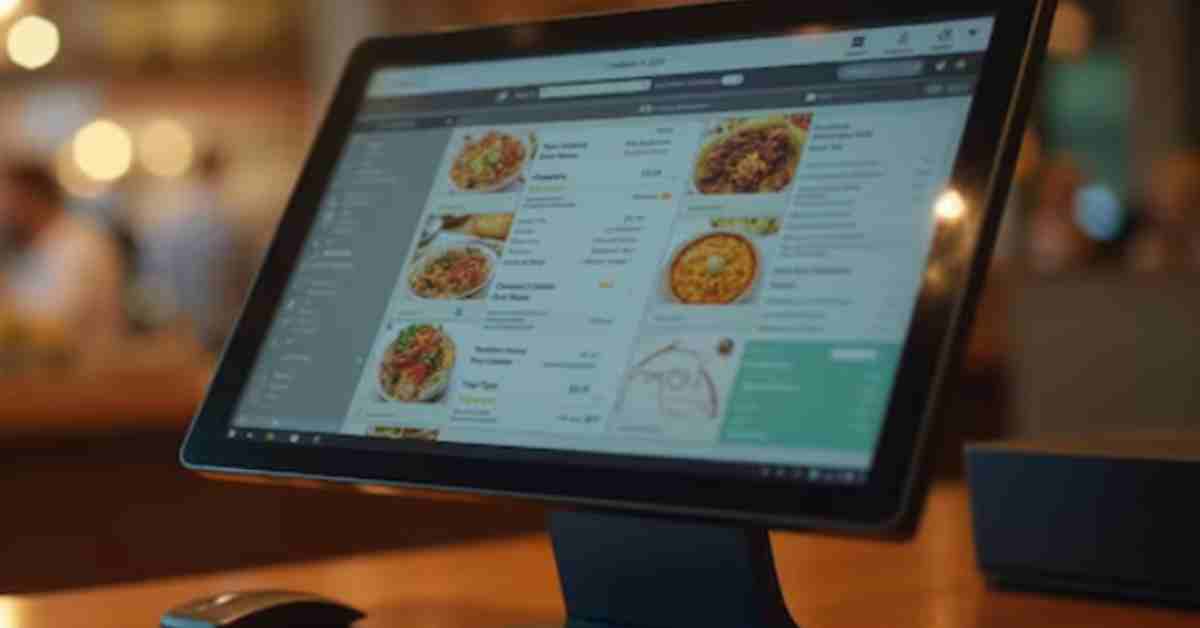
A modern restaurant pos system allows orders to be captured quickly and transmitted instantly to the kitchen. Modifiers, special requests, and substitutions are clearly recorded, reducing the risk of errors. Faster order entry means shorter lines, quicker table turns, and a smoother experience from the moment a guest places an order.
When customers receive exactly what they ordered without unnecessary delays, their confidence in the restaurant increases.
2. Consistent Service Across All Ordering Channels
Many elements such as dining in, taking out, online ordering, or delivery are increasingly found in restaurant experience. If the experiences across these elements are not consistently maintained, the customers immediately begin to see a violation of trust.
But technology now integrates all the different ordering methods into a single operational flow. Items on the menu, prices, and preparation standards remain unchanged, no matter from where they are ordered. The results are consistently pleasing food whether one orders at the counter, from the phone, or from the drive-thru.
To see standardization work in practice would fill customers with confidence that a repeat visit is due to this.
3. Improved Kitchen Efficiency Leads to Better Service
When the kitchen does not perform to expectation-tabletops are rushed as servers run to resolve issues-patrons are not impressed and may not come back.
A kitchen display system gives kitchen teams real-time visibility into orders, priorities, and preparation timing. Orders are organized clearly, reducing confusion and improving coordination between stations.
When a kitchen functions more efficiently, it only means that it takes less time for the food to reach the customers in the manner it is supposed to be in, thereby ensuring that customers can rely on consistency in their judgment of satisfaction. Thus, any dissatisfaction or complaining possibility is ruled out.
4. Shorter Wait Times During Peak Hours
If it were pouring down, victim service levels would peak at the times. Long queues, packed eating rooms, and late food and drinks all lead to frustration.
Technology, on the other hand, plays a very crucial role in optimizing workflow efficiencies and minimizing bottlenecks created during peak service volume times. From input to output, orders are easily transmitted so that there is never a hitch even in heavy times.
Hence, lessening wait times will definitely increase the overall opinion of a restaurant and ensure visitors who return during peak hours instead of avoiding them.
5. More Reliable Drive-Thru Experiences
The drive-thrus are a critically important interaction point, mainly for fast-food and quick-service establishments, serving to many of their customers. These must be fast and accurate, but the legacy drive-thru operation is fraught with miscommunication problems.
A modern drive thru system integrates order capture, confirmation, and kitchen routing into a single digital workflow. Orders are clearly recorded and displayed, reducing misheard items and delays.
This leads to faster car throughput, fewer order corrections, and a smoother experience that meets customer expectations for convenience.
6. Personalized and Predictable Experiences
Customers prize feeling recognized and understood. But, personalization can come in many shapes and sizes, where consistency is equally important. Customers need a guarantee of the experience when they come back on a second visit.
Technology creates doorways for restaurants to design predictable experiences via its standardized menus, preparation methods, conventionalize service, and work flows. When standard service, high quality, and accuracy are maintained at one time, the trust eventually builds.
Moreover, businesses that have their history of selling do also reap fruitions of ROI, with which they are able to turn on more personalized conversations and track systems with technology, without adding complexity to staff.
7. Fewer Mistakes and Faster Resolutions
No restaurant goes without mistakes, but customer experience largely depends on their quick fixing. It is the technology that lessens the rate of errors and aids in faster problem solving when problems do happen.
Clear order records, time stamps, and preparation data help employees find faults easily and rectify them without moving into months of debates. This way, minor issues do not escalate into major ones.
People are more inclined to let the shopkeeper off the hook when a possible bad experience is efficiently and professionally resolved.
8. More Engaged and Confident Staff
The experience of the employee is tightly tied with the experience of the customer. If the staff is burdened by unclear processes or the need for constant troubleshooting, service quality gets affected.
Technology supports the staff by making workflows clear. It eliminates guesswork and minimizes repetitive tasks. When employees feel certain about the systems they use, they are able to interact positively with guests.
Engaged staff makes a better contribution towards customer experience-they are more attentive, more responsive, and friendly too. Technology works to empower hospitality in creating a great guest experience without replacing it whatsoever. Having systems operate in the background as they should enables people who are serving guests to maintain an intimate commitment to great service, ensuring they have a smooth dining journey. This digital integration is part of a larger trend of leveraging AI to enhance customer experience across all modern business touchpoints.
9. Consistent Experiences Across Multiple Locations
For multiple-location restaurant brands, inconsistency can be a real killer to customer trust. Across all places, guests assume the identical experience will be delivered.
Technology can bring processes and workflows within a common set of standards across all locations. Central rollout of updates ensures that those updates will be implemented uniformly.
This strong undertaking of brand loyalty will let customers trust brand experiences, bringing them to repeat business.
Technology that helps better the customer experience is not adding more complexity nor taking away face-to-face relationship rather, it’s striving to reduce any and all frictions in the operational machinery The fact of the matter is, when services are on time, kitchens are neat, teams are motivated, and service goes above and beyond-those very customers sense the real difference.
As standards evolve, the restaurants that continue to invest into these pieces of technology that can help , speed up things and make sure of accuracy when it is in demand will get a competitive edge for retaining customer loyalty and great reviews and lasting success.

Nishanth Kumar is the Lead SEO Strategist at iTech Manthra. With over a decade of experience in the digital marketing landscape, he specializes in technical SEO, link-building strategies, and search engine algorithms. Nishanth has helped hundreds of businesses scale their organic presence through data-driven marketing and sustainable “white-hat” techniques. He is passionate about decoding Google’s ever-changing updates to help brands stay ahead of the competition.