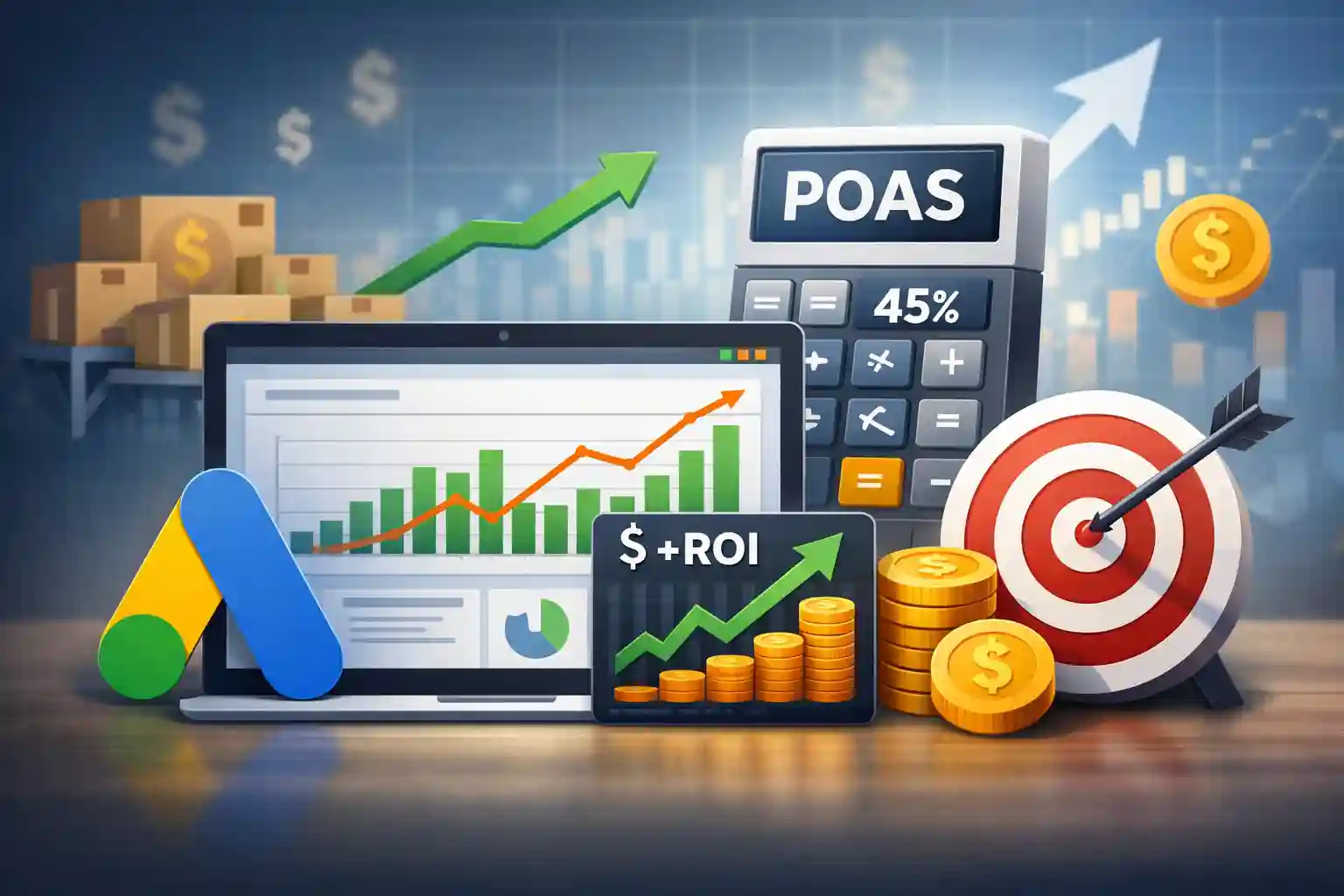
Revenue tracking on its own can fail to paint a complete picture of ad performance for e-commerce or digital advertising businesses. Metrics in the traditional sense, such as RoAS, simply concentrate on revenue, which can sometimes result in decisions that are not truly profitable in the long-run. Switching to POAS is a bit superior here because total gross profit after deduction from all variable costs comes as a result. It allows for an analysis of the campaigns against real profitability with segmentation and tweaking.
Why Moving from ROAS to POAS Matters
Reiterating the point in simpler terms, if an ad consumed part of a business’s profits in order to produce one dollar in sales, it eventually created a non-profit campaign which directly ads their cut. So in the end calculation, they are measuring the profits and losses associated with these campaigns. The actual ROI of product prices includes taxes and delivery, so you want to know accurately what works for those expenses. Another issue is that many other paid and organic campaign initiatives would indeed fall under poor profit margins.
These play a role in determining many more details beyond basic expenditures, and letting the details of performance mark the sales.
For those aiming to improve marketing effectiveness, understanding POAS offers a more reliable path to lasting profitability by focusing on net earnings instead of top-line revenue.
Key Steps to Implement POAS in Google Ads
In order for POAS to emerge within any system, company level costing information must be integrated into a tracking system. By setting up the cost details for each product or service including not only ad cost, but also product returns and per-transaction charges one could classify these against every sale. For those managing multiple campaigns, using Free AI Checker Tools Every SEO Expert Should Use can help ensure your product descriptions and ad copy remain unique and high-quality.
When a sale is enabled by this, bidding within Google Ads can then be adjusted to maintain ideal profit margins, which are hardly predictable. The move from making continuous low-CPA sales and lead flows to higher CPA requires concentrating more on striking a balance between results and ROI.
In comparison with that, putting the accent on a marketing strategy might help to point to relevant divisions, through which one can see, for example, which segment or product is the most profitable. Once brands are able to differentiate among them, an evaluation of their relative profit margins must be made on which amounts to the rates.
Allocations of funds should then be able to be made based on such top performers. Eventually, in the long run, certain tweaks in that direction are what would eventually drive a big bang for the buck with profitability campaigns.
Practical Ways Companies Use POAS for Improved Results
POAS is indeed a method beneficial to many e-commerce stores. Essentially, everyone is now crafting their marketing campaigns around their product line, and soon, many more e-commerce websites will join the movement. With the help of POAS, one is able to figure out what products are yielding the most profits. And then, advertising efforts will be held accountable to target these areas of product line. If that particular product has more margin after all the costs considered, together with basic cost data through integrated planning, one could easily increase marginal product advertising spend, so increasing the overall profit column without increasing overall spend.
POASs, for example, are always facilitated over a range of clients by an agency, and it is always applied in stages. They start by applying basic cost data, much like descriptions and reviews, and work forward for some considerable time with automated bidding strategies that are founded exclusively on profit signals creeping up real-time.
In this light, the ROI focus expects each advertising dollar to contribute toward the long-term strategic goals derived from actual financial returns rather than superficial growth metrics.

Nishanth Kumar is the Lead SEO Strategist at iTech Manthra. With over a decade of experience in the digital marketing landscape, he specializes in technical SEO, link-building strategies, and search engine algorithms. Nishanth has helped hundreds of businesses scale their organic presence through data-driven marketing and sustainable “white-hat” techniques. He is passionate about decoding Google’s ever-changing updates to help brands stay ahead of the competition.