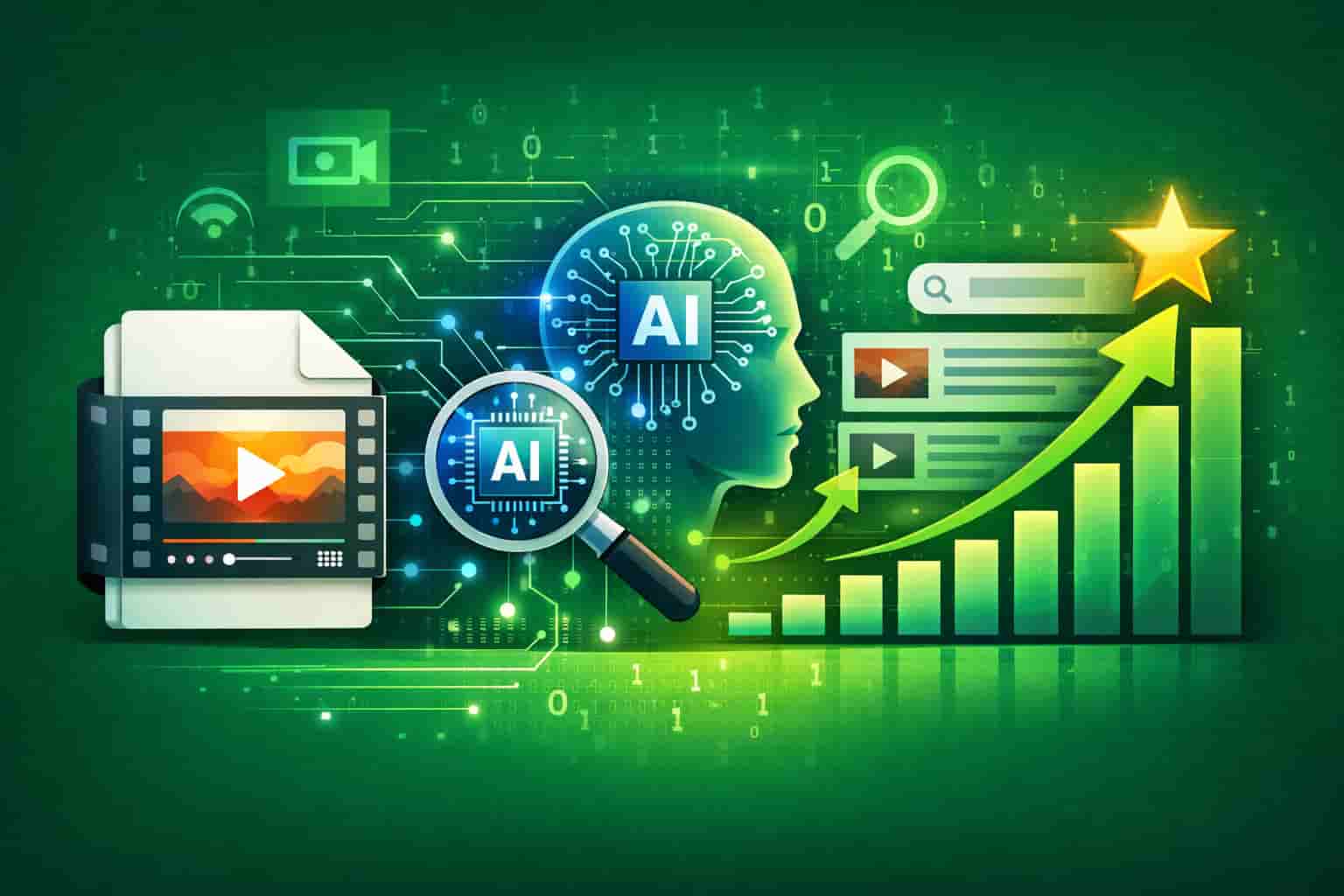
The current digital environment requires people to focus on video content because it holds the top position as the most important medium. The increasing use of AI-based search systems requires businesses to optimize their video content because it has become an essential requirement. The ability to optimize videos for AI search enables content creators and marketers and business owners to improve their content visibility and reach their intended audience.
What Exactly is AI-Powered Search, and Why Does it Matter for Video?
AI-powered search engines use advanced algorithms and machine learning techniques to understand and analyze content. The systems now examine content through various methods because they no longer depend on keywords alone. People who create videos need to optimize their content beyond using only titles and descriptions. AI systems can evaluate images and sounds together with facial expressions to deliver advanced insights.
This transformation creates a major opportunity for content creators together with businesses. Everything requires improvement beyond what first appears attractive. The process of ranking your video through AI-powered searches requires you to optimize every aspect of your video content.
How Can You Optimize Your Video for AI-Powered Search Engines?
The process of optimizing video content for AI-powered search systems requires both basic SEO techniques and new AI-based optimization methods. The following methods will help you increase the discoverability of your video content.
The title of your video remains crucial for search rankings. AI-powered search engines rely on video metadata, including the title, to understand its content. Relevant keywords should be used, but you need to avoid excessive keyword usage. The title must deliver sufficient details about the video to attract both human viewers and AI systems.
Use the title “How to Optimize Video for AI-Powered Search: Boost Visibility & Ranking” instead of the title “How to Optimize Videos.”
How Important is Video Metadata for AI Search Optimization?
Video metadata has great importance. The video title and description and tags together with the transcript create complete video metadata. AI systems use these elements to understand the content better. The subject matter of videos becomes clearer to AI systems when they receive complete transcripts of the video content.
The addition of closed captions and subtitles enables viewers to access your content while enhancing its visibility to AI systems. The small additions help your video attain significant AI-based ranking changes according to how AI systems assess your content.
Should You Be Using AI-Generated Tags and Keywords?
Yes, using AI-generated tags can be a helpful strategy for optimization. The visual and auditory components of your video can be used by Google Cloud Vision and IBM Watson to create appropriate tags through their analysis capabilities. The AI tools scan your video content to discover important elements such as objects and people and primary themes which they will then use to create tags.
Your video will achieve appropriate categorization through correct label selection which matches current trending keywords. This practice enhances your video presence during relevant AI-powered searches.
How Can You Leverage AI for Video Content Analysis?
AI tools will evaluate your video content to determine its quality and relevance. Video optimization requires two components: keyword usage and the creation of content that brings value to viewers. The AI algorithms now evaluate video effectiveness through metrics which include watch time and user interaction and viewer retention.
The quality of your video content will improve through the use of compelling visuals and professional sound and editing which will result in better AI search rankings. Your video will achieve higher AI-powered search rankings through increased viewer duration and audience engagement.
Can You Use AI to Optimize Thumbnails and Descriptions?
Absolutely! Thumbnails perform the same function as book covers for your video content. AI systems evaluate thumbnails through their assessment of thumbnail content which determines how well it matches video material. Your thumbnail needs to show attractive elements that match your video content through the use of clear visual elements. Your video will gain more clicks from AI-based search results when your thumbnail design achieves these goals.
FAQs
Q1: Can AI-powered search engines understand the content of my video?
AI-powered search engines possess the ability to analyze both audiovisual elements of your video to identify which search queries it matches.
Q2: Do closed captions help with video optimization?
The use of closed captions benefits both accessibility and optimization purposes. The additional text material lets AI systems perform better analysis, which leads to your video content achieving better ranking results.
Q3: Should I use AI tools to generate video tags?
Your video visibility in search results will increase when you use AI tools to create accurate tags that match your content.
Q4: How do I improve my video engagement for AI search optimization?
You need to produce highly engaging videos
Conclusion
The process of creating an SEO-friendly description will enhance your content. The AI system uses the description analysis process to assess content relevancy. The primary and secondary keywords should be included naturally to explain the video content.
Expert Advice on Video Optimization for AI Search Engines
As AI expert Megan Stone says, “Video optimization isn’t just about fitting in with search engines anymore. AI recommends content based on relevant factors that stem from user experience design which must be understandable to AI systems.

Kumar Swamy is the CEO of Itech Manthra Pvt Ltd and a dedicated Article Writer and SEO Specialist. With a wealth of experience in crafting high-quality content, he focuses on technology, business, and current events, ensuring that readers receive timely and relevant insights.
As a technical SEO expert, Kumar Swamy employs effective strategies to optimize websites for search engines, boosting visibility and performance. Passionate about sharing knowledge, he aims to empower audiences with informative and engaging articles.
Connect with Kumar Swamy to explore the evolving landscape of content creation!