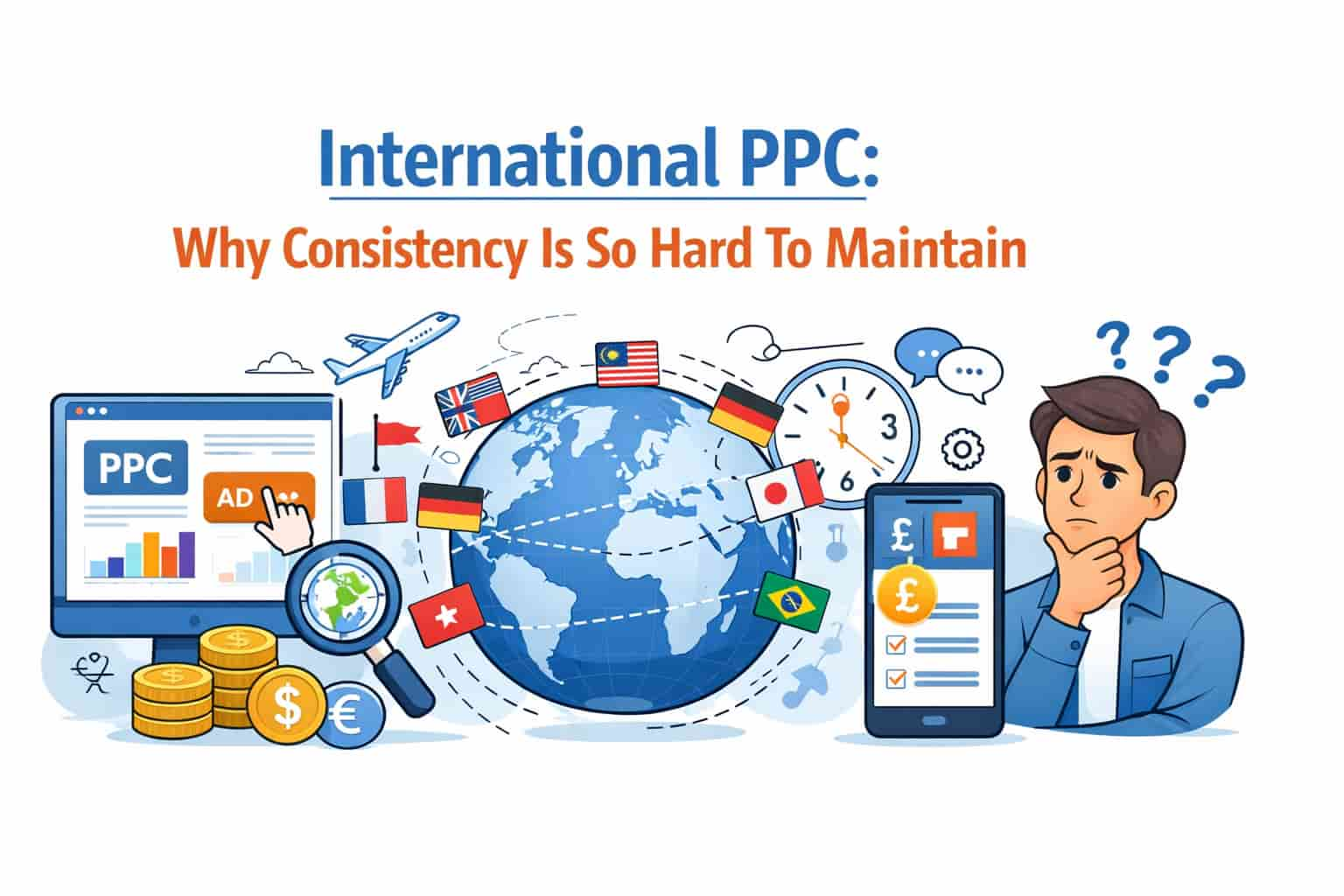
Keeping consistency while running an international pay-per-click (PPC) campaign seems endless. Expanding into new markets and managing campaigns for multiple languages while maintaining everything perfectly aligned is a difficult challenge. What makes consistency the toughest struggle and how can it be angled for an effective performance? We will analyze the major reasons for hitches in international PPC and will provide helpful tips for maintaining your campaigns on track.
Why Is International PPC So Tough?
Firstly, explain why international PPC campaigns are a different kettle of fish from domestic campaigns. What makes it even more complicated is the vastness of the global population and diversity. Each region and country has a particular culture, language, search behavior, and purchasing power. Throw in varying platforms, currency issues, and varying local regulations, and it becomes a very complex web of interrelated variables that you can expect to throw off consistency easily.
“It is like, ‘What works in one market may not work in another’,” explained Emily Dawson, a PPC industry expert, and strategist. “Even tiny differences can make a major difference in the campaign’s performance, and that is where the complexity comes into place.”
How far your understanding and adjustment can stretch these factors largely determines the performance of an international campaign. In the absence of this insight, consistency could fast slip away.
Do language barriers interrupt PPC consistency?
Overt language is probably the most elementary issue in international PPC challenges. Simple translation of ads will not suffice; that is the error to begin with. It requires more than words; it requires ensuring your message resonates with your audience in its new geography.
For instance, hot phrases in one country might serve as a major point of gaining attention, while in the other such phrases may localize the message to the point of being unprofessional and out of sync. The effective presentation of an ad needs to recognize the linguistic subtleties of a language, the cultural context, and relevant humor. Without this adjustment, the ad will be carrying a message with gender indifference that comes across as nothing but bull-kind.
Cultural differences play such a crucial role in the success of any PPC campaign. An ad campaign that thrives in one culture tends to flop in another. Different cultures have different values, priorities, and social norms that, in turn, guide their various responses to advertisements.
For example, family values are highlighted in one country; in the opposite case, such messages will alienate the rest against you through a far better consumer individual perspective. When viewed from this perspective, understanding cultural context and observing the influence such behavior has in response to PPC becomes crucial. Such means can be summed in that users are capable of being ensured the branding provided in these countries remains wholly consistent. Without paying heed to such cultural contexts, PPC ads feel like a different world altogether disjointedly targeting the participants and can feel incompatible with the brand, thus leveraging the performance.
Currency eludes you when working on international PPC. When you straddle contexts and differences in language and the currency, you very well believe there’s some huge layer added on and it is actually. These currency differences can cause large problems in managing one’s budget, in evaluating the success of the campaigns, or in turning the data into any actionable information.
Because variables like currency flocculation or economic differences can cause starkly different cost-per-click (CPC) scenarios from province to province. That always makes it difficult to decide how effective your entire global campaign has been. It creates a conflict of interest when you end up trying to compare metrics in countries that have, because of these financial discrepancies, a set of unadjusted variables.
Technology remains the major accelerator in preventing consistency from happening across PPC.
Often, market-hurdles that affect consistency are the technology and platforms employed in different markets amongst other factors. The so-called global authorities such as Google Ads and Facebook Ads may function very differently in diverse corners of the earth. Over here, local regulations, the actual availability of platforms, and the technological infrastructure contribute to substantial consequential differences.
In some markets, stricter data privacy laws directly affect the ability of campaign tracking, targeting, or both. Besides, not all search engines or social platforms are inosed in the English or American marketing scenes, nor do they use the AAA tools that would make this a no-brainer. One market may be completely different from another in terms of succeeding along specific criteria in PPC. Understanding and scaling around these technological differences demands a deeper comprehension of each market’s unique circumstances, ultimately putting still more hurdles in front of any consistent realization of campaigns.
Who Normalizes the PPC Campaigns Across the Globe?
Nevertheless, even amongst these difficulties, the uniformity in international PPC campaigns is attainable. Some tips are given here:
Localized Strategy: Any action should be sensitive to the culture, language, and local market situation of the countries where it is going to take place. Translating something word for word is not the answer for this-enough study must be done for the market within the language for that to occur.
Platform Adaptation: Tailoring the PPC effort to meet the already popular platforms of each country is another place to start. Look for laws, limitations due to technology, and whether or not these platforms will impede the thread throughout.
Data Centralization: It’s certainly advised to go through a single global platform that will determine how to aim for the sake of tracking down non-standard data rather than focusing on the types like currency ratios and tech capabilities.
Testing and Optimization: The campaigns for different regions can always do with some testing led jointly by the regular maintainer. These tests can reveal information on components that work, and those which certainly do not, thereby helping to relate to the problem over time and keep things the same.
Occasion your nearby knowledgeable: Make sure to cooperate with PPC professionals or agencies from your locality that are fully in sync with the market, able to impart knowledge where you might overlooked it, and help in keeping the campaigns on course.
Frequently asked questions
1. How do cultural differences manifest in PPC campaigns?
Cultural differences affect ad campaigns in terms of buying audience and customer reception to ads, because they have varied preferences for messaging, design, and values. Understanding how these nuances are different from each other is essential in planning any effective international PPC campaign.
2. How is international PPC problematic in terms of consistency?
Differences prevalent in language, culture, technology, currency, and local laws make internationalization of PPC challenging as every market is tailored, and, therefore, one model can be hardly enforced over all the markets.
3. What are the ways to improve international PPC campaigns?
The optimization of international PPC hinges on localization, adjustment of the platform, maintaining a centrally controlled data repository, continuous testing, and securitizing the aid of local gurus to propel your ways of international marketing.
4. What is the role of technology in international PPC?
It is imperative since it relates to the consistency of your PPC. Different regions could utilize different platforms or face technological inequalities affecting the outreach or performance of your campaigns.
5. How do the discrepancies in currencies affect international PPC performance?
Currency differences can change your costs per click toward the bottom line, finally obscuring performance comparisons by country. Understanding these financial nuances is the essential ingredient to maintaining consistent arrangements.
Conclusion
Running an International PPC campaign is anything but easy; as a matter of fact, it has more of its own challenges. Delving into the set of intricacies attached to language, compatibility, currency, and technology will take you far in maintaining one marketing trend in terms of global advertisement. And it is something for which the purchase can be well worth waiting: Such benefits can only be seen in a preliminary manner.
Would You Like To Share Some International PPC Experiences?
If you want to ask anything on the PPC campaign, need guidance or have an idea, share below in the comments; we would be eagerly anticipating your contribution!