Introduction
Have you noticed how search feels different lately? You ask a question, and instead of scrolling through ten blue links, you sometimes get a direct answer from AI. That shift has sparked a big debate in the SEO world: SEO vs. GEO. Recently, Google’s John Mueller weighed in, making one thing clear obsessing over labels won’t help, but understanding audience behavior absolutely will. And that’s exactly why this topic matters right now.
Search isn’t dying. It is in the state of transition at the present. A person creating content, a website, or a brand, is more affected by this modification than it might have initially thought to be.
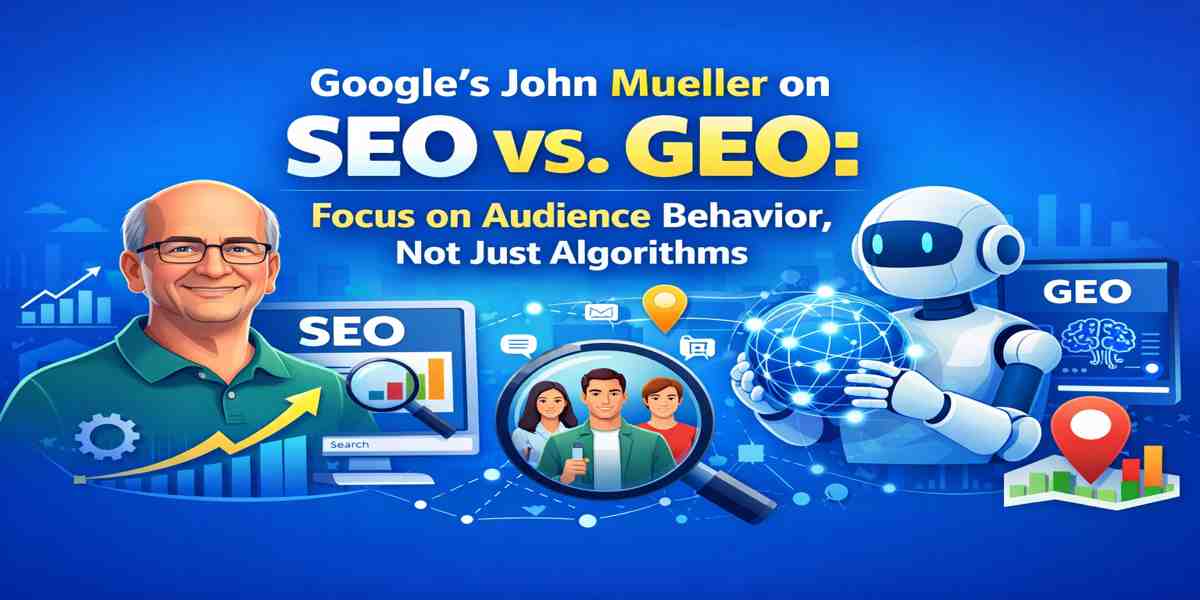
What did Google’s John Mueller really say about SEO vs. GEO and audience behavior?
WMueller sent a clear message when he categorized SEO as opposed to GEO (Generative Engine Optimization): there is a need to maintain setting and perspective amid the waves of technological shifts. So the need for organic search to be oriented more toward users while giving them what they are seeking doesn’t disappear.
Google search optimization would always be about managing the searches as are performed by individuals and their mentalities. Search powered by AI was never seen as a substitute to SEO; rather, its purpose was to surface content. Matters have now changed. Present PR-aligned content can still be a valuable player in the digital advertising sector.
Another consultant defined it: all search engines are really doing is changing its formats, without any change in strategies. Humans and businesses continue to aim for clear, businesslike WTFs.
Is GEO replacing SEO, or is it just an evolution of search optimization?
This is where many marketers panic. To make GEO sound so new, so shiny, and so menacing, generative AI search is built on the very same principles of SEO: relevance, clarity, and trust. Traditional SEO focused on rankings and clicks. Generative Engine Optimization focuses on whether your content is good enough to be referenced, summarized, or quoted by AI systems. That doesn’t cancel SEO it extends it.
Think of GEO as SEO growing up. Instead of asking, “Will this rank?” you also ask, “Will this answer the question better than anything else out there?” That mindset naturally improves search visibility in AI results without gaming the system.
Why does audience behavior matter more than algorithms now?
Here’s the uncomfortable truth: algorithms change faster than strategies. But audience behavior changes slower. People still skim, still ask follow-up questions, and still want reassurance they can trust what they’re reading.
John Mueller’s advice aligns with what smart marketers already know. If you understand:
- what questions users ask first,
- what confuses them,
- and what makes them feel confident,
you’re already ahead. This is why content strategy for AI search starts with empathy, not tools. AI can rewrite answers, but it can’t replace genuine understanding of human intent.
On iTechManthra, this approach also complements topics like future-ready SEO strategies and how AI is reshaping digital marketing, which dive deeper into adapting content for real users, not just bots.
How should content creators adapt to AI-driven search experiences?
Adapting doesn’t mean rewriting everything overnight. It means refining how you present information. Clear structure, natural language, and direct answers matter more than ever.
Ask yourself:
- Does my content answer the question upfront?
- Is it written in plain English, not jargon?
- Would I trust this if I were the reader?
That’s where user intent optimization shines. AI systems look for content that feels complete and reliable. Adding context, examples, and even a touch of personality helps your content stand out.
A digital strategist once said, “AI favors clarity. Humans favor honesty. Great content needs both.” That balance is exactly what modern SEO best practices are moving toward.
What’s the smartest SEO strategy in a world of GEO and AI search?
The smartest move isn’t choosing sides. It’s blending them. Focus on:
- Strong fundamentals like site quality and helpful content
- Clear answers that AI can understand and summarize
- A tone that feels human, not manufactured
This is where search behavior trends become your north star. Watch how users interact with your pages, what they scroll past, and what keeps them engaged. Tools help, but observation matters more.
For a broader view, many marketers also look at how search engines are evolving globally through trusted industry insights from leading digital marketing publications, which often highlight how AI and SEO are converging rather than competing.
FAQs
Is GEO really different from SEO?
Not fundamentally. GEO builds on SEO by focusing on how AI presents answers, not just rankings.
Will AI search reduce website traffic?
Some queries may get direct answers, but helpful, in-depth content still attracts engaged users.
Should I change my content strategy right now?
Refine it, don’t replace it. Focus more on clarity, intent, and usefulness.
Does Google favor AI-written content?
Google favors helpful content, regardless of who or what writes it.
What’s the best way to future-proof SEO?
Understand your audience deeply and create content that genuinely solves their problems.
Conclusion
Seo vs Geotargeting, really, is not selfish; it is a wakeup call. Rightly observed by Google’s John Mueller, regarding a space that will be wearying while pursuing the next trendy optimization search suggestion, please focus on what the consumer is doing close to you. Write for humans, structure for machines, and you are prepared for whatever intention search may be replaced by next. If this intrigues you with new ideas or questions, share your thought or pass it along to someone navigating this disruption.

Kumar Swamy is the CEO of Itech Manthra Pvt Ltd and a dedicated Article Writer and SEO Specialist. With a wealth of experience in crafting high-quality content, he focuses on technology, business, and current events, ensuring that readers receive timely and relevant insights.
As a technical SEO expert, Kumar Swamy employs effective strategies to optimize websites for search engines, boosting visibility and performance. Passionate about sharing knowledge, he aims to empower audiences with informative and engaging articles.
Connect with Kumar Swamy to explore the evolving landscape of content creation!