
Modern consumer goods have long moved beyond simple products on store shelves. The industry is actively transforming under the influence of digital technologies that change everything from manufacturing to how we interact with customers. Samsung Family Hub smart refrigerators track product expiration dates, Nespresso coffee makers connect to smartphones for personalized brewing, and Nike adapts its shoe production to individual foot parameters. Companies invest millions in consumer goods software development, understanding that without a technological component, it’s impossible to compete in the market. Problems arise due to fragmented management systems, lack of integration between different departments, and shortage of analytical tools for making quick decisions. This article examines leading companies that help consumer goods brands implement comprehensive digital solutions and achieve competitive advantages.
Technological Changes in Consumer Goods Manufacturing
Manufacturers experiment with technologies that seemed like science fiction just five years ago. Procter & Gamble tests robotic systems with machine vision for packaging quality control, which detect defects 100 times faster than humans. Unilever launched a pilot project using blockchain to track the supply chain of Lipton tea from plantations in Kenya to supermarket shelves. Software development services for consumer goods include creating such complex simulation systems.
Consumer goods software development covers numerous directions: predictive demand analytics, customer relationship management systems, direct-to-consumer (D2C) platforms, logistics optimization solutions. L’Oréal uses artificial intelligence in the ModiFace app, which allows virtual makeup try-ons before purchase. This isn’t a marketing gimmick the technology increased online sales conversion by 49%.
Companies implement digital twins of their production lines. Coca-Cola experiments with digital replicas of factories, where different production scenarios are simulated to optimize processes without stopping actual capacities. Software development services for consumer goods include creating such complex simulation systems.
The Internet of Things changes the approach to after-sales service. Electrolux connects washing machines to cloud platforms that analyze washing modes and warn about the need for technical maintenance before a breakdown occurs. This reduces the number of complaints by 34% and increases customer loyalty.
Augmented reality has become a standard tool for furniture brands. IKEA Place allows you to place virtual furniture in a real apartment through a smartphone camera with 98% accuracy to real dimensions. The technology accelerated the purchase decision cycle from 23 to 8 days.
Overview of Leading Software Developers
DXC Technology
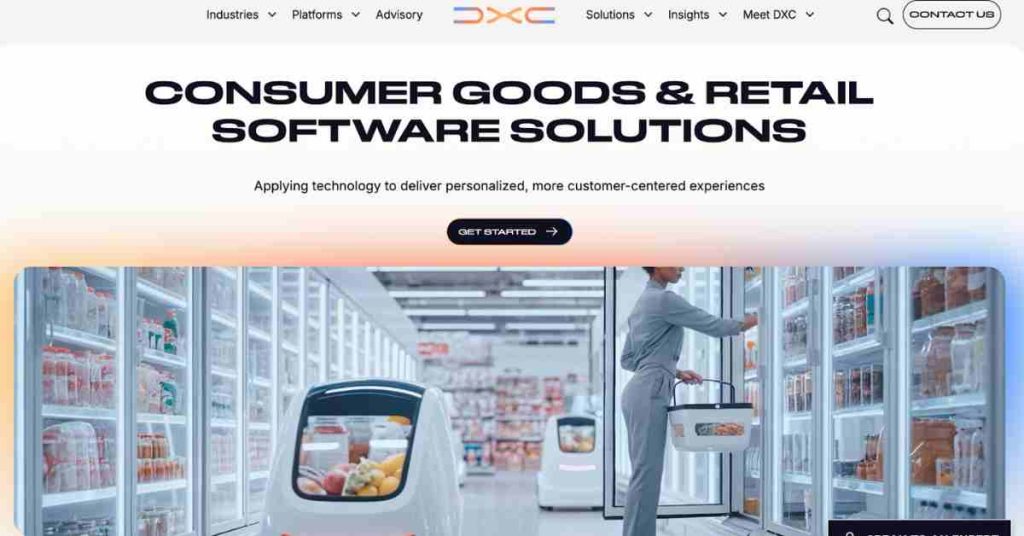
This global technology company offers comprehensive solutions for modernizing consumer goods businesses. Their specialists work on integrating legacy systems with modern cloud platforms, https://dxc.com/industries/consumer-goods-retail provides a detailed description of capabilities in this direction, and the company has experience working with Fortune 500 brands. DXC Technology develops data management systems that combine information from dozens of sources into a single analytics dashboard. Their experts created a platform for one European cosmetics manufacturer that consolidates data from 47 countries and processes 12 million transactions daily. The company specializes in implementing SAP and Oracle solutions with deep customization for industry specifics.
Infosys

The Indian tech giant has a separate division for consumer goods software development. Infosys implemented a project for a global beverage manufacturer, creating a unified promotion management platform in 23 countries. The system uses machine learning to predict the effectiveness of different promo types and automatically adjusts budgets. The company offers solutions based on its own Infosys Cobalt platform, which includes 35,000 cloud assets and more than 300 ready industry solutions. Their team developed a mobile app for Nestlé sales representatives that uses computer vision to analyze product shelf placement and provides optimization recommendations.
Accenture
This consulting company with a powerful technology division works with half of the Fortune Global 500 list in consumer goods. Accenture created a digital marketing management platform for Heineken that’s integrated with SAP and covers 192 markets. Software development services for consumer goods from Accenture include creating personalized e-commerce platforms. For Adidas, they developed a mass shoe customization system where customers choose from 500 design options, and orders are automatically transferred to production. The company invests in artificial intelligence research and has its own Innovation Hubs laboratories in 18 countries.
Cognizant
This American company specializes in digital transformation of traditional manufacturers. Cognizant created a dynamic pricing system for Mondelēz International that analyzes 1,200 factors in real time from weather to competitor prices and automatically adjusts recommended retail prices. Their developers work with blockchain technologies to ensure supply chain transparency. For one organic food brand, they created a system where each jar has a QR code with the complete origin story of ingredients. Cognizant has a specialized IoT practice and develops solutions for connected consumer goods.
Wipro
This Indian technology company offers solutions for optimizing operational efficiency. Wipro developed an analytics platform for Johnson & Johnson that forecasts product demand with 94% accuracy three months ahead. The system processes data from social networks, weather services, economic indicators, and historical sales. Consumer goods software development at Wipro includes mobile apps for direct consumer communication. They created a loyalty platform for a major household chemicals manufacturer that’s integrated with cash register systems in 15,000 stores and has 4.7 million active users.
Capgemini
This French consulting company has powerful experience in retail and FMCG. Capgemini implemented an AI-based assortment management system for Carrefour that analyzes local consumer preferences and automatically adjusts the product matrix for each store. Their specialists developed a platform for Pernod Ricard that tracks product movement through the distributor network in 86 countries and detects counterfeit products. Capgemini invests in voice interface research and created voice commerce solutions for several leading brands.
TCS (Tata Consultancy Services)
This Indian company is one of the world’s largest IT service providers. TCS developed a production schedule optimization system for PepsiCo that considers 800 parameters and reduces equipment downtime by 23%. Software development services for consumer goods include creating innovation management platforms. For one cosmetics company, TCS created a system where consumers can vote for new fragrances and product textures, and this data is integrated with the R&D division. The company has specialized development centers in Bangalore and Hyderabad focused on consumer goods.
IBM

The tech giant offers solutions based on its own Watson and IBM Cloud platforms. For Unilever, IBM created a global procurement management system that uses blockchain to track 3 million transactions annually from 160,000 suppliers. Consumer goods software development at IBM includes quantum computing for optimizing complex logistics tasks. They experiment with quantum algorithms for delivery route planning and multi-tier supply chain management. IBM developed a platform for Walmart that tracks the temperature regime of fresh product transportation from farm to store.
Deloitte Digital

The consulting wing of Deloitte specializes in creating digital products and services. Deloitte Digital developed the Nike Training Club app for Nike, which has over 100 million downloads and is integrated with the brand’s product ecosystem. Their team created a direct sales platform for a premium coffee manufacturer where consumers subscribe to monthly deliveries of personalized blends. Deloitte invests in metaverse research and creates virtual stores for fashion brands in Roblox and Decentraland.
EPAM Systems
This company with offices in 50 countries has expertise in complex technical projects. EPAM created an inventory management system for a global sportswear manufacturer that uses machine learning to predict the popularity of colors and models by region. Software development services for consumer goods include AR app development. EPAM implemented a virtual fitting room project for an online eyewear store, where artificial intelligence analyzes face shape and recommends the most suitable models. The company has specialized teams for development on React Native, Flutter, and native mobile platforms.
Key Technologies in Consumer Goods
Predictive analytics has become the foundation of operational planning. Target uses machine learning algorithms that analyze purchases and predict life events for customers for example, the system was trained to identify pregnancy in shoppers at early stages by changes in purchasing behavior with 87% accuracy. This allows sending relevant offers at the right moment.
Computer vision technologies transform merchandising. Consumer goods software development in this area includes creating systems for auditing product placement. Trax and Shelfie use sales representatives’ smartphones to photograph shelves, and algorithms automatically recognize products, evaluate compliance with planograms, and detect missing positions.
Main advantages of implementing AI in shelf placement:
- Reduction of store audit time from 4 hours to 45 minutes
- Detection of out-of-stock situations in real time
- Automatic verification of price tags and promotional materials
- Analysis of competitor placement and share of shelf
Voice commerce is gaining momentum. Procter & Gamble integrated its brands with Amazon Alexa users can order Tide or Pampers with voice commands, and artificial intelligence remembers preferences and offers automatic stock replenishment. Conversion in voice commerce reaches 23%, which is three times higher than traditional e-commerce.
NFC and RFID technologies create intelligent packaging. Diageo released bottles of Johnnie Walker Blue Label whisky with NFC chips that confirm product authenticity, tell the production story, and allow participation in exclusive events. Each bottle has a unique digital passport.
Challenges of Implementing Digital Solutions
Integration with legacy systems remains the main pain point. Many manufacturers work on ERP systems implemented 15-20 years ago. Consumer goods software development often requires creating middleware solutions that connect new digital platforms with legacy infrastructure without completely replacing the latter. Data migration from IBM AS/400 systems, which some companies still use, to cloud platforms requires careful planning.
Data quality critically affects analytics effectiveness. Companies face problems:
- Duplication of customer records in different systems
- Inconsistent data formats between countries and divisions
- Lack of standardized information collection processes
- Incomplete or outdated master data about products and prices
Danone implemented a three-year data governance program, creating unified data management standards for all divisions in 120 countries. The project cost $78 million but increased demand forecasting accuracy by 31%.
Cybersecurity is becoming critical in the world of connected products. When consumer goods become part of the internet of things, they turn into potential entry points for hackers. In 2023, a vulnerability was discovered in smart kettles that allowed access to home WiFi networks. Software development services for consumer goods now necessarily include security audits and pentesting.
The role of manufacturers themselves is changing. Brands are transforming into technology companies Nike has over 1,000 software engineers developing digital products. Traditional consumer packaged goods manufacturers hire data scientists, UX designers, DevOps engineers. This is a cultural transformation that requires revising approaches to hiring and personnel development.
Future Development Trends
Composable commerce is changing the architecture of digital platforms. Instead of monolithic systems, companies are moving to a modular approach where different functions from catalog management to payment processing are represented by independent microservices. Consumer goods software development focuses on creating flexible API-first solutions that are easily integrated and scaled.
Sustainability becomes a technological challenge. Brands implement product carbon footprint tracking systems. Allbirds developed a calculator that shows the CO2 footprint of each shoe model from material production to transportation. This information is displayed on the product page next to the price. Microsoft and Unilever invest in a joint blockchain platform for tracking carbon emissions in supply chains.
Generative artificial intelligence revolutionizes content creation. Coca-Cola uses DALL-E to generate label design variants, and GPT-4 for creating personalized marketing messages in 58 languages. Software development services for consumer goods include integrating LLM models for automating customer communication and generating product descriptions.
Future technology development directions:
- Autonomous cashierless stores based on computer vision (like Amazon Go)
- Biometric product personalization based on genetic tests
- Robotic last-mile delivery systems with drones and ground robots
- Brain-computer interface technology integration for product testing
Conclusions
Digital transformation in consumer goods has reached a point where technology determines brand competitiveness. Companies that invest in consumer goods software development gain measurable advantages: reduction of operational costs by 18-34%, acceleration of new product market entry by 40-60%, increase in demand forecasting accuracy to 90-95%. Leading software developers offer comprehensive solutions from cloud enterprise management platforms to mobile apps for direct consumer interaction.
Successful projects combine technological expertise with deep understanding of industry specifics. DXC Technology, Accenture, IBM, and other market leaders don’t just write code they act as partners in transforming business models. Their teams work at the intersection of technology, data analytics, and operational efficiency.
The coming years will bring even greater convergence of physical products and digital services. Consumers expect a seamless experience where purchasing a smart toothbrush automatically opens access to personalized oral care recommendations from dentists. Brands that can create such ecosystems will have a decisive advantage. Technologies cease to be an optional improvement they become the core competency of modern consumer goods manufacturers.

Nishanth Kumar is the Lead SEO Strategist at iTech Manthra. With over a decade of experience in the digital marketing landscape, he specializes in technical SEO, link-building strategies, and search engine algorithms. Nishanth has helped hundreds of businesses scale their organic presence through data-driven marketing and sustainable “white-hat” techniques. He is passionate about decoding Google’s ever-changing updates to help brands stay ahead of the competition.