
A single Google Discover hit can drive more traffic than months of SEO grind and yet most teams treat it like luck.
That’s the mistake.
The recent breakdown of Discover pipelines and cards reveals something uncomfortable: Discover isn’t just “content + E-E-A-T.” It’s a structured distribution system with its own logic, ranking layers, and creative formats. If you’re still optimizing like it’s Search, you’re leaving reach (and revenue) on the table.
Insights
• Discover is pipeline-driven, not query-driven your content is evaluated, filtered, and packaged before users ever see it.
• Cards (visual formats) matter as much as content: presentation is ranking leverage.
• Small brands can win if they optimize for velocity + freshness + emotional triggers, not just authority
What are Google Discover pipelines and why do they matter?
A tremendous shift in dynamics. Discover feeds on prediction and intent-driven search introduces an entirely different approach.
If content is just about keywords, there is a good chance it will not ascend the pipeline stages. What Discover does put in the highest priority is:
• Topic momentum (what’s trending now)
• Entity relationships (how your content connects to known topics)
• Engagement likelihood (including CTR, dwell time predictions)
Moreover, Discover is all about the prediction of user engagement, not necessarily the best answer.
How do Google Discover cards influence rankings?
Short answer: Cards are not just presentation they directly affect click-through rates, which feed back into Discover’s ranking system.
Discover is visual-first with “ranking” being how the content gets packaged onto a card.
Important elements of the card are:
• Hero Images (large, good-quality images 1200 px or larger)
• Title (emotional + curious)
• Publisher branding
• Topic labeling
Think of cards like social media thumbnails. Except here, they’re part of the ranking loop.
Why this truly matters
An average article with a compelling thumbnail outperforms a great article with a weaker thumb.
Discover optimizes for engagement velocity:
• High CTR → more impressions
• More impressions → more data
• More data → stronger ranking signals
This creates a flywheel.
Real-world example (not from the source)
A mid-sized Indian fintech blog tested two versions of the same article:
• Version A: Generic stock image + neutral headline
• Version B: Custom chart image + curiosity-driven headline
Result over 72 hours:
• CTR improved from 3.2% → 8.9%
• Discover impressions grew 4.5x
• Traffic spike sustained for 5 days instead of 1.
No change in the content: just in the packaging.
Quotable insight: In Discover, your thumbnail is your SEO.
What signals boost Discover visibility?
Short answer: Being discovered actually works out of pairs namely freshness, engagement score, entity benefits, and visual appeal, though not in the standard ranks of keywords.
Divulge the actual drivers:
- Freshness + Usability
Content that storms in serves a high purpose. Great appreciation leads to spikes in engagement through their shares. - Subject authority (not site authority)
It is not as important to have a vast spot as it is to keep a fresh series of finished things on a relevant topic. - Tracking user behavior
Google will watch user engagement, not user search, to deliver the most appropriate information to viewers. - Visual optimality
If your content and presentment are not well cut out in the cards, that is one strike against your work. - Emotion key appeal
Any emotional crusade works better than neutrally relaying sentiment of information.
Large Picture: Discover works as a distribution engine, whereas SEO operates as a retrieval engine.
Do small companies have a shot at achieving wins in Discover?
Well, the answer is short too: it is an advantage. Minus the emphasis on authority, with speed, relevance, and an emotional pull in marketing.
There are one too many pieces of advice put out there.
Admittedly, most of the action is dominated by the big publishers on Discover, which is counter-effective when trying to maintain presence. It all depends on smallness.
• Rapid content generation
• Specialization in topics
• Trial-and-error in terms of formats
What are the differential activities that small businesses should pursue?
- Target trends, not themes.
No need to market the ERP software that companies are using now. Get out ahead and let readers know what AI textile ERP trends to watch out for by the end of 2026. - For applications, it is not pressure, but on other opponents
Take the first step, even if it is a little in need of a frame. - Design for cards first
Would you hit it in-stream if you came across it on a scroll? - Create content clusters
Smash out as much content grouped under the same topic as possible before the linearity of your posts and give topical authority signals. - Pour more into the channels with some early commitment
Utilize social media and email pushes to bring out the promise of contention at its nascent stage.
A counterpoint regarding the focus source
Discoverability might not result from a long-term result at all.
Traffic:
• Remains from the beginning unpredictable
• Is tough to reproduce
• Remains as ephemeral as a Mayfly
If your business relies on Discover solely, your exposure is high.
For the wiser option:
- Employ Discover for top-of-funnel spikes
- Change charmingly (email captymre, retargeting)
- Create and maintain an audience that is necessary for oneself.
Quotable wisdom: Discover is the launchpad of growth, not its foundation.
How to optimize content for Discover pipelines (a 3-step guide)
Short version: validate their editorial values.
Here’s an actionable workflow for you:
- Spot new emerging topics
• Pick them from Google Trends + social listening
• Spot those on the rise, not on top - Rapidly produce and release content within 24-48 hours
• Reliability beats authenticity
• Publish first and correct later - Design spectacularly effective cards
• Create your own 1200px+ original images
• Add foreground, background, and contrast
• Avoid cheap-looking, unjust stock photos - Write clickbaity headlines
• “Why X is failing in 2026”
• “The hidden problem with Y”
• “Why Nobody Tells You About X” - Turn it into a happening
• Share on LinkedIn, WhatsApp, email lists
• Get clicks in a matter of hours - Experiment, follow, and improve
• Keep an eye on Discover impressions in Search Console, aim at repeating the winning formats - Which gets some momentum going towards the topic
Launch another 3-5 (related) articles soon, then enhance entity signals
Example Workflow in Action:
An instance of the above workflow in practice:
SaaS businesses played with truck fleets.
• Day 1: Publish “AI Fatigue Monitoring in Fleet ERP”
• Day 2: Publish “Top 5 Risks in Driver Fatigue Tracking”
• Day 3: Publish “How Logistics Firms Reduce Accidents with AI”
Resulting:
Google sees the cluster of articles with flavor enough to rather than just one isolated unit of text.
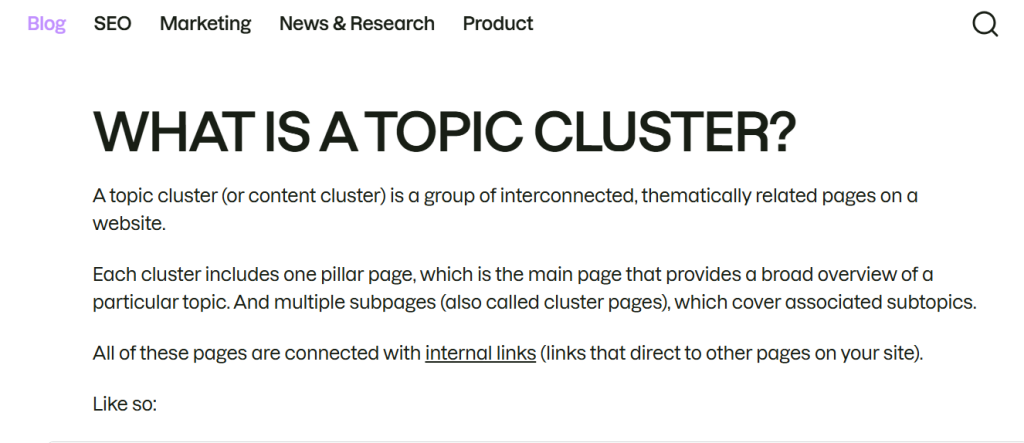
Quote-worth note: Discover rewards momentum and not great lone showcases.
Greatest mistakes marketers might do with Discover?
Short Answer: Doing SEO on Discover, with the absence of graphics, and crazy traffic spikes come to no avail.
This is what you shouldn’t do:
- Targeting too hard on keywords
A perfect example of this is thinking a high percentage of keywords make sense to Google. - Compromising on image quality
Poor-quality pics will never get you those evergreen friend cards; hence, a poor click-through rate is the result of it. - Dissemination without Distribution
No response from the initial post means no headway. - Fail to update
Nevertheless, there’s a chance that the refreshed Discover content can reappear. - Crumpeting spikes of traffic
Most teams miss out on collecting data on leads due to viral moments.
Missed opportunity (critical)
If you are getting a spike in your traffic on Discover and you don’t:
• Capture emails
• Pixel users for retargeting
• Offer a next step
You have wasted the opportunity.
One spike in Discover can bring thousands of users—a notable number of which you may convert.
Quotable insight: Traffic without capture is just noise.
Conclusion: Discover is more aligned by nature with TikTok, not Google Search
This is most practitioners’ potentially necessary mindset shift.
Discovery is treated as a content feed:
• Algorithm-fueled
• Engagement-leveraged
• Visual-based
Overperform if you consider this SEO.
You’ll unlock it as soon as you begin to otherwise approach it in terms of content distribution.
The future playbook:
• Think topically instead of leading off from positions.
• Craft for cards instead of bothering about pages.
• Optimize for engagement instead of pursuing rankings.
Comparison: Discover vs Traditional SEO
| Factor | Google Discover | Traditional SEO |
|---|---|---|
| Trigger | User interest prediction | Search query |
| Ranking signals | Engagement + freshness | Keywords + backlinks |
| Content format | Visual-first (cards) | Text-first |
| Time sensitivity | High (short lifecycle) | Medium to long-term |
| Optimization focus | CTR + imagery + topics | Keywords + structure |
| Traffic pattern | Spiky, viral bursts | Stable, compounding |
Discover is a distribution engine; SEO is a retrieval engine.

Kumar Swamy is the CEO of Itech Manthra Pvt Ltd and a dedicated Article Writer and SEO Specialist. With a wealth of experience in crafting high-quality content, he focuses on technology, business, and current events, ensuring that readers receive timely and relevant insights.
As a technical SEO expert, Kumar Swamy employs effective strategies to optimize websites for search engines, boosting visibility and performance. Passionate about sharing knowledge, he aims to empower audiences with informative and engaging articles.
Connect with Kumar Swamy to explore the evolving landscape of content creation!