Introduction:
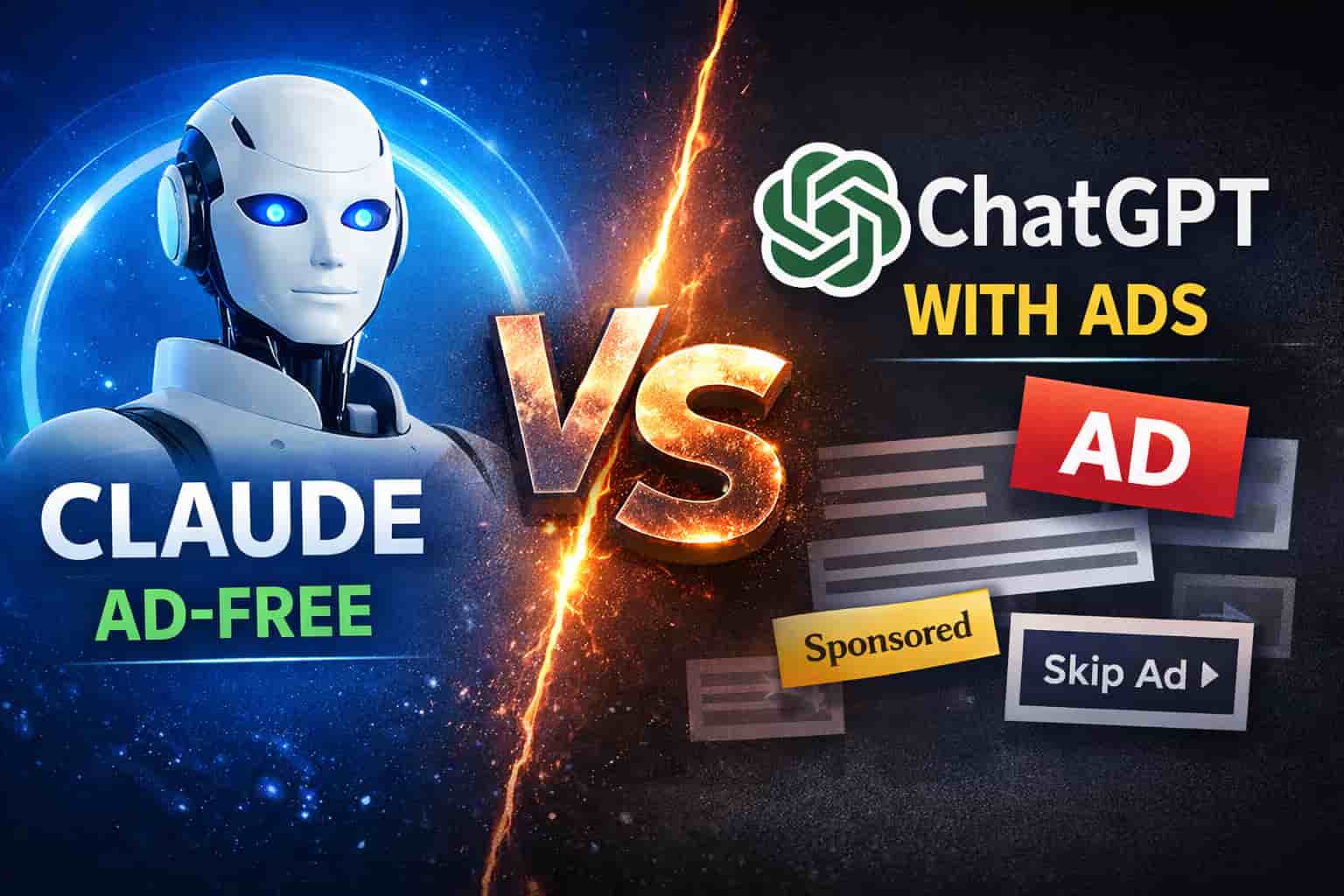
How might the future look when it comes to user experience in the context of AI? With the evolution of the AI landscape, one of the trending updates nowadays is from Anthropic. On one hand, ChatGPT is known to be exploring an advertising model. On the other hand, with Claude, Anthropic has developed a much more user-friendly, ad-free brush-up. But what about significance and implications for you and me, AI enthusiasts?
If you ever experience ChatGPT or Claude, you would know how a glitch-free, smooth experience is absolutely vital. This is why, as ChatGPT is aiming for a world connected by advertisement banners to monetize its project, Claude is choosing to dispense with advertisements. This decision is quite exciting because it might well shake up the AI community.
What is Anthropic’s Claude and How Does It Compare to ChatGPT?
Claude is an AI assistant generated by Anthropic to challenge OpenAI’s ChatGPT. Although ChatGPT has received a lot of attention, much of it has been for its attempt to deliver more accurate results through ad premises than for its ChatGPT phenomenon or for changing the nature of conversation engendered therewith. Claude, however, generates conversation through a unique perspective that sets it apart from its opponents- Anthropic strives to make safe, ethical, and user-friendly AI by not mingling ads in conversation, as ChatGPT is trying out.
So, what’s the big fuss about ads in AI models? They are quite a few, when you consider that some companies aim to make their AI generate revenue-advertising being a natural route, while at the same time disturbing users if what they want is some undisturbed conversation.
Claude is free of ads, but why ChatGPT wants to sack that strategy?
In a world where freebie services almost always have ads, it is heartening to see a company like Anthropic advocating for user experience. Admittedly, there are companies that believed in using advertisement revenue to support their services, but they have allowed the presence of ads in at least the ad-supported te (further linking to save it, if needed) to the `index’, but they have made it clear that Claude will have to remain ad-free for now. This decision is based on their commitment to user experience, which has been their biggest concern, stressing interaction and humane use of AI.
It would be interesting to watch if the idea of ChatGPT embarking on free-tier ads would stay noticeable. Thus, it seems as though people could be following AI monetization in separate ways through the very existence of an ad-free Claude. While this decision on the ads understandably may raise eyebrows, it is because of the competitive AI chatbot sector that Claude has, with either his or any other chatbot’s foresight been enlightened.
What Does This Decision Mean for Users?
Claude is going to be a game-changer for users. Picture this: A very powerful AI model without any interruption from ads popping up every few minutes. Precisely what Claude, thereby promising a clean and effective experience, is designed for. This could be a major attraction for people who are very much irritated by nothing but advertisements everywhere.
Besides, by choosing to make Claude ad-free, Anthropic has struck off any possibility of making monetization through ads. If their product is fast, efficient, and clean, they could potentially get a faithful customer base, especially with those defendants who are unwilling to watch any more ads on most digital services today.
So, how do the others do ads for AI platforms?
When it comes to advertisements, AI platforms are adopting diverse approaches. OpenAI, which has developed ChatGPT, has recently ventured to test the practice of advertisements on the free tier of its service-an essential move for its economic sustainability. But at the same time, it comes with challenges for the users. Do you buy into CashAI ad-mania as the future of AI models? Yeah, ChatGPT may test advertisements and accordingly, others with similar business mechanisms may well introduce the monetization model through AI-generated advertisement. On the other hand, Anthropic has taken head for an ad-free approach.}_${$_}$/leaving aside the ad insertion model, Anthropic is a clear choice which is poised to create something like ChatGPT, prioritizing user experience.
What Are the Pros of Using Ads-Free AI such as Claude?
An ad-free experience by AI solutions leads to a smoother journey for brands or individuals. Minimizing distractions through such a solution allows users to pay attention to what is needed without average interruptions every few seconds: advertising. It is undeniable that, with ads disabled, the service’s usability is optimized during users’ writing, brainstorming, or general information search ventures. Nevertheless, and even more importantly, a quick and efficient run is guaranteed without hesitation and delay due to the download and display of ads.
The marketplace for the future AI companies is likely to see competitive monetization experimentation as well. However, any momentum in the success of ad-free models, like Serge’s, makes it unsurprising that there is a demand for a clean user service with no interruptions. What will pull users toward this kind of platforms, especially the ones claiming to respect time and attention will be a serious growth effort to work for Claude.
FAQ:
1. Why does Claude remain ad-free while other platforms such as ChatGPT employ ads?
Anthropic made the decision for Claude to be ad-free in order to give users a seamless and uninterrupted experience so that people could concentrate on quality interaction and user experiences rather than on earning revenues with advertisements.
2. Will other AI platforms adopt these ad-free models in the future?
Although this is not clear, the fact that Anthropic decided to keep Claude ad-free sets a good precedent for other AI platforms to consider, prioritizing user experience over ad revenue. Many other companies may also explore these models in the future.
3. How does an ad affect the user experience in AI?
Ads in AI may introduce interruptions and delays that distract from the smooth operation of the machine, so that the user may not enjoy the experience as much as possible. Without ads, these services can make the interaction as fluid as possible.
4. What is good about ad-free services available like Claude in AI?
Ad-free services present not only vivid and focused experiences as users interact, but also go to the blindness that might come from distractions caused by ads.
5. Is the ad-free model by Claude anthropic sustainable in the long run?
While this model is challenging, Anthropic’s emphasis on a Claude that remains ad-free is indicative of the general desire for improved AI to favour its user and, its future sustainability relies on a solid attempt to strike a balance between quality and revenue.
Concluding:
Amongst the ongoing changes within the AI industry, the current decision by Anthropic to keep Claude ad-free is a bold move. Since there are more products, like ChatGPT, dabbling with ads, Claude’s unbroken experience may serve as a lesson to several companies to act to draw in users who pay a premium for simplicity and ease of operation. Whether others will tow the line is yet unclear, but certainly, Claude is here to stay as it originated with a clean, no-nonsense provision against the ad-crazy AI market.

Kumar Swamy is the CEO of Itech Manthra Pvt Ltd and a dedicated Article Writer and SEO Specialist. With a wealth of experience in crafting high-quality content, he focuses on technology, business, and current events, ensuring that readers receive timely and relevant insights.
As a technical SEO expert, Kumar Swamy employs effective strategies to optimize websites for search engines, boosting visibility and performance. Passionate about sharing knowledge, he aims to empower audiences with informative and engaging articles.
Connect with Kumar Swamy to explore the evolving landscape of content creation!