Here’s a frustrating pattern that plays out constantly: a marketing team launches retargeting ads, throws their entire visitor list into one audience, and then wonders why nobody’s clicking. The creative looks fine. The budget seems reasonable. But conversions? Basically flat.
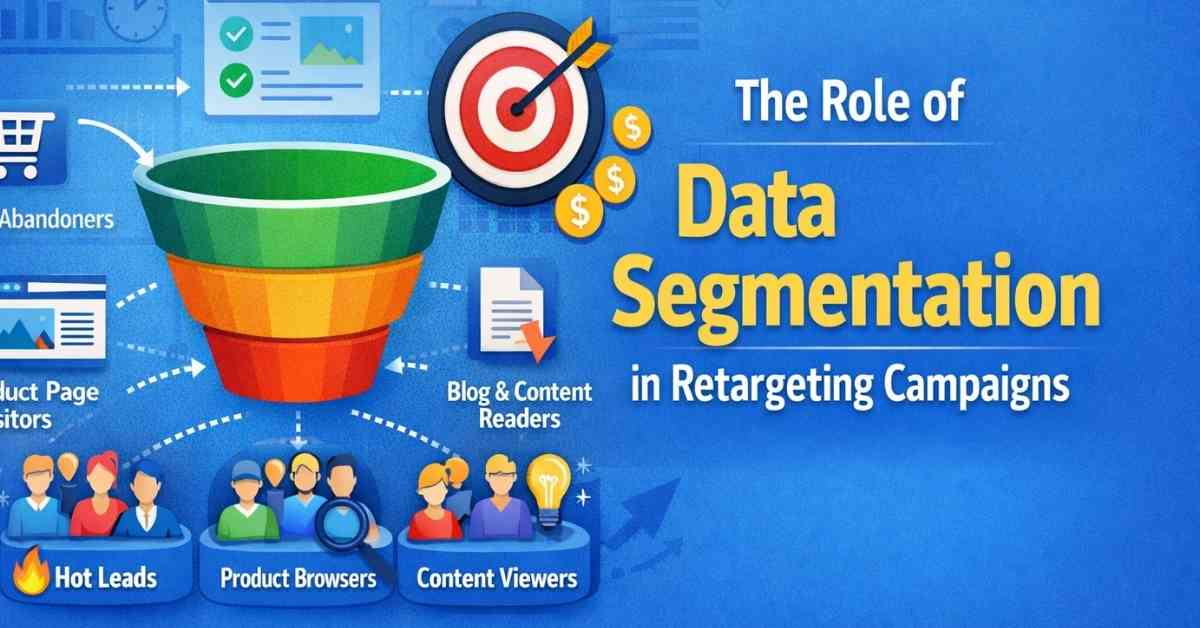
The missing piece is almost always segmentation. Lumping every website visitor together treats a cart abandoner the same as someone who bounced after 8 seconds. That’s a problem.
Why Blasting Everyone With the Same Ad Doesn’t Work
Think about how differently people behave on your site. Someone who added three items to their cart and got distracted by a phone call isn’t remotely similar to a person who clicked a blog headline from Twitter and left.
Showing both of them identical “Come back and buy!” ads wastes money on one and annoys the other.
There’s also the algorithm issue. Platforms like Meta and Google learn from whatever data you feed them. Give them a messy audience full of mixed signals, and they’ll optimize toward… something. Probably not what you wanted.
Clean segments tell the algorithm exactly who converts and why. That clarity makes a real difference in performance.
Breaking Down Your Audience Into Useful Groups
The GoAudience.com retargeting strategies guide covers this well, but the short version: stop segmenting by pages visited and start segmenting by intent.
Cart abandoners are your hottest leads. They wanted to buy. Something stopped them (shipping costs, got busy, needed to check with a spouse). A 10% discount or free shipping nudge often closes the deal.
Product page lurkers sit in the middle. They browsed, maybe compared a few options, but didn’t commit. These folks respond better to social proof: reviews, comparison charts, “why customers love this” angles.
Blog readers and PDF downloaders are barely warm. Hitting them with aggressive sales messaging feels weird and pushy. Educational content works better here.
Harvard Business Review research on segmentation found companies using these kinds of targeting approaches saw 10% profit improvements. And that study came out before retargeting tech got really sophisticated.
Timing Changes Everything
A visitor from yesterday and a visitor from three weeks ago might as well be different people.
MIT Sloan Management Review published data showing engagement drops roughly 10% per day after initial contact. That decline adds up fast.
The first 24 hours matter most. Conversion rates during that window can run 3x higher than what you’ll see targeting week-old visitors. But here’s the thing: most ad platforms default to 30-day audiences, which buries your best prospects in a pile of cold traffic.
Build separate campaigns for fresh abandoners (1-day), recent visitors (7-day), and everyone else. Bid higher on the fresh ones. They’re worth it.
Don’t Forget About Cross-Device Behavior
People don’t shop in neat, single-device sessions anymore. Someone discovers you on their phone during lunch, researches on their laptop at home, then buys from a tablet on the couch.
Meta and Google both offer cross-device tracking now (with the usual privacy caveats). Use it.
A user who showed up twice from different devices is telling you something. That’s real interest, not an accident.
Geographic differences matter too.World Bank digital development data shows purchasing behavior varies significantly by region. What works for German shoppers might flop in Brazil.
Actually Measuring What’s Working
Setting up segments means nothing if you’re not tracking them separately. Comparing your cart abandoner campaign against your blog reader campaign tells you exactly zero useful information.
Each segment needs its own benchmarks. Your top-funnel CPA will (and should) be higher than bottom-funnel. That’s fine, as long as those early-stage users eventually convert at decent rates. Understanding how these segments affect your ad relevance is also key to mastering the Google Ads Quality Score, which helps lower your costs while increasing visibility.
Watch your attribution windows too. Bottom-funnel folks convert fast. Top-funnel people need weeks, sometimes months.
Keeping Your Segments Clean
Most teams get the strategy part. Execution is where things fall apart.
Audience data gets stale quickly. Cookies expire, people change emails, preferences shift. Without regular maintenance, your carefully built segments turn into garbage.
Run quarterly audits. Pull out anyone who has already converted. Suppress existing customers from acquisition campaigns. Refresh your lookalike seeds with recent buyer data.
Tools like Segment and Zapier can automate a lot of this routing work, which helps once you’re running multiple audiences.
The bottom line: retargeting without proper segmentation burns money. The teams getting strong results in 2025 aren’t necessarily spending more. They’re just being smarter about who sees what.

Nishanth Kumar is the Lead SEO Strategist at iTech Manthra. With over a decade of experience in the digital marketing landscape, he specializes in technical SEO, link-building strategies, and search engine algorithms. Nishanth has helped hundreds of businesses scale their organic presence through data-driven marketing and sustainable “white-hat” techniques. He is passionate about decoding Google’s ever-changing updates to help brands stay ahead of the competition.