Introduction:
Did you ever run an ad and saw its approval and thought, “Great, we are legally safe now”?
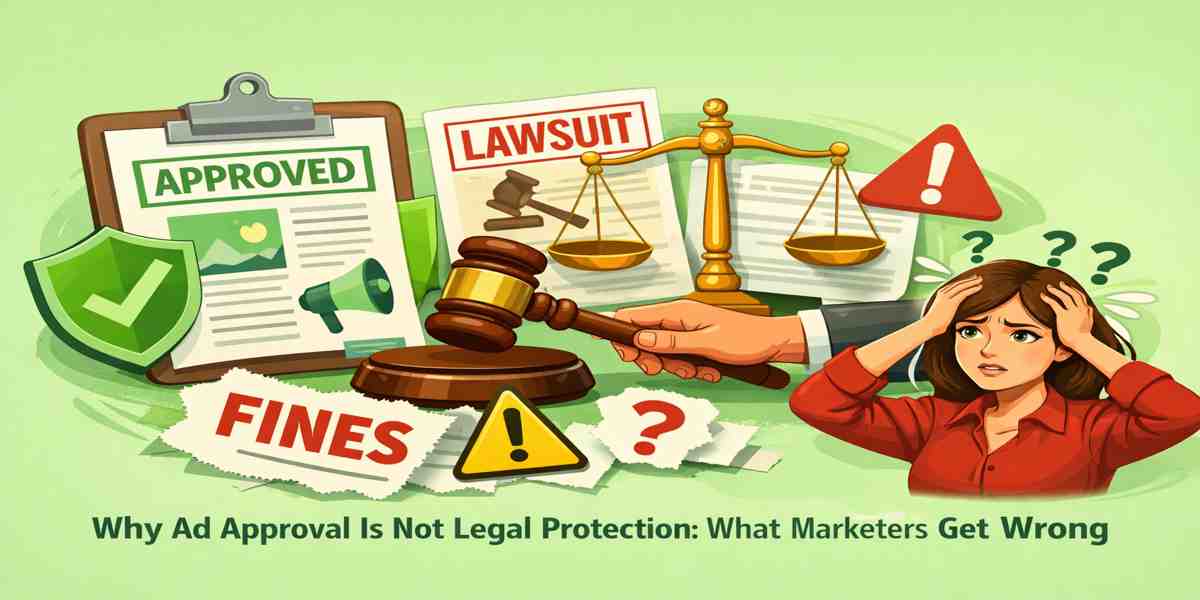
You are not the only one. A lot of the time marketers take it for granted that if Google, Meta, or any ad platform has approved their ad, it means everything is inside the law. But here is the awkward truth: the approval of an ad is not the same as legal protection, and mixing up such terms may lead to serious trouble for brands.
At the moment, regulators are very strict about the issue of false claims, and ads platforms are making it hard for advertisers, so it is very important discerning this difference now more than ever. It is all the more so if you are running ads worth a fortune or dealing with the finance, healthcare, or e-commerce sectors which are the most restrictive.
What does the approval of an ad really connote in the process of the platform’s ad approval?
Ad approval means merely that your ad is compliant with the platform’s advertising policies, not the law. Platforms like Google Ads or Meta rely on automated systems and limited human checks to make sure that they do not violate their internal rules while reviewing ads.
These checks are fast, surface-level, and aimed at protecting the platform and not your business. They do not validate claims, contracts, or compliance with misleading advertising laws.
Why Ad Approval Is Not Legal Protection in Advertising Law Court
This is the point where many a marketer gets it totally wrong. The distinction between ad approval and legal protection revolves around the question of responsibility. The platforms make it clear that the advertisers have the duty to abide by all local and international laws.
The regulators will not listen to your argument of “We have got the approval from Google or Meta.” If a claim is found to be in violation of consumer protection rules, data privacy regulations, or financial disclosure laws, the burden of responsibility falls on you.
As one compliance consultant put it, “Platforms enforce policy. Governments enforce law. Confusing the two is expensive.”
This distinction is critical when dealing with advertising legal compliance, especially across multiple regions.
Who is legally responsible when an approved ad breaks the rules?
Short answer: the advertiser.
Long answer: still the advertiser, sometimes along with agencies or partners.
Even if an ad passes the platform ad approval process, regulators can investigate claims, landing pages, pricing language, testimonials, and disclosures. If anything is misleading, incomplete, or deceptive, enforcement actions can follow.
This is where advertising liability risks become real. Fines, forced refunds, ad account suspensions, and brand reputation damage are common outcomes.
If you’re working with agencies, this is also where contracts matter. Approval screenshots won’t save you in court.
How misleading advertising laws override platform approvals
Misleading advertising laws focus on how real people interpret your message, not whether an algorithm approved it. Claims like “guaranteed results,” “clinically proven,” or “limited time only” often trigger scrutiny.
Platforms may approve such language if it doesn’t break their internal rules, but regulators evaluate intent, evidence, and consumer harm. That’s why regulatory compliance in advertising requires legal review, not just policy checks.
If you’re running performance ads, this ties closely to broader digital strategy issues discussed in our guide on SEO and paid visibility shifts on iTechManthra.
The key takeaway: platform approval is permission to publish, not permission to mislead.
How can marketers reduce advertising liability risks?
The smartest brands treat ad approval as the first step, not the last. They build internal review systems that look at claims, disclosures, and regional laws before campaigns go live.
Legal reviews don’t need to slow everything down. Many teams use standardized claim libraries and compliance checklists to move fast and stay safe.
As digital marketing strategist Rahul Mehta says, “Speed matters, but survival matters more. Compliance is part of performance now.”
If you’re scaling campaigns, it also helps to align paid media with your broader content and SEO strategy, like we explain in our article on search visibility and brand trust.
FAQs: Quick Answers Marketers Actually Need
Does Google ad approval mean my ad is legally compliant?
No. It only means the ad follows Google’s policies, not advertising laws.
Can regulators penalize approved ads?
Yes, absolutely. Approval doesn’t override legal responsibility.
Who pays the fine if an approved ad breaks the law?
Usually the advertiser, sometimes shared with agencies depending on contracts.
Do small businesses face the same risks?
Yes. Regulators don’t exempt smaller advertisers from misleading advertising laws.
What’s the safest way to launch ads?
Combine platform approval with basic legal and compliance checks before launch.
Conclusion:
Ad platforms approving your ad feels reassuring, but it’s not a legal shield. Understanding why ad approval is not legal protection can save your brand from fines, stress, and long-term damage.
If this sparked questions or reminded you of a close call, drop a comment or share this with your team. These are conversations every marketer should be having right now.

Kumar Swamy is the CEO of Itech Manthra Pvt Ltd and a dedicated Article Writer and SEO Specialist. With a wealth of experience in crafting high-quality content, he focuses on technology, business, and current events, ensuring that readers receive timely and relevant insights.
As a technical SEO expert, Kumar Swamy employs effective strategies to optimize websites for search engines, boosting visibility and performance. Passionate about sharing knowledge, he aims to empower audiences with informative and engaging articles.
Connect with Kumar Swamy to explore the evolving landscape of content creation!